Arsip:

SDGs 1: No Poverty

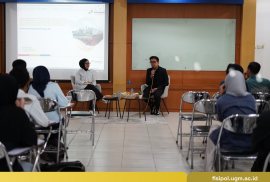
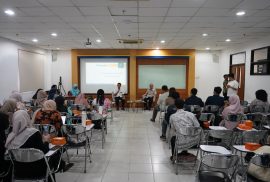
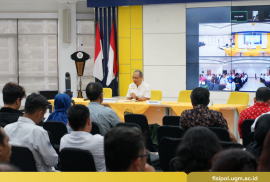
Sejahtera Bersama Sospol Cooperative Holds Annual Members Meeting: Deliberation on the Cooperative’s Future

Yogyakarta, March 9, 2026—The Sejahtera Bersama Sospol Cooperative held its Annual Members Meeting for the 2025 fiscal year on Monday (March 9) at the Faculty of Social and Political Sciences Auditorium, Universitas Gadjah Mada (UGM).

As an expression of the cooperative’s value of equality, the Annual Members Meeting (AGM) invited all members to attend and share their views on the cooperative’s future. Furthermore, discussions, including implementation results, plans, and oversight, were openly presented to all cooperative members. Wawan Mas’udi, advisor to the Sejahtera Bersama Sospol Cooperative, stated, “Cooperative membership is equal; there are no lecturers, no tenders, no seniors or juniors. The principle of cooperatives is equality among members. Therefore, we ask that everyone share their ideas for the future development of the cooperative,” he said. read more

PSDK FISIPOL UGM Lecturer Joins Visiting Scholar Program at BRAC University, Bangladesh

Dr. Nurhadi, lecturer at the Department of Social Development and Welfare (PSDK), Faculty of Social and Political Sciences, Universitas Gadjah Mada (FISIPOL UGM), participated in a visiting scholar program at BRAC University, Dhaka, Bangladesh, from August 6–15, 2025. The program aims to strengthen international academic collaboration, particularly in poverty alleviation studies through the Graduation Approach.

BRAC University was chosen due to its close connection with BRAC International, the institution that pioneered the Graduation Approach in the early 2000s. Today, this method has become a global reference in poverty reduction strategies, including in Indonesia. read more

Simulation of Action and Inauguration Marks the Closing of PIONIR Society FISIPOL UGM 2025

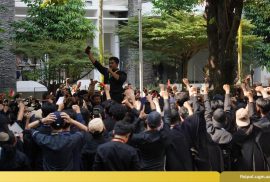
Yogyakarta, August 7, 2025 — The series of events for PIONIR Society FISIPOL UGM 2025 officially concluded with the Consolidation, Action Simulation, and Inauguration. Quoting Tan Malaka, “Idealism is the final luxury possessed by the youth,” this very spirit was instilled through open forums and public orations.

New students were invited to discuss two critical issues in Indonesia’s socio-political landscape: the commercialization of education in state universities and freedom of expression. They were not only encouraged to voice their opinions but also to understand that oration is not merely about speaking loudly—it serves as a medium to deliver sharp, argumentative, and substantive criticism. read more

KAPSTRA FISIPOL UGM Discusses the Future of the Pre-Employment Card Program Amid Government Transition in KAPSTRA Dialogue #4

The Pre-Employment Card (Kartu Prakerja) Program, initiated by President Joko Widodo as a response to the surge in unemployment during the pandemic, now faces uncertainty at the beginning of 2025. According to data from Statistics Indonesia (BPS), open unemployment remains high, reaching 7.28 million people in early 2025, with 26,455 cases of layoffs recorded.

Since its launch in 2020 until 2024, the program has supported 18.9 million beneficiaries, including 1.4 million workers in 2024 alone. The program provides digital-based training and financial incentives amounting to IDR 4,200,000 per participant, aiming to enhance skills and productivity among job seekers. read more

FISIPOL UGM Lecturer Unveils Land Grabbing Through Colonial Archives in Latest Publication

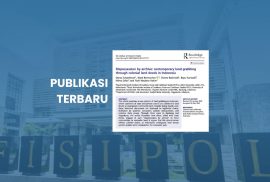
Bayu Dardias Kurniadi, lecturer at the Department of Politics and Government (DPP), Faculty of Social and Political Sciences (FISIPOL) Universitas Gadjah Mada, has achieved another academic milestone through his latest publication in the internationally renowned journal Journal of Peasant Studies (Routledge). The article, titled “Dispossession by Archive: Contemporary Land Grabbing Through Colonial Land Deeds in Indonesia,” was co-authored with Diana Suhardiman, Ward Berenschot, Dianto Bachriadi, Hilma Safitri, and Rizki Maulana Hakim. read more

Soft Launching of KHDTK Book: Reflections on Social and Ecological Collaboration in Forest Areas

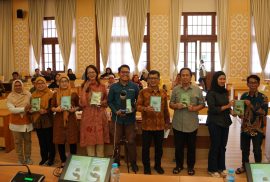
Yogyakarta, July 17, 2025 — Universitas Gadjah Mada (UGM), through the Faculty of Social and Political Sciences (FISIPOL), officially held the soft launching of the book “Community Empowerment and Sustainable Partnership: Experiences and Reflections of Working with Communities in the Special Purpose Forest Area (KHDTK) Blora–Ngawi” on Thursday afternoon at Multimedia Room 1, UGM Rectorate Building. This book serves as a reflective and scholarly documentation of UGM’s long journey in community-based forest management since 2016. read more

Master’s Program in Public Administration at UGM Engages in Regional Autonomy Dialogue with Bapperida DIY

Yogyakarta, July 10, 2025─In a significant step toward experiential learning, Master of Public Policy (MKP) students at Gadjah Mada University (UGM) conducted a field visit to the Regional Development Planning Agency (Bapperida) of the Special Region of Yogyakarta (DIY). This visit was conducted as part of a field study on Regional Autonomy.

The event began with a presentation by Ni Made Dwipanti Indrayanti, Head of Bapperida DIY, who outlined strategic issues related to budget management and asset governance in regional development planning. Students listened attentively to the presentation, noting key points relevant to the implementation of regional autonomy and the complexities involved in local governance. read more

Department of Social Development and Welfare FISIPOL UGM Successfully Holds the 5th Graduate Symposium on Social Development and Welfare 2025

Yogyakarta, July 8, 2025—The Master’s Program in Social Development and Welfare (PSDK) of the Faculty of Social and Political Sciences (FISIPOL) UGM successfully held the 5th Graduate Symposium on Social Development and Welfare 2025 from July 7 to 8, 2025. With the theme “Quo Vadis Contemporary Development,” the event provided a platform for cross-perspective academic discussions to address the challenges and direction of sustainable development in Indonesia.

The first day of the symposium opened with a keynote speaker session titled “Frugal Innovation: A New Strategy for CSR Program Planning,” featuring Adi Rahmadi (Officer II CSR at PT Pertamina Geothermal Energy Tbk.) and moderated by Galih Prabaningrum, S.Sos., M.A. (PSdK Lecturer). The discussion highlighted the concept of Frugal Innovation as an efficient approach to designing CSR programs based on optimizing company resources. Participants were invited to understand the definition of Frugal Innovation, its implementation, the benefits it offers companies and communities, and its practical applications at Pertamina Geothermal. The session also highlighted criticisms of CSR practices in Indonesia and the relevance of this new approach. read more

Collaborating Ideas to Address Social Development Challenges at the PSdK Symposium 2025

The Master’s Program in Social Development and Welfare (PSdK) of FISIPOL UGM successfully held the PSdK Master’s Symposium over two days, July 7–8, 2025. Taking place at the BA Building and FISIPOL Auditorium, the event became a space for the exchange of strategic ideas involving students, lecturers, practitioners, and alumni.

The symposium opened on Monday (7/7) with a seminar entitled “Frugal Innovation & CSR” delivered by PSdK alumnus Adi Rahmadi. Held in BA 501, this session highlighted the role of low-cost innovation and corporate social responsibility in addressing pressing development issues. read more

Young Researchers of FISIPOL UGM Foster Empathy and Social Awareness Through Gender and Social Justice Research

Research is not merely a process of data collection, but also a meaningful space for learning. This was evident in the fieldwork experience of students from the Faculty of Social and Political Sciences (FISIPOL) at Universitas Gadjah Mada (UGM), who joined a research team focusing on women’s empowerment and social justice across various regions in Indonesia. Through direct interaction with women from diverse social, cultural, and economic backgrounds, these young researchers not only sharpened their technical skills but also reflected deeply on their own position, privilege, and social responsibility as academics. read more