
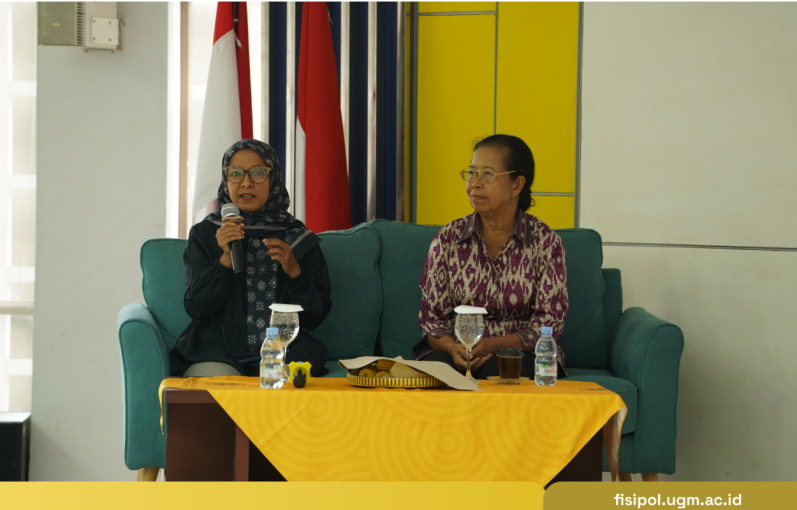
Yogyakarta, May 12, 2026—As a manifestation of the educational institution’s commitment to facilitating inclusive dialectical spaces, the Social Research Centre (SOREC) of the Sociology Department, Faculty of Social and Political Sciences (FISIPOL) UGM, took a strategic initiative by hosting the ‘Papua Solidarity Space for Land, Food, and Life Sovereignty’ (Ruang Solidaritas Papua Untuk Kedaulatan Tanah, Pangan, dan Kehidupan). This event was realized through a screening, collective viewing, and discussion of the documentary film entitled Pesta Babi (Pig Feast). Held on Tuesday (12/5) in the Auditorium on the 4th Floor of FISIPOL UGM, this agenda sparked widespread enthusiasm and was attended by various elements, ranging from the academic community to the general public.
The main agenda began with the screening of Pig Feast, a documentary directed by journalist Dandhy Dwi Laksono and his team. After the screening session concluded, SOREC continued the event with an interactive discussion session adeptly moderated by Sana Ulaili from the Cik Di Tiro Forum. This discussion featured three panelists with diverse perspectives, namely Bagus Sulistiono (Center for Capacity Building and Cooperation/PPKK FISIPOL UGM), Made Supriatma (CRRS and YLBHI Knowledge Council), and Herni Saraswati (Women Farmers). This space for exchanging ideas became even more lively when the issues within the film were directly responded to by representatives of the Papuan Student Alliance (AMP) as well as several Papuan Indigenous Peoples from the Meepago, Lapago, and Animha Regions.
On that occasion, Herni Saraswati highlighted the living space crisis from her perspective as a farmer. “I see how hundreds of millions of hectares of land are utilized and turned into development land with little regard for the community, which is my main concern. Even though that is the land and a legacy that must be passed down to our generations in the future,” Herni expressed. She also conveyed a strong hope that the implementation of National Strategic Projects (PSN) in the future can be more centered on the needs and safety of local communities.
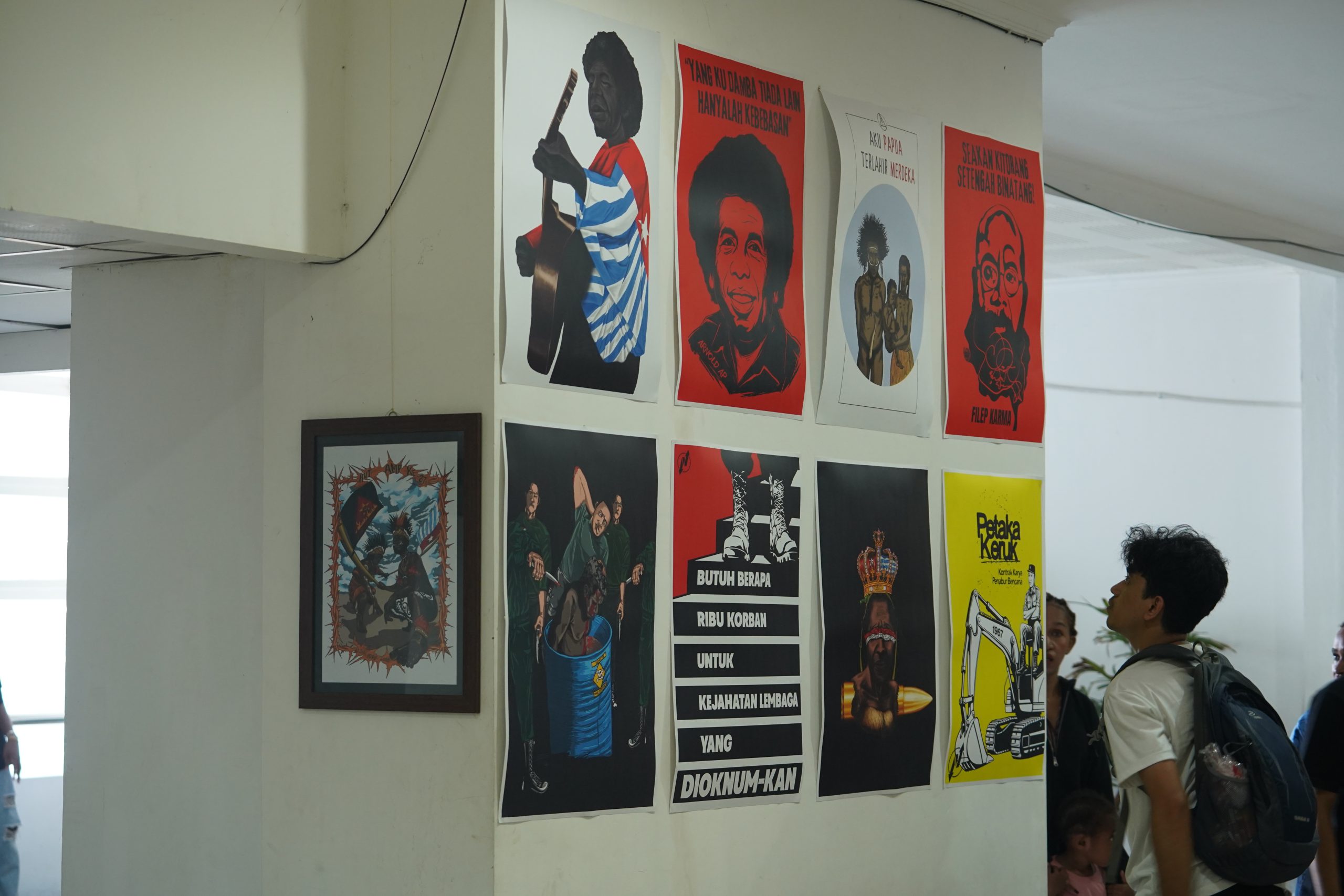
To enrich the nuance of cultural solidarity, this event did not stop at the boundaries of formal discussion. The series of events was also filled with various expressions of art and movement, including a live screen printing session, poetry readings, political speeches, an art exhibition, and a deeply meaningful stage performance by the art group Membesak.
The provision of this solidarity space ultimately serves to affirm the role of higher education institutions in bridging the voice of the community. A discussion forum like this is crucial to remind the public that every direction of development must fundamentally align with efforts to protect and restore terrestrial ecosystems, in order to ensure an equitable food system for the future of all living beings.