Arsip:

News

Getting to Know Expressive Writing in Journaling Activities

Yogyakarta, April 24th 2022─Career Development Center (CDC) of FISIPOL UGM held a workshop entitled “Process Feeling with Journaling” on Sunday (24/4). The event, which took place through the Zoom platform, invited two speakers in the field of clinical psychologists, namely Ranisa Kautsar Tristi from the Bureau of Dynamic Psychology and Zahwa Islami from the Faculty of Psychology of UGM.

This opportunity discusses one form of writing in journaling activities, namely expressive writing. Expressive writing, also known as free writing, is writing whatever comes to mind without any restrictions and no need to edit. By pouring our feelings, ideas, or thoughts into writing, we can help recover from things we have experienced, either traumatic or unpleasant. read more

‘Women Leadership Can Create a Healthier Organization’

Yogyakarta, April 18th 2022─The Department of Sociology, Social and Political Sciences UGM in collaboration with the Department of Women’s Empowerment, Child Protection and Population Control DIY held the Second Series of Public Lectures on Women’s Leadership and Social Transformation on Monday (18/4). This online activity via Zoom raised the topic of “Women’s Leadership in the Public and Private Sector”. The speaker that was invited on this occasion was Safira Rosa Machrusah as the Indonesian Ambassador to Algeria and Elvira Lianita as the External Affairs Director of PT HM Sampoerna Tbk. read more

The Third Session of the Symposium of the Department of Social Development and Welfare Master Program Discusses Social Enterprises

Yogyakarta, April 12th 2022─The Department of Social Development and Welfare (PSdK) of FISIPOL UGM held an online 2022 Masters Symposium on 11-12 April 2022. In the third session of the symposium, a lecturer of the Department of Social Development and Welfare, Nurhadi, became the moderator who guided the discussion with keynote speaker Kelly Hall from the University of Birmingham, England.

Kelly explained the general description and results of his research on social enterprises in the UK in a discussion entitled “Social Enterprise: An Organisational Model to Promote Health and Social Care”. According to Kelly, a social enterprise is a company that carries out business activities to address social problems and improve and empower communities, living standards, and the environment. He added that social mission plays an important role in running a social enterprise. However, Kelly emphasised that social enterprises are different from charitable organisations which only carry out their activities through donations. read more

Discussion and Review of the Book “In Search of New Social Democracy” by Professor Olle Tornquist

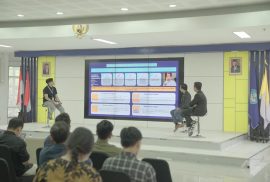
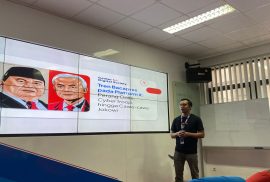
Yogyakarta, April 8th 2022─The Faculty of Social and Political Sciences (Fisipol) of Universitas Gadjah Mada (UGM), held a discussion and review of the book “In Search of New Social Democracy”. Professor Olle Tornquist from the University of Oslo, the author of the book, discussed his work with two speakers, namely Amalinda Savirani (lecturer of the Department of Politics and Government/DPP or PolGov) and Muhammad Najib Azea (lecturer of the Department of Sociology or SOREC), as well as several audiences who were the Fisipol UGM doctoral student at the Digital Library of Fisipol UGM. read more

“Apindo Cooperation Internship” Involves All Faculties at UGM

Yogyakarta, March 25th 2022─The Faculty of Social and Political Sciences (Fisipol) of Universitas Gadjah Mada (UGM) held a meeting between the Indonesian Employers’ Association (Apindo) and all faculty and vocational school leaders at UGM to discuss preparations for the implementation of the “Cooperation Internship with Apindo”. Dozens of people consisting of the dean, deputy dean, and representatives from Apindo attended the meeting which was held at the Auditorium of FISIPOL.

Executive Director of Apindo, Danang Girindrawardana, explained that the absorption of university graduates in the world of work is still very low, only around 11 percent. Therefore, drastic changes are needed for the pattern of absorption of undergraduates people so that there is no spike in educated unemployment. Danang said that one of the concerns of the business world was to support the Ministry of Education and Culture of the Republic of Indonesia and to support the Independent Learning Campus Independent Program (MBKM) program of the Ministry of Education and Culture of the Republic of Indonesia. In this case, Apindo wants a more formal and systematic internship process. read more

The Opening of Digital Intelligence Class 2022

Yogyakarta, March 18th 2022─The Center for Digital Society (CfDS) collaborated with the Ministry of Communication and Information of the Republic of Indonesia, and the National Digital Literacy Movement SIBERKREASI launched the 2022 Digital Intelligence Class course. The event was officially opened on (18/03) with several speakers, namely Dedy Permadi, a representative from the Ministry of Communication and Information, Tasya Kamila, and Fiki Naki as a representative of Indonesia’s digital talent. This continues to grow and in its development will provide considerable economic opportunities in Indonesia. “Therefore, the need for technology-savvy talents is urgently needed in this era, and this class facilitates capacity building and knowledge for this,” said Dedy as the opening remarks for this afternoon’s event.The Digital Intelligence Class will discuss several things including critical thinking, design thinking, privacy and data protection, digital communication, digital ethics, and digital governance.

Guiding the course of the event, Anisa Pratita as the moderator gave some discussion questions. Starting from Kominfo, Anisa tries to find out what breakthroughs have been made by Kominfo, and about what homework needs to be done together.

Responding to this, Dedy said that Digital Intelligence Classes have been held since 2020 and in collaboration with 120 community institutions and institutions in Indonesia. Considering that this class requires cooperation from various parties, together with public figures, content creators, activists on women’s issues, children’s issues, and others, the Ministry of Communication and Information seeks to implement inclusive and collaborative digital literacy. Basically, there is still a lot of homework, but the point is that every individual must be responsible for using existing digital developments. In this case, young people must always be positive, creative, and productive. read more

Seminar on the Opening of the G20 Indonesian Presidency Series of Events by Fisipol UGM

Yogyakarta, March 17th 2022─Faculty of Social and Political Sciences (Fisipol) Universitas Gadjah Mada (UGM), the Alumni Family of Fisipol UGM  (Kafispolgama), and Institute of International Studies (IIS) of the Department of International Relations (HI) Fisipol UGM held a seminar “Recover Together, Recover Stronger: G20 and the Indonesian Strategic Agenda” at the Senate Hall of UGM.The opening seminar of the series of events entitled “G20 Indonesian Presidency: Leadership for a Just and Sustainable World Order” was officially opened by the Rector of UGM, Professor Panut Mulyono. In his speech, Prof. Panut hopes that this series of activities, which will be held from March 10 to September 19, 2022, can provide space for comprehensive studies and discussions about Indonesia’s leadership at the G20 of 2022. The Dean of Fisipol UGM, Wawan Mas’udi, and the Deputy General Chair of the Kafispolgama Partnership, Danang Girindrawardana, also gave remarks at this hybrid event.  Wawan said that the output of this series of events consisted of policy papers, policy briefs, and a complete compilation book related to the presidency of the G20 Indonesia. read more

Press Conference of Fisipol UGM’s Participation in G20

Yogyakarta, March 16th 2022─This year, Indonesia is participating in the G20 forum with the slogan “Recover Together, Recover Stronger”. In order to enrich G20’s strategic agenda, the Faculty of Social and Political Science of Gadjah Mada University held a couple of seminars. Titled “Indonesia’s G20 Presidency: Leadership towards a Just and Sustainable Global Order”, the event started on March 10th and will continue until September 19th, 2022. The press conference attended by Wawan Masudi, Luqman Hakim, and a couple of media partners opened the event last Wednesday (16/3). read more

Going Beyond: Women in The So ‘Called’ Men’s Working Field

Yogyakarta, March 11th 2022─Fisipol Crisis Center (FCC) in collaboration with KAFISPOLGAMA held an online webinar with the title “Going Beyond Women in The So ‘Called’ Men’s Working Field” in commemoration of International Women’s Day. On this occasion, the speakers of the webinar were attended by Amalia S. Prabowo and Sri Astutik. Both are women who work in fields that are dominated by men, namely as Manager Director of Export Hub Ecosystem and Member of PK4L Center of UGM.

Starting the discussion session, the starter question was guided by Marwa, a lecturer of the Department of International Relations, Faculty of Social and Political Sciences, UGM. In line with the theme of this year’s International Women’s Day, ‘Break the Bias’, the questions were raised discussing the dynamics of the two speakers at work. read more

Inauguration of Professor of Journalism from DIKOM of FISIPOL UGM

Yogyakarta, March 10th 2022─Professor Ana Nadhya Abrar, a professor from the Department of Communication Studies (Dikom), Faculty of Social and Political Sciences (Fisipol), Universitas Gadjah Mada (UGM) was inaugurated as Professor of Journalism at the Senate Hall of UGM.

In the inauguration event, which was held offline and online, Prof. Abrar delivered a speech entitled “Drawing the Boundaries of Journalism in Biographical Writing”. Prof. Abrar describes four limits that form the technical basis of journalism in writing biographies. First, the right limit of journalism is the prioritization of human values. Second, the left limit of journalism is shaping narrative tastes. Third, the upper limit of journalism is to increase the intellectuality of the audience. Finally, the lower limit, namely utilizing investigative journalism. read more