
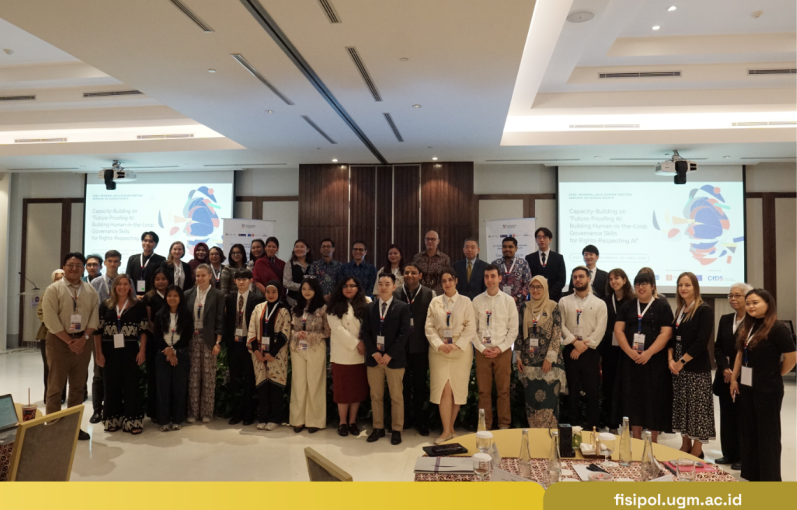
Yogyakarta, March 30, 2026—The Faculty of Social and Political Sciences, Universitas Gadjah Mada (FISIPOL UGM), through the Center for Digital Society (CfDS), in collaboration with the Asia-Europe Foundation (ASEF), held the 23rd Informal ASEM Seminar on Human Rights (ASEMHRS23): Capacity-Building Training entitled “Future-Proofing AI: Building Human-in-the-Loop Governance Skills for Rights-Respecting AI.”
This event is an international forum bringing together participants from various countries in Asia and Europe, including representatives of governments, civil society, academics, and human rights institutions. Held over three days, from March 30 to April 1, 2026, in Yogyakarta, this program focused on strengthening capacity to understand and respond to the impacts of artificial intelligence (AI) on human rights, while also encouraging cross-sector and cross-regional collaboration.
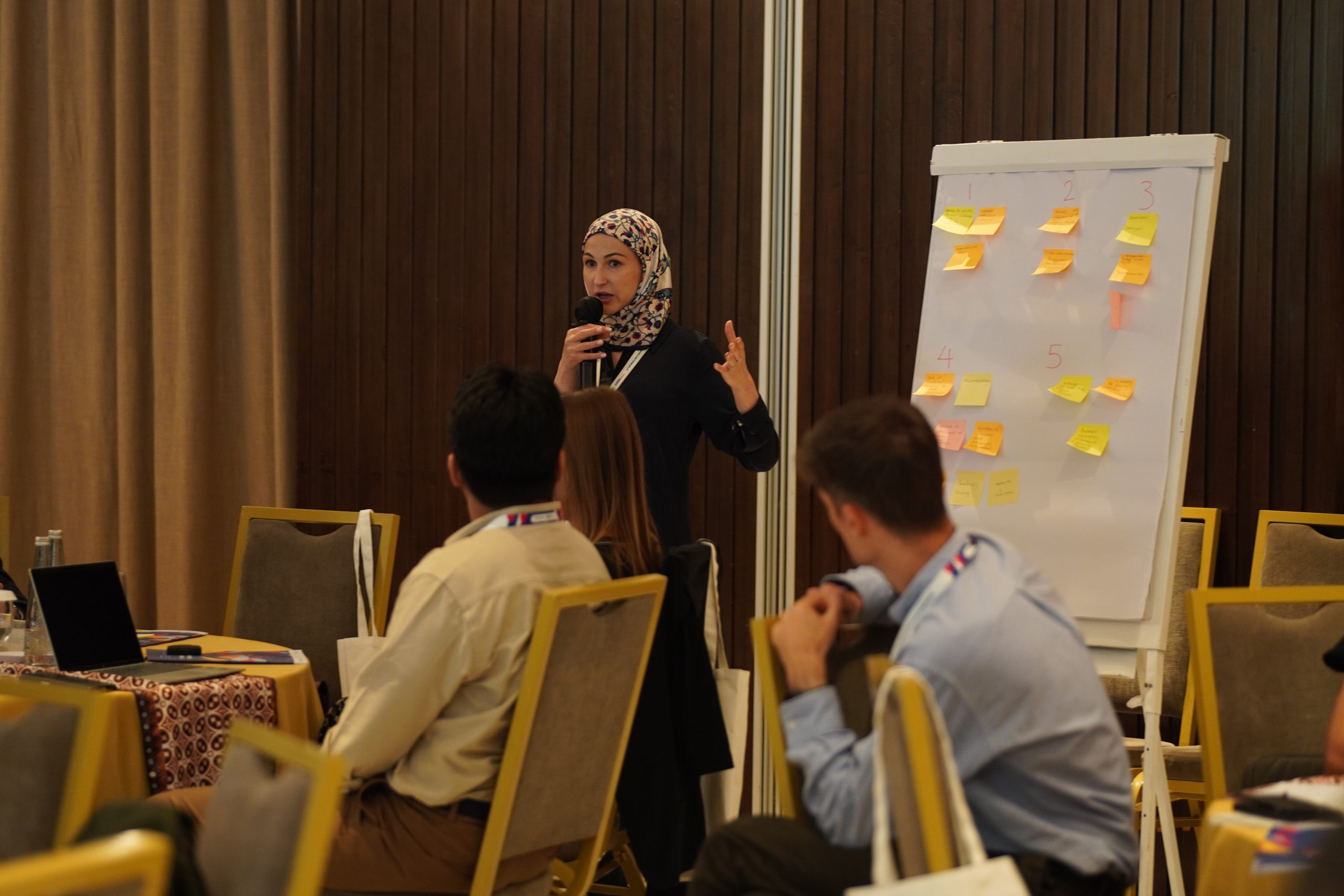
The series of activities included public lectures, panel discussions, problem-mapping and solution workshops, and the development of a capstone project. Furthermore, this event served as a forum for exchanging knowledge and best practices in accountable, transparent, and human-centered AI governance.
The event was officially opened by the Deputy Minister of Communication and Digital Affairs of the Republic of Indonesia, Nezar Patria, and featured a keynote from a UNESCO representative. Dr. Wawan Mas’udi, Dean of the Faculty of Social and Political Sciences, Gadjah Mada University, and Mr. Zhang Lei, Deputy Executive Director of the Asia-Europe Foundation (ASEF), also attended the opening ceremony.
Mr. Zhang Lei, Deputy Executive Director of ASEF, highlighted the importance of placing humans at the center of AI governance. “AI is a tool that must remain under human oversight and public accountability. Keeping humans involved in every process is crucial to ensuring that important decisions continue to reflect human empathy and judgment,” he said.
The Indonesian Deputy Minister of Communication and Digital, Nezar Patria, in his remarks highlighted the importance of Indonesia’s readiness to face the global development of AI.
“Strengthening capacity and international collaboration are crucial to ensuring that digital transformation is aligned with the protection of human rights,” he emphasized.
Meanwhile, the Dean of the Faculty of Social and Political Sciences, Gadjah Mada University (UGM), Dr. Wawan Mas’udi, stated that this collaboration reflects the role of academics in bridging knowledge and policy practice. “At the Faculty of Social and Political Sciences, we view the governance of artificial intelligence (AI) as deeply social and political. This is influenced by power, institutions, and how seriously we take accountability,” he said.
The UNESCO representative in his keynote also emphasized that AI governance must be based on human rights principles, including justice, inclusivity, and accountability, in line with the global framework currently being developed.
ASEMHRS23 highlighted a key challenge in artificial intelligence (AI) governance: how these principles are applied in different contexts. In this regard, closer collaboration between Asia and Europe is needed to ensure better representation. Through this initiative, ASEF and CfDS UGM aim to go beyond principles and focus on practical solutions rooted in real-world contexts.