
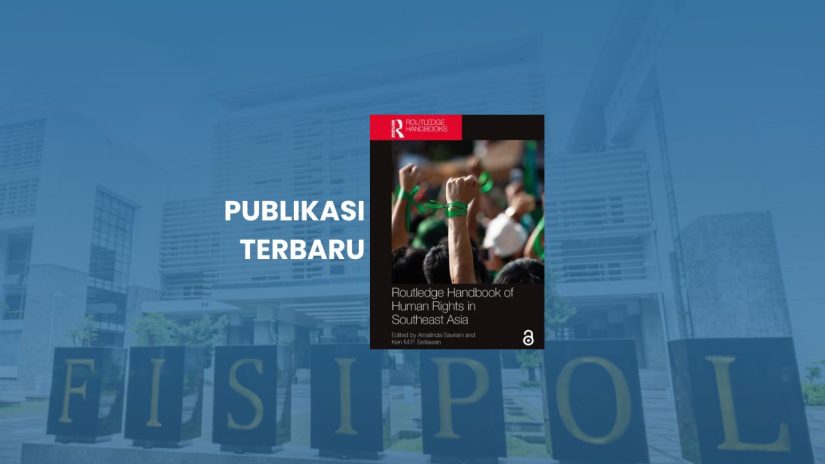
A FISIPOL UGM lecturer has launched her latest academic work in the book “Routledge Handbook of Human Rights in Southeast Asia” on Wednesday (July 9) during an event held at the University of Melbourne, Australia. The book is co-edited by Prof. Amalinda Savirani, lecturer at the Department of Politics and Government, FISIPOL UGM, and Dr. Ken M.P. Setiawan, Senior Lecturer in Indonesian Studies at the Asia Institute, University of Melbourne.
This handbook represents a significant contribution to the study of human rights in Southeast Asia. Bringing together leading international experts, the book not only addresses the region’s most pressing human rights issues but also highlights the roles of actors and institutions working to foster improvement.
Through an interdisciplinary approach, the Routledge Handbook of Human Rights in Southeast Asia provides in-depth analysis of the political and social dynamics behind both rights violations and struggles for justice in the region. It covers a wide range of themes, from regional-level political debates to the lived experiences of fundamental rights such as access to food, water, and employment in everyday life.
The launch of this book also reflects the strengthening of academic collaboration between Universitas Gadjah Mada and the University of Melbourne, while underscoring the importance of intellectual contributions from Southeast Asia to the global discourse on human rights.
Relevant SDGs (Integrated in the Narrative)
This book contributes to advancing several Sustainable Development Goals (SDGs):
-
SDG 16 – Peace, Justice, and Strong Institutions: by promoting accountability, justice, and human rights protections in Southeast Asia.
-
SDG 10 – Reduced Inequalities: by addressing systemic discrimination and unequal access to fundamental rights across the region.
-
SDG 6 – Clean Water and Sanitation & SDG 2 – Zero Hunger: by highlighting the importance of equitable access to basic resources such as food and water as part of human rights.
-
SDG 8 – Decent Work and Economic Growth: by analyzing rights to fair employment and livelihoods.