Arsip:

SDGs 10: Reduced Inequalities

FISIPOL UGM Facilitates Village Official Selection for Guwosari, Bantul Regency

Yogyakarta, 6 August 2025 — The Faculty of Social and Political Sciences (FISIPOL) at Universitas Gadjah Mada hosted the selection process for village officials (pamong) of Guwosari Village, Pajangan District, Bantul Regency. Held at the Big Data Room and the PolGov Meeting Room, this activity reflects the tangible contribution of the Department of Politics and Government (DPP) at FISIPOL UGM in strengthening inclusive, participatory, and high-quality village governance.

The selection opened four positions: three hamlet chiefs (dukuh) and one kamituwa. The process involved multiple stages, including psychological testing, written exams, in-depth interviews, and the delivery of speeches in Javanese. Each stage was designed to assess candidates’ personal competencies, administrative capacity, and understanding of local culture. read more

Jelajah FISIPOL: An Interactive Learning Experience for New Students Exploring Learning Spaces at FISIPOL UGM

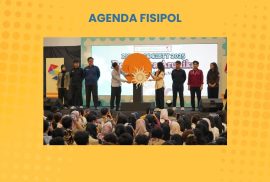
Yogyakarta, 6 August 2025 — One of the highlights of the opening day of PIONIR SOCIETY 2025 was Jelajah FISIPOL, an interactive learning activity designed to comprehensively introduce new students, known as Gamada, to the FISIPOL UGM campus environment.

In this program, Gamada were guided by co-facilitators as they explored various corners of the faculty. The route began at FISIPOL Smart Park, continued to Sansiro Park, an open green space often used by students for discussions, relaxation, or informal gatherings. read more

FISIPOL UGM Lecturer Explores Body Modification and Gender Practices Among Asian Youth

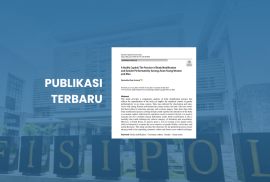
Desintha Dwi Asriani, a lecturer at the Department of Sociology, Faculty of Social and Political Sciences, Universitas Gadjah Mada (FISIPOL UGM), has recently published her latest scholarly article titled “A Bodily Capital: The Practice of Body Modification and Gender Performativity Among Asian Young Women and Men” in the Journal of Applied Youth Studies, published by Springer Nature.

This study delves into the practices of body modification — such as tattoos, piercings, and cosmetic surgery — among young people in South Korea and Indonesia, and examines their connection to gender performativity and social mobility. Using a qualitative approach through interviews and observations, the article presents a comparative analysis of how the body is perceived as both symbolic and economic capital within the rapidly growing consumer cultures of Asia. read more

FISIPOL UGM Lecturer Studies Global South Emerging Donors’ Strategies in International Development Cooperation

Professor Poppy S. Winanti from the Faculty of Social and Political Sciences, Universitas Gadjah Mada (FISIPOL UGM), reaffirms her contribution to the global development discourse through her latest scholarly publication titled “International Development Cooperation and Domestic Support: Strategies of TIKA and TICA as Emerging Donors”. The article appears in Jurnal Penelitian Politik published by BRIN, Volume 21, No. 1, 2024.

In this work, Prof. Winanti critically examines the growing involvement of developing countries in the Global South as new actors in international development cooperation. The focus lies on how countries such as Thailand and Turkey — each with their dedicated agencies, the Thailand International Cooperation Agency (TICA) and the Turkish Cooperation and Coordination Agency (TIKA) — play their roles as emerging donors, providing foreign aid despite still being classified as developing nations. read more

Students & Online Loans: FISIPOL UGM Lecturers Reveal the Other Side of Educational Fintech Platforms

FISIPOL UGM lecturers Ratna Noviani, Heru Nugroho, and Elok Santi Jesica have published their latest research article titled “Grab It Fast! Entrepreneurial Self and Hyper-Consumerism in the Students’ Prosumption of Online Lending Services in Indonesia” in the July–September 2025 edition of the international journal SAGE Open.

The article examines the practice of prosumption — the simultaneous production and consumption of services — in online lending among Indonesian university students, with a specific focus on the Cicil platform. Within the framework of the sharing economy and prosumerism, this platform not only offers educational loans but also encourages students to act as both “digital workers” and active consumers. read more

Megashift FISIPOL UGM Publishes New Article: Challenging the Dominance of Economic Logic in Indonesia’s Development

Megashift FISIPOL UGM has released a new article titled “Seeking Alternatives to the Dominance of Economic Logic in Indonesia’s Development.” The piece offers a critical reflection on Indonesia’s national development agenda, which has long been centered on economic growth, investment, and macro-financial indicators.

The article emphasizes the importance of pursuing alternative development approaches that prioritize social welfare and environmental sustainability. Rather than relying solely on economic logic, it advocates for an integrative approach that incorporates social values, local wisdom, and participatory democracy into policy formulation. read more

KAPSTRA FISIPOL UGM Discusses the Future of the Pre-Employment Card Program Amid Government Transition in KAPSTRA Dialogue #4

The Pre-Employment Card (Kartu Prakerja) Program, initiated by President Joko Widodo as a response to the surge in unemployment during the pandemic, now faces uncertainty at the beginning of 2025. According to data from Statistics Indonesia (BPS), open unemployment remains high, reaching 7.28 million people in early 2025, with 26,455 cases of layoffs recorded.

Since its launch in 2020 until 2024, the program has supported 18.9 million beneficiaries, including 1.4 million workers in 2024 alone. The program provides digital-based training and financial incentives amounting to IDR 4,200,000 per participant, aiming to enhance skills and productivity among job seekers. read more

Exploring Village Political Dynamics in the Latest Publication by FISIPOL UGM Lecturers

Two lecturers from the Department of Politics and Government (DPP), Faculty of Social and Political Sciences (FISIPOL) Universitas Gadjah Mada, Arie Ruhyanto and Amalinda Savirani, have once again achieved academic recognition through their latest publication in the reputable Asian Journal of Political Science, published by Routledge (Taylor & Francis). The article, titled “Comparing Village Politics Across Time and Space,” was co-authored with Edward Aspinall and Ward Berenschot.

The article offers a profound comparative study of village politics in Indonesia, examining not only geographical differences but also temporal changes. The authors explore how practices of power, patronage relations, and political participation at the village level have evolved across different periods and regions. read more

FISIPOL UGM Lecturers Publish New Research on Variations in Village Governance Across Indonesia

Two lecturers from the Department of Politics and Government (DPP), Faculty of Social and Political Sciences (FISIPOL) Universitas Gadjah Mada, Amalinda Savirani and Arie Ruhyanto, have once again contributed to international scholarship through their latest publication in the prestigious journal Asian Journal of Political Science (Routledge, Taylor & Francis). The article, titled “Analysing and Explaining Variation in Village Governance Regimes Across Indonesia,” was co-authored with Edward Aspinall and Ward Berenschot. read more

FISIPOL UGM Lecturer Unveils Land Grabbing Through Colonial Archives in Latest Publication

Bayu Dardias Kurniadi, lecturer at the Department of Politics and Government (DPP), Faculty of Social and Political Sciences (FISIPOL) Universitas Gadjah Mada, has achieved another academic milestone through his latest publication in the internationally renowned journal Journal of Peasant Studies (Routledge). The article, titled “Dispossession by Archive: Contemporary Land Grabbing Through Colonial Land Deeds in Indonesia,” was co-authored with Diana Suhardiman, Ward Berenschot, Dianto Bachriadi, Hilma Safitri, and Rizki Maulana Hakim. read more