Arsip:

SDGs 4: Quality Education

[IMPORTANT NOTICE] Academic Registration Timeline for Odd Semester 2025/2026

Undergraduate and Graduate Programs – FISIPOL UGM

The Faculty of Social and Political Sciences (FISIPOL), Universitas Gadjah Mada, announces the official registration timeline for the Odd Semester of the 2025/2026 Academic Year for all undergraduate and postgraduate students. The following are key dates and steps to be noted:

This academic registration process (herregistrasi) includes several stages such as tuition fee payment, academic advising, course enrollment, and confirmation of course plans (KRS). All students are required to complete the procedures according to the set schedule to maintain their active academic status for the upcoming semester. read more

Strengthening the Digital Foundation: The Roadmap of SPBE 2025 Promotes Government Data Integration

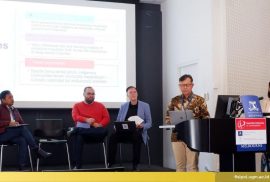
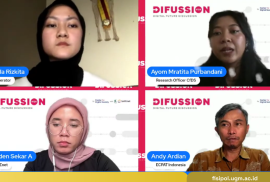
Yogyakarta, July 1st 2025─In order to strengthen digital governance and promote cross-sector data interoperability, the Center for Digital Society (CfDS) collaborated with Jogja Smart Province (JSP) to hold a public discussion titled “The Roadmap of SPBE 2025: Strengthening Digital Governance and Data Interoperability.” The discussion features three main speakers: Perwita Sari (Policy Formulation Coordinator for SPBE Implementation, Ministry of PAN-RB), Nanang Ruswianto (Chair of the SPBE Assessment Team at UGM), and Sayuri Egaravanda (JSP Team). read more

FISIPOL UGM Revitalizes Digilib Cafe with a Fresh Look

Yogyakarta, July 2025 — The Faculty of Social and Political Sciences (FISIPOL) at Universitas Gadjah Mada is undergoing a major renovation of Digilib Cafe, a creative space that has been part of the campus ecosystem since its establishment in 2017. The renovation, which began at the end of 2024, has now reached its halfway point, marked by the completion of the new front façade as the first step in the comprehensive transformation of the area.

The next phase will focus on interior design, landscaping of green spaces, and finalizing the cafe’s management system, which is expected to become a new gathering point for students. The revitalization of Digilib Cafe is intended not only as a supporting facility but also as a living space that fosters an inclusive and collaborative academic atmosphere. read more

Observing Strategies to Strengthen MSMEs, MAP Students Conduct Field Trip to Magelang

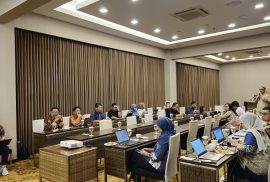
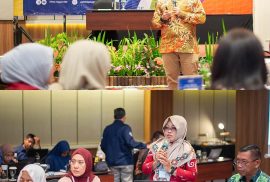
Magelang, June 24, 2025 — Students of the Magister Public Administration Affirmation Program (MAP) at Universitas Gadjah Mada undertook a field trip to Magelang Regency as part of a learning process connecting theory with practical public policy implementation. The activity, held from June 23–24, involved scholarship recipients from various local government institutions across Indonesia and focused on strengthening Micro, Small, and Medium Enterprises (MSMEs) as pillars of the local economy and job creation. read more

FISIPOL UGM Lecturers Encourage Students to Master Academic Writing Early

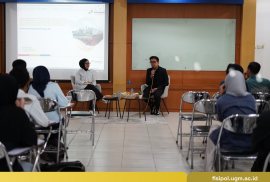
Yogyakarta, July 2025 — Writing academic journal articles is not only a requirement for aspiring lecturers or researchers but also a crucial foundation for developing critical thinking skills and constructing systematic arguments. This was emphasized by Indri Dwi Apriliyanti, a lecturer at the Department of Management and Public Policy (MKP) FISIPOL UGM, during a knowledge-sharing session on the importance of academic writing skills for students across disciplines.

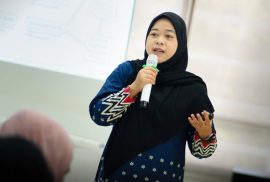
In her presentation, Dr. Indri highlighted that many students still question the relevance of journal writing, especially if they do not plan to pursue an academic career. However, she argued that academic writing skills provide long-term benefits across professions. “Writing trains us to think systematically, build data-driven arguments, and communicate ideas clearly to an audience,” she explained. read more

Explore Strategies for Strengthening MSMEs, UGM Faculty of Social and Political Sciences (MAP) Students Visit Magelang Regency Government

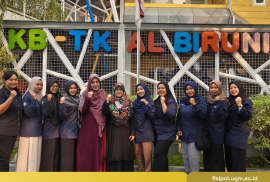
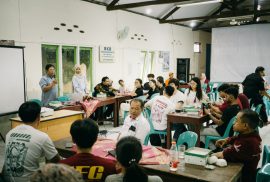
Magelang, June 24, 2025─Master of Public Administration (MAP) students from the Faculty of Social and Political Sciences, Gadjah Mada University, conducted a field visit to Magelang Regency on June 23–24, 2025. This visit was organized to explore further strategies for strengthening Micro, Small, and Medium Enterprises (MSMEs) as a pillar of the local economy.

The field study is an integral part of the MAP FISIPOL UGM Karyasiswa program, specifically the Bappenas Affirmation program. In addition to exploring course material in greater depth, this activity aims to enhance understanding, foster direct experience, and promote collaboration with various stakeholders to promote people-centered economic development, as committed to Sustainable Development Goals 8 (Decent Work and Economic Growth) and 17 (Partnerships for the Goals).

Raising the Consistency of Indonesia’s Support for Palestine, Prof. Dr. Dra. Siti Mutiah Setiawati, M.A., Officially Inaugurated as Professor

Yogyakarta, 19 June 2025–The history of the development of international relations with the Middle East shows the identity and alignment of Indonesia’s foreign policy. Consistency over the years reflects the strong solidarity of the past and present governments, especially in the Palestinian conflict. Prof. Dr. Dra. Siti Mutiah Setiawati, M.A., Professor of Middle East Geopolitics, Faculty of Social and Political Sciences, Universitas Gadjah Mada, raised the issue in her speech on Thursday (19/6). read more

BRF The Clinics Explore Opportunities and Strategies for Climate Finance Based on Public Participation

Yogyakarta, June 19th 2025 – Bulaksumur Roundtable Forum (BRF) was held again through The Clinics series which this year focused on the theme “Opportunities for Zakat, Infaq, Sadaqah, and Waqf (ZISWAF) to Build Participative Climate Finance in Indonesia”. Located at the 4th Floor Auditorium of FISIPOL UGM, this forum became a forum for cross-sector discussions to explore the potential of social funds as an instrument of inclusive and sustainable climate crisis financing. The forum presented a variety of speakers from philanthropic institutions, Islamic finance, to government agencies. Some of them were Syamsul Ardiansyah (Senior Officer of Strategic Alliance Dompet Dhuafa), Dede Haris Sumarno (Commissioner of Supervision and Governance of the Indonesian Waqf Board), and Nur Fadilah (ESG Operation and Communication Head of Bank Syariah Indonesia). In addition, the forum also involved academics and climate policy experts to enrich perspectives. read more

Luhmann’s Communication Theory Provides a Perspective Regarding Information Systems

Yogyakarta, June 17th 2025—A professor from UGM’s Department of Communication Science published an introductory book regarding the theory of Niklas Luhmann as an eye-opening perspective in the field of communication science. Prof. Dr. Phil. Hermin Indah Wahyuni organized a discussion with several communication science experts from Universitas Padjadjaran titled “Titik Balik: Teori Sistem dalam Ilmu Komunikasi” on Tuesday (17/6).

Niklas Luhmann is a German sociologist who discovered the systems theory. Luhmann was inspired by Talcott Parsons theory of the social system, which aims to answer the many questions that society faces in regards to social change. It is the development of this theory that is explained as the Luhmann systems theory, in which the social system is not shaped through mutual agreement, moreso through conflicting disagreement. Without difference of opinions, there won’t be interaction between social actors and therefore, a system will not be formed.  read more

Prof. Gabriel Lele Officially Becomes UGM Full Professor

Yogyakarta, 11 June 2025–Prof. Dr. Phil. Gabriel Lele, S.IP., M.Si, Lecturer of Public Policy and Management, was officially inaugurated as Full Professor of Public Policy Governance on Thursday (5/6). The issue of democracy is one of his concerns about the country’s socio-political conditions. Through his speech, entitled ‘Democracy Beyond Election: Agonistic Public Policy as a Transformation Agenda,’ Gabriel highlighted several trends in the current pattern of democracy, including authoritarianism, populism, and policy uniformity. read more