Arsip:

SDGs 4: Quality Education

BRF The Clinics Explore Opportunities and Strategies for Climate Finance Based on Public Participation

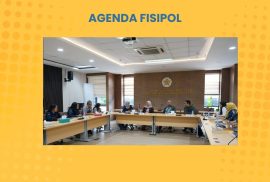
Yogyakarta, June 19th 2025 – Bulaksumur Roundtable Forum (BRF) was held again through The Clinics series which this year focused on the theme “Opportunities for Zakat, Infaq, Sadaqah, and Waqf (ZISWAF) to Build Participative Climate Finance in Indonesia”. Located at the 4th Floor Auditorium of FISIPOL UGM, this forum became a forum for cross-sector discussions to explore the potential of social funds as an instrument of inclusive and sustainable climate crisis financing. The forum presented a variety of speakers from philanthropic institutions, Islamic finance, to government agencies. Some of them were Syamsul Ardiansyah (Senior Officer of Strategic Alliance Dompet Dhuafa), Dede Haris Sumarno (Commissioner of Supervision and Governance of the Indonesian Waqf Board), and Nur Fadilah (ESG Operation and Communication Head of Bank Syariah Indonesia). In addition, the forum also involved academics and climate policy experts to enrich perspectives. read more

Luhmann’s Communication Theory Provides a Perspective Regarding Information Systems

Yogyakarta, June 17th 2025—A professor from UGM’s Department of Communication Science published an introductory book regarding the theory of Niklas Luhmann as an eye-opening perspective in the field of communication science. Prof. Dr. Phil. Hermin Indah Wahyuni organized a discussion with several communication science experts from Universitas Padjadjaran titled “Titik Balik: Teori Sistem dalam Ilmu Komunikasi” on Tuesday (17/6).

Niklas Luhmann is a German sociologist who discovered the systems theory. Luhmann was inspired by Talcott Parsons theory of the social system, which aims to answer the many questions that society faces in regards to social change. It is the development of this theory that is explained as the Luhmann systems theory, in which the social system is not shaped through mutual agreement, moreso through conflicting disagreement. Without difference of opinions, there won’t be interaction between social actors and therefore, a system will not be formed.  read more

Prof. Gabriel Lele Officially Becomes UGM Full Professor

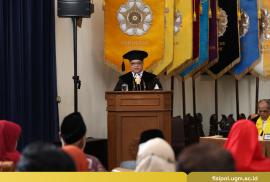
Yogyakarta, 11 June 2025–Prof. Dr. Phil. Gabriel Lele, S.IP., M.Si, Lecturer of Public Policy and Management, was officially inaugurated as Full Professor of Public Policy Governance on Thursday (5/6). The issue of democracy is one of his concerns about the country’s socio-political conditions. Through his speech, entitled ‘Democracy Beyond Election: Agonistic Public Policy as a Transformation Agenda,’ Gabriel highlighted several trends in the current pattern of democracy, including authoritarianism, populism, and policy uniformity. read more

70% of the Public still Thinks Sexual Harassment is Caused by the Victim’s Clothes

Yogyakarta, June 5th 2025 – The Faculty of Social and Political Sciences (Fisipol) of Universitas Gadjah Mada is committed to the implementation of the Law on Sexual Violence (TPKS). In this mission, Fisipol certainly seeks to raise awareness of the prevention of sexual violence by educating all academicians, namely lecturers, education staff, and students. Carrying out this theme, the Department of Sociology of UGM invited the Commissioner of the National Commission on Violence Against Women and the Task Force for the Prevention and Handling of Sexual Violence (PPKS) UGM on Thursday (5/6). read more

UGM’s Department of Social Development and Welfare (PSdK) Organizes Discussion on Education and Career Opportunities for Social Workers

Yogyakarta, June 4th 2025—Challenges faced in the workplace not only encompass the issue of the job market, but also the issue of the shifting transition regarding job prosperity and social issues that are directly affected by the development of modern technology. With that in mind, UGM’s Department of Social Development and Welfare (PSdK), as part of the Faculty of Social and Political Science of Universitas Gadjah Mada, decided to organize a discussion at the Self Development Series titled “Social Work Without Borders” on Wednesday (4/6). read more

Food Security Issues in the Blue Economy

Yogyakarta, June 4th 2025 – Indonesia with its natural wealth has biological resource potential that has not been fully maximized. As an archipelago, the marine sector has long been one of the export commodities that support the country’s economy. However, on the other hand, the level of fish consumption and the welfare of fishermen have not been evenly distributed. The Faculty of Social and Political Sciences (Fisipol) of Universitas Gadjah Mada presented the discussion “Blue Food as Climate Session: Sustaining Blue Food Ecosystem, Community Empowerment, and Climate Solution” on Wednesday (4/6). read more

A Lecturer of FISIPOL UGM Offers New Perspective in Analyzing Agrarian Policy and Food Sovereignty in Indonesia

Yogyakarta, May 26th 2025─Muchtar Habibi, a lecturer from the Department of the Department of Public Policy Management (MKP), Faculty of Social and Political Sciences of UGM, once again shares his thoughts through his latest scientific publication entitled “Challenging the orthodox policy analysis in Indonesia: a historical materialist policy analysis of Joko Widodo’s agrarian reform and food sovereignty”. This article was published in the reputable journal Critical Policy Studies published by Routledge Taylor & Francis Group. read more

To Prevent Stunting Early, FISIPOL UGM Shares Health Insights with Getas Residents

Getas, May 24th 2025─The Faculty of Social and Political Sciences (FISIPOL) Universitas Gadjah Mada (UGM), in collaboration with the Directorate of Community Service UGM and Pertamina Foundation, successfully held a Socialization of Reproductive Health and Stunting in Getas Village on Saturday (24/5). In addition to being a collaborative activity of the three parties, this activity also directly involved the Getas Village Posyandu Cadres. This activity was held with the aim of providing insight and basic knowledge to adolescents, pregnant women and Posyandu cadres regarding the importance of reproductive health and stunting prevention. read more

After Five Months of Empowering the Community in Blora, FISIPOL UGM and Pertamina Foundation Officially Ends Program with Ceremony

Blora, May 23, 2025—UGM’s Faculty of Social and Political Science (Fisipol) has successfully organized a closing  ceremonial event for the socio–economic empowerment program for village communities around forest areas with special-purpose (KHDTK). It is done through the lens of circular economy at the second location, Mendenrenjo Village, Blora Regency on Friday (23/5). This event also marks the official end of the program that has been ongoing for five months since January 2025. 

Arie Sujito, as Vice Rector for Student Affairs, Community Service, and Alumni of UGM, attended the ceremony and mentioned that,”The activities carried out all this time are aimed at increasing the quality of life of communities together. It is hoped that this cooperation between villages and groups is important in reducing the rate of poverty by empowering communities.” read more

Highlighting Issues of Food Security and Urban Industry, Fisipol UGM Organizes Discussion with Gaziantep University

Yogyakarta, May 22, 2025—Community empowerment, energy transition, and food security became government agendas in an effort to achieve the Golden Indonesia 2045 Vision. UGM’s Faculty of Social and Political Science organized a discussion session regarding the challenges and development of these three agenda together with experts from the Gaziantep University, Turkey. Held on Thursday (22/5), the discussion talked about how factors such as climate change and food crisis became determinant of the success of the government’s agenda.

Dr. Mehmet Cevat Yildirim, as Associate Professor of Public Administration, explained that the global crisis has experienced its own set of dynamics from time to time along with technological advancements and climate change. For example,  in 1970, there was a transition from the import sector to global manufacturing. It then developed further to global factory networks due to globalization. Now, the world has entered an era of robotic technology and the neoliberal economic structure. These changes have caused a number of disruptions in various fields, including employment. “This creates new problems for countries that depend on the development of  urban areas. This is the case in Turkey, where the growth of industry outpaced the infrastructure planning process,” Mehmet stated. Gebze, one of the centers of the automotive and chemical industries that drive Turkey’s economy, is now faced with the lack of adequate infrastructure. Unprepared, the city infrastructure is increasingly under pressure, causing several social problems such as congestion, minimal public service, and high population density. 

Similar things are happening in Indonesia, specifically in the city of Bekasi, West Java. Mehmet’s research has shown Bekasi as the centre of the world’s automotive industry that has grown at a rapid pace due to investments. However, the area of Bekasi itself is separated into two very unequal areas, namely the modern industrial district and the residential district. “The city infrastructure that we see in Bekasi is under pressure due to high amounts of migration, land purchase for investment and infrastructure gaps,” Mehmet explained. According to him, the economic growth experienced  is not accompanied by proper access to public services and infrastructures.
read more