The Faculty of Social and Political Sciences (FISIPOL) at Universitas Gadjah Mada has once again demonstrated its academic engagement on the global stage. One of its lecturers, Dr. Novi Kurnia from the Department of Communication Science, contributed as a key resource in the development of an online course entitled “Navigating Climate Information with Media and Information Literacy”, initiated by UNESCO in collaboration with the Mahatma Gandhi Institute of Education for Peace and Sustainable Development (MGIEP).
SDGs
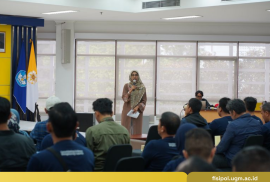
Yogyakarta, 14 August 2025 — The Faculty of Social and Political Sciences (FISIPOL) at Universitas Gadjah Mada hosted the welcoming ceremony for its new postgraduate students at the West Hall of FISIPOL. This year, the faculty admitted 313 students across 14 study programs, consisting of 251 master’s students and 62 doctoral students. Among them are two students from Timor Leste, whose presence enriches the diversity of perspectives within the academic community.
In his address, Dean of FISIPOL UGM, Dr. Wawan Mas’udi, emphasized the faculty’s strong commitment to building a robust and relevant research ecosystem. As part of this strategic direction, FISIPOL is advancing three flagship areas of study at the faculty level: Climate Change and Sustainability, Digital Transformation, and Social Inclusion. These three pillars serve as a foundation for responding to societal change, broadening perspectives, and making tangible contributions to the study of communities and global challenges.
Yogyakarta, August 14th 2025─The Center for Digital Society (CfDS) of the Faculty of Social and Political Sciences, Universitas Gadjah Mada (UGM), held the International Resiliency and Integrity Symposium (IRIS) 2025 on Thursday (August 21st) at the Mandiri Auditorium of the Faculty. In collaboration with Safer Internet LAB (SAIL), an initiative of the Center for Strategic and International Studies (CSIS) and Google Indonesia, this forum aims to discuss and respond to the increasing use of Generative Artificial Intelligence (GenAI), especially in the Asia-Pacific region. The forum is titled “Generative AI and Information Resilience in the Asia-Pacific: Actions and Adaptations.”
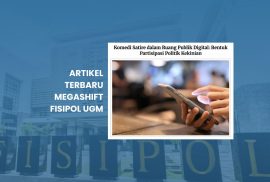
Latest article from Megashift FISIPOL UGM
“Energy Transition from the Fields: Agrivoltaics Meets Agroforestry”
By: Fikri Danang Himawan
This article explores the concept of agrivoltaics — the integration of solar panels and agriculture on the same land — and how this system can be combined with agroforestry, a land management practice that integrates trees, food crops, and/or livestock. The combination of these two approaches offers a solution to address the challenges of renewable energy, food sustainability, land-use efficiency, and climate change adaptation.
The third edition of IIS UGM’s Monthly Review is here, bringing you fresh insights and the latest knowledge!
Featured articles in this issue include:
• When Vietnam’s Lotus Blooms in BRICS Water (Christopher Paller Gerale, Universitas Negeri Malang)
• The Structural Crisis Behind Bangladesh’s 2024 Student Protest (Allene Florence Fadhilah Darmawan, Department of International Relations UGM, 2023)
• The Making of Macan Asia in A Shifting Western Geopolitical Landscape (Aminah Rafa, Department of International Relations UGM)
• Indonesia’s Dilemma Between Nickel Extraction and Biosphere Preservation (Paramasatya Rakha Abiyoga, Department of International Relations UGM)
Latest Article on Megashift FISIPOL UGM
“Rethinking the Architecture of Climate Finance: How Political Discretion Undermines Global Commitments”
By: Meilisa Anggraeni
Megashift FISIPOL UGM has released another thought-provoking and timely article, this time spotlighting global climate finance, which is under immense pressure due to the shifting tides of international politics. In her piece, “Rethinking the Architecture of Climate Finance,” author Meilisa Anggraeni examines how climate funding pledges from developed nations often weaken — not because of technical or economic constraints, but due to the political choices of their leaders.
Yogyakarta, 7 August 2025 — The series of events under the 2025 PIONIR Society of FISIPOL UGM officially concluded with a Consolidation Forum, Public Action Simulation, and Inauguration Ceremony. Quoting Tan Malaka, “Idealism is the final luxury possessed by youth,” this spirit was instilled throughout the open discussions and public orations.
New students were invited to engage in critical conversations on two pressing issues within Indonesia’s socio-political landscape: the commercialization of higher education and freedom of expression. Beyond simply voicing their opinions, students were encouraged to understand that public oration is not merely about speaking loudly, but rather about delivering critiques that are sharp, well-argued, and substantive.
Yogyakarta, 6 August 2025 — A total of 627 new students from across Indonesia officially joined the opening of PIONIR Society 2025, held at the West Hall of FISIPOL UGM. This year, PIONIR Society carries the theme “Gerak Bara Arunika”, symbolizing the spirit of being not only a light for oneself but also a source of tangible benefits for society and the surrounding environment.
The opening ceremony was marked by the symbolic distribution of tumblers to six student representatives from each department, underscoring the faculty’s commitment to the Green Society movement. The program continued with the ceremonial lighting of the “Dawn of the Journey”, representing the first steps of the new students (Gamada) in their academic and personal development journey at FISIPOL UGM.
Yogyakarta, 6 August 2025 — The Faculty of Social and Political Sciences (FISIPOL) at Universitas Gadjah Mada hosted the selection process for village officials (pamong) of Guwosari Village, Pajangan District, Bantul Regency. Held at the Big Data Room and the PolGov Meeting Room, this activity reflects the tangible contribution of the Department of Politics and Government (DPP) at FISIPOL UGM in strengthening inclusive, participatory, and high-quality village governance.
The selection opened four positions: three hamlet chiefs (dukuh) and one kamituwa. The process involved multiple stages, including psychological testing, written exams, in-depth interviews, and the delivery of speeches in Javanese. Each stage was designed to assess candidates’ personal competencies, administrative capacity, and understanding of local culture.
Yogyakarta, 6 August 2025 — One of the highlights of the opening day of PIONIR SOCIETY 2025 was Jelajah FISIPOL, an interactive learning activity designed to comprehensively introduce new students, known as Gamada, to the FISIPOL UGM campus environment.
In this program, Gamada were guided by co-facilitators as they explored various corners of the faculty. The route began at FISIPOL Smart Park, continued to Sansiro Park, an open green space often used by students for discussions, relaxation, or informal gatherings.