
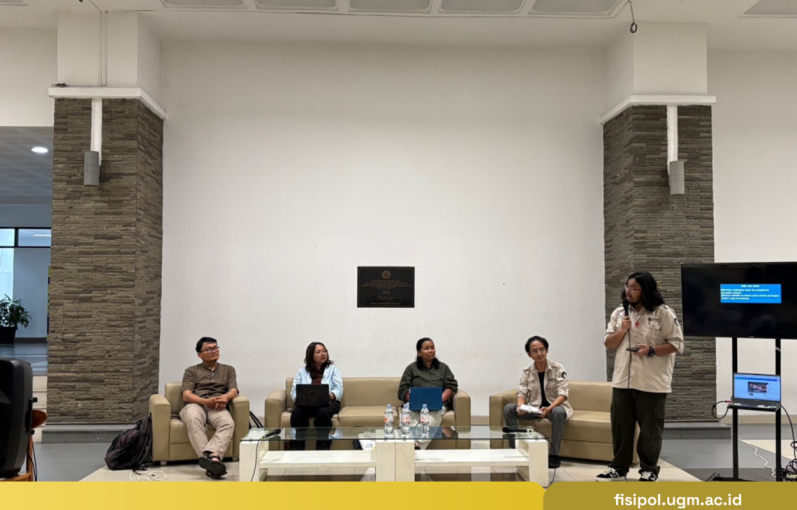
Yogyakarta, May 19, 2026─DEMA FISIPOL UGM’s Selasar Forum highlighted the vulnerabilities faced by migrant domestic workers on Tuesday at the FISIPOL UGM Selasar Barat.
In commemoration of Labor Day (May 1), the Student Council (DEMA) of the Faculty of Social and Political Sciences at Gadjah Mada University held a Forum Selasar with a primary focus on highlighting the vulnerabilities experienced by Indonesian migrant domestic workers. The event took place at the West Selasar, FISIPOL UGM, and featured several speakers from Beranda Migran and the Coordination of Former Indonesian Migrant Workers (KOPPMI).
Hanindha Kristy, an activist from Beranda Migran, explained that the chaotic domestic economic situation—such as poverty, unemployment, layoffs, economic slowdown, and the shrinking middle class—forces many Indonesian citizens, especially women, to seek livelihoods abroad. The climate crisis and environmental degradation are also causing internal displacement without adequate resilience. Meanwhile, the neoliberal framework within Indonesia’s governance system actually reinforces labor export as a quick fix to address economic turmoil.
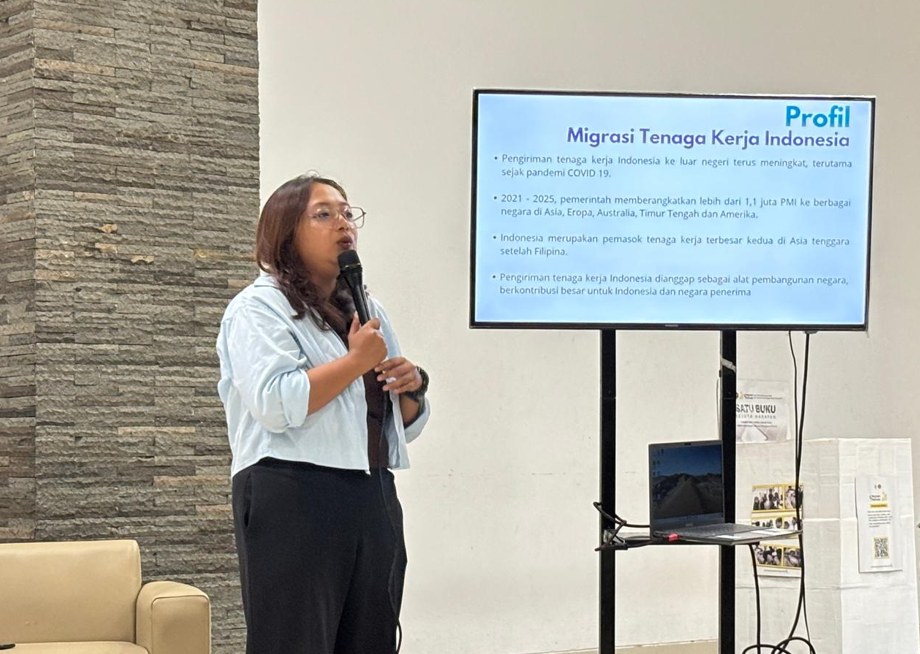
Kristy explained that Indonesian migrant domestic workers face systemic vulnerabilities, not merely isolated cases. According to the data presented, in 2025 alone, placement services for Indonesian migrant workers were dominated by women, accounting for 187,468 placements—or 63.13 percent of the total 296,948 placements. Most of them are placed in the domestic sector as house maids, caregivers, and domestic workers in countries such as Taiwan, Hong Kong, Malaysia, Japan, and Singapore. “Migrant domestic workers face extremely low wages, which can be as low as half the local minimum wage. Their working hours are also inhumane, ranging from 11 to 20 hours a day with a 24-hour on-call system,” she stated.
Muchtar Habibi, a Lecturer in Management and Public Policy at UGM, urged students to examine domestic systemic issues to address the vulnerabilities of Indonesian migrant domestic workers. “If you want to learn from Korea or Taiwan, look at agrarian reform. Provide access to economic resources in rural areas so that everyone in the village has a vital economic source,” he said. In addition to agrarian reform, the state also needs to intervene with corporations to create domestic jobs and reduce the export of migrant workers. “A developmental state—a state capable of disciplining domestic corporations to follow the state’s directives to achieve industrialization,” he added.
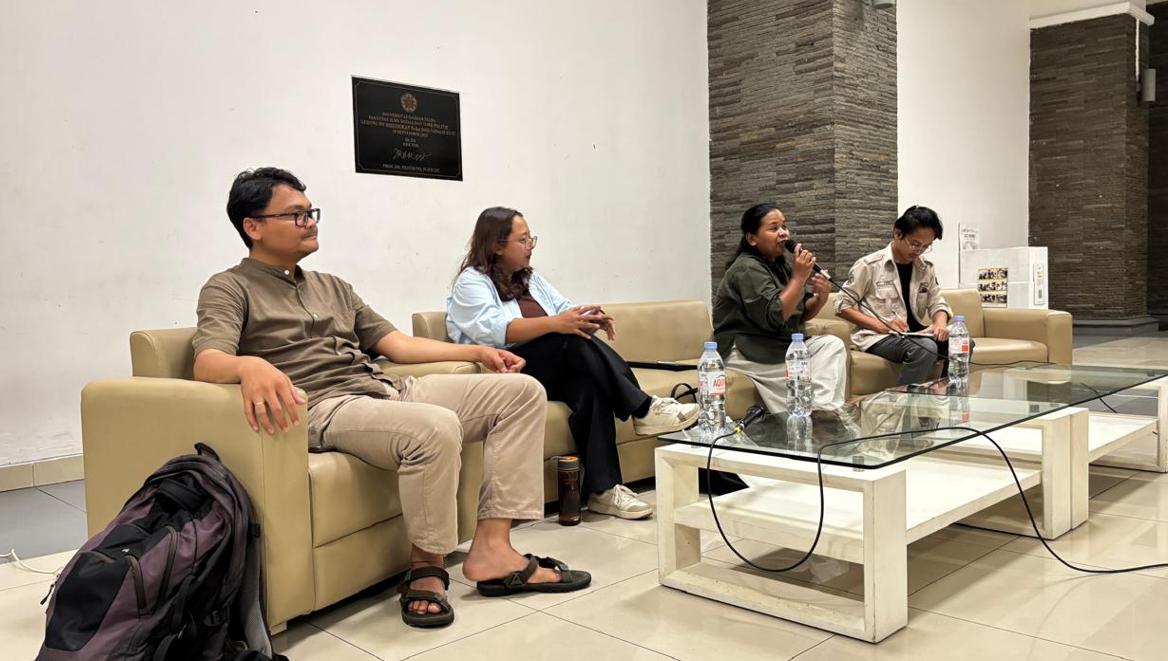
In conclusion, the Selasar Forum, organized by DEMA FISIPOL UGM, serves as a vital platform for discussing the issues faced by Indonesian migrant domestic workers. With a focus on education, exploitation, decent work for all, and capacity building, the forum aims to inspire collective action toward a more just and equitable society for all workers.