
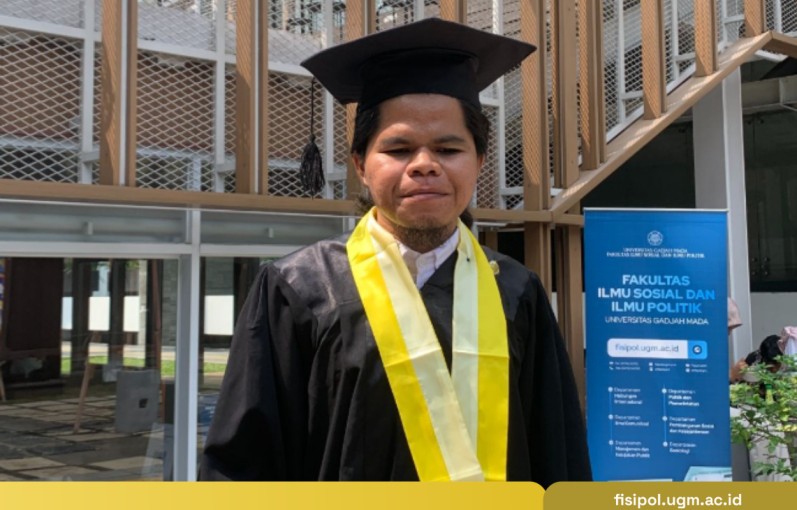
Yogyakarta, May 29, 2026─Graduation moments always bring a sense of relief and pride, and Muhammad Irsyad is no exception. On Thursday (21/5), Irsyad officially became one of the graduates of the Social Development and Welfare (PSdK) Study Program at FISIPOL UGM. Having a visual impairment was not an obstacle in his journey to earn a bachelor’s degree, a journey that provided him with many meaningful lessons. Starting college during the pandemic certainly presented difficult adaptation challenges, but Irsyad successfully proved that the situation did not deter his steps to obtain equal and quality access to education.
Irsyad’s enthusiasm for advocating equality is also strongly reflected in his final thesis. He researched a highly essential issue: employment policies for persons with disabilities in Indonesia. Although he initially struggled to find literature because the topic is still rarely studied, Irsyad never gave up. He also brought this spirit of empowerment outside the classroom. During his studies, Irsyad actively built disability-friendly and inclusive spaces, from joining the HRD division of KAPSTRA, serving as Public Relations staff for PPSMB Empower, to actively participating in various disability awareness campaigns with the UGM Disability Care Student Activity Unit (UKM Peduli Difabel UGM).
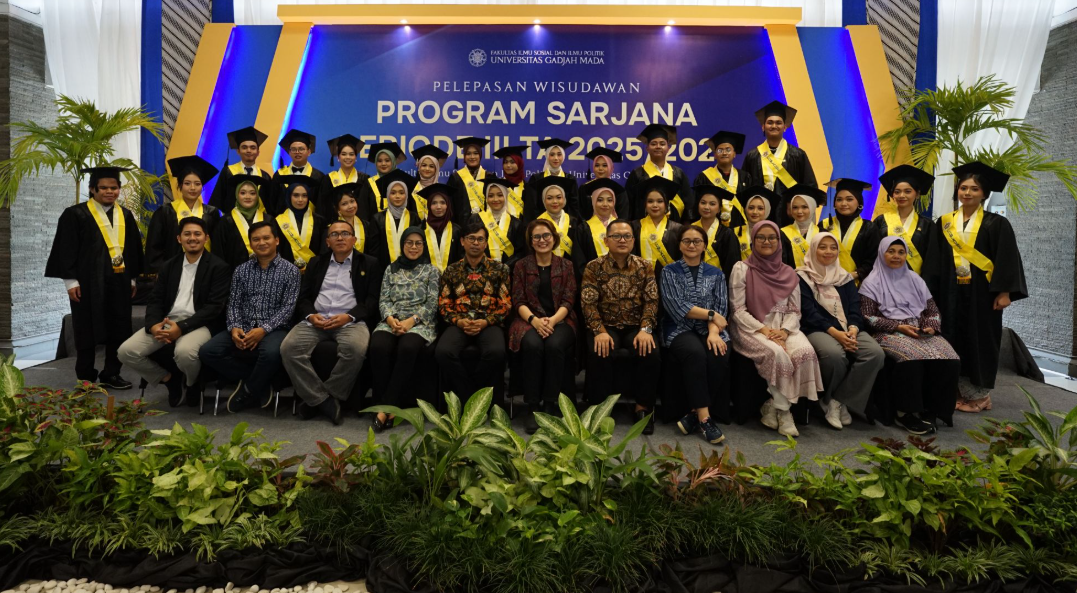
This extraordinary achievement is inseparable from the presence of a support system and a supportive campus ecosystem. Irsyad stated that his family, peers, and the UGM Disability Service Unit greatly assisted him in both academic matters and daily mobility. He is grateful for every step he took, from the transition back to offline classes following the Covid-19 pandemic—which gave him the opportunity to explore every corner of Yogyakarta and meet with peers—to experiencing a supportive Student Study Service (KKN) environment.
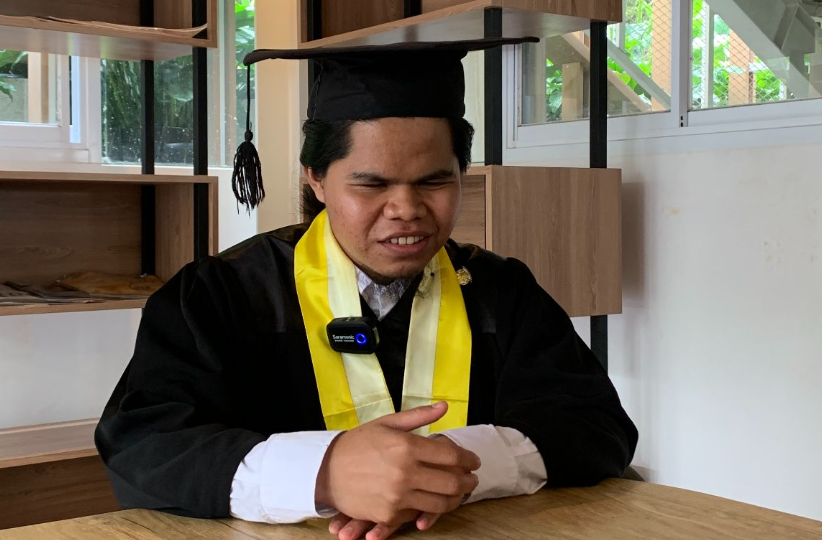
Specifically, Irsyad also highly appreciates FISIPOL UGM’s commitment to becoming increasingly friendly toward students with disabilities through the provision of inclusive physical facilities.
“The facilities supporting disabilities at FISIPOL (now) have developed very far since I first entered. Now, guiding blocks have been added, and there are ramps, which facilitate the mobility of visually impaired friends and wheelchair users,” said Irsyad.
The presence of ramp access for wheelchair users, guiding blocks, and voice announcement features in the faculty elevator facilities have provided him with a sense of safety and comfort. Not only physical facilities, but the adaptation of library literature into a digital format through Digilib FISIPOL has also been an innovative breakthrough that greatly simplified his daily learning process.
Irsyad provides his support for sustainable campus development by expressing his hope that FISIPOL’s inclusive ecosystem can continue to be perfected. Going forward, he hopes that the distribution of guiding block facilities can be expanded further into the interior of the buildings, along with an innovation to add physical buttons to the elevators to complement the existing touch panels. Furthermore, he hopes for accommodations regarding the learning and examination needs of students with disabilities so that they can be automatically integrated into the faculty’s academic system, ensuring that teaching and learning activities run more precisely.
Now, Irsyad is preparing to step into the work and professional world and harbors aspirations to continue his studies to the master’s (S2) level. For fellow students who are still struggling to complete their studies, he shares a heartwarming message:
“It doesn’t matter whether our process is fast or slow. Keep holding on and do what you can. With hope and conviction, everything will succeed and be finished in due time.”