
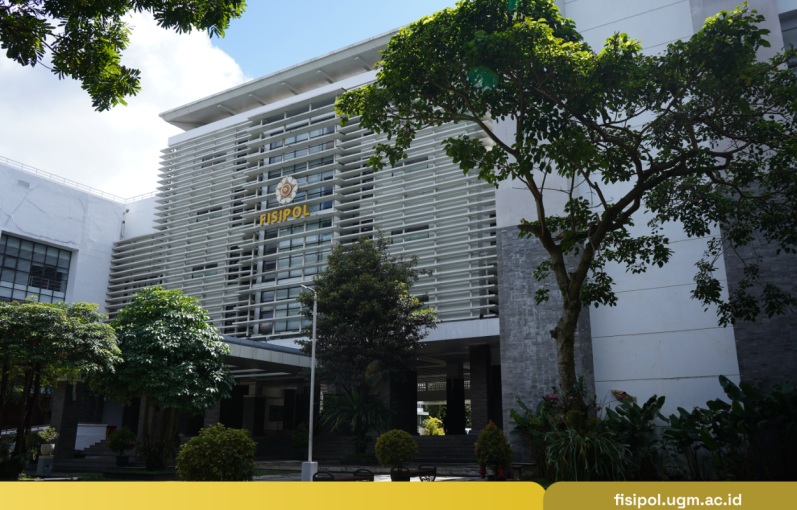
Yogyakarta, July 9, 2026 – The Faculty of Social and Political Sciences (FISIPOL) of Universitas Gadjah Mada (UGM) is preparing to welcome a new leadership transition for the 2026-2031 period. To ensure a democratic and open process, this year’s FISIPOL Dean Selection Committee prioritizes transparency that directly broadens the space for participation, extending even to the student body.
This selection process is overseen by a committee led by Prof. Dr. Wahyudi Kumorotomo as the Chair and Dr. Dian Arymami, S.I.P., M.Hum. as the Secretary. Overall, this selection team was formed in accordance with the university’s mandate and consists of nine members, comprising three professors and six non-professors.
Currently, the contestation has entered the initial stage, namely the opening of registration for prospective dean candidates, which takes place from July 7–18th 2026. If there are no more than three prospective candidates, the registration period will be extended until July 25, 2026. Once closed, the selection committee will conduct an administrative verification of the candidates before advancing to the next stage. Regarding the nomination mechanism, the committee provides quite broad opportunities.
“Open nominations can be made through the head of the department proposing an individual, or self-nomination as long as it meets the requirements. Thirdly, one can be nominated by others, with a minimum of five lecturers, either across different departments or from the same department,” explained the Chair of the Selection Committee, Prof. Kum, when interviewed on Wednesday (8/7).
After the verification stage is complete, the next phases are the actual selection stages: the Public Hearing (Uji Publik), Voting, and the Determination of Three Prospective Dean Candidates for the Rector. The Public Hearing process is a crucial agenda that students should closely monitor. This stage serves as an interactive forum to thoroughly examine the visions, missions, and concrete steps the candidates offer for the next five years. On this stage, the prospective dean candidates will elaborate on their strategies for resolving various issues within the faculty. He also emphasized that this involvement is comprehensive for all campus residents.
“The Public Hearing, intended for an in-depth examination of the prospective dean candidates’ visions and missions, will fully involve the entire academic community within the faculty.”
As a form of transparency, students will also receive a strategic portion of the role. The committee ensures the presence of examining panelists consisting of lecturers (including representatives of young lecturers), administrative staff, and student representatives. This panel team will be the ones delivering questions to the new prospective dean candidates.
“Student representatives are welcome to attend (the public hearing) and one representative from the students will be appointed as a panelist,” he added.
This series of layered selections aims to narrow down the candidates before they are submitted to the Rector.
“The selection of prospective candidates will be carried out through a public hearing, and each individual will show their preference through voting, which will later serve as a guideline to determine the three prospective candidates to be submitted to the university,” explained Prof. Kum. These top three names will later be submitted to the university level, complete with their voting result rankings.
The effort to encourage this open and participatory election process simultaneously represents FISIPOL UGM’s tangible commitment to supporting the Sustainable Development Goals (SDGs), specifically Goal 16 concerning Strong, Inclusive, and Transparent Institutions (Peace, Justice, and Strong Institutions). Through the involvement of all campus elements, the faculty is practicing democratic educational institution governance to create a just academic environment.