
Yogyakarta, August 18, 2026—Marking the start of the Fall Semester 2026/2027, the Department of Politics and Government (DPP) at Universitas Gadjah Mada held a semester-opening public lecture featuring four early-career lecturers who shared the stories behind their respective dissertation research. The event highlighted the research processes undertaken, the findings produced, and the contributions offered to the advancement of knowledge and public policy.
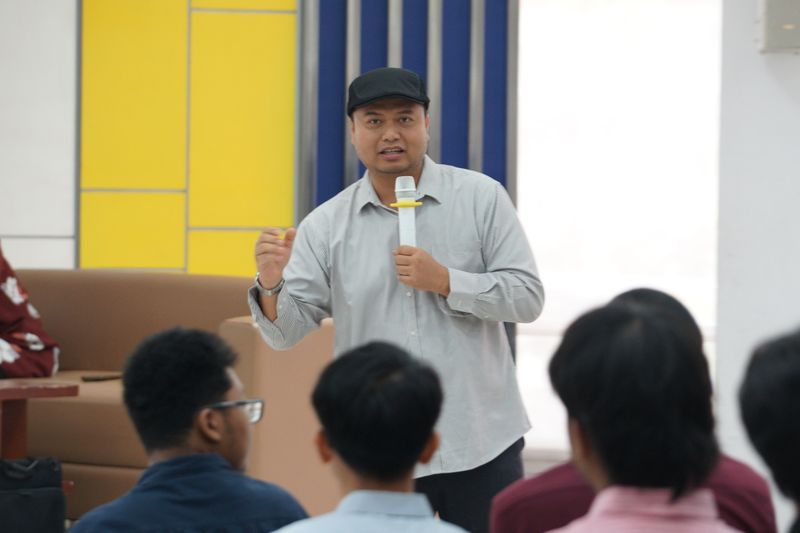
Kicking off the presentations, Dr. A. Sudiana Sasmita outlined his dissertation, which examines the relationship between ethnicity and democracy in West Papua through a comparative case study of South Sorong and Keerom Regencies. His fieldwork findings demonstrate that the relationship between ethnicity and democracy is not necessarily negative—contrary to common assumptions in mainstream political literature. Instead, his research reveals that ethnic politics in West Papua can coexist with democratic participation. “Although transmigrant groups are numerically dominant, they collectively support Indigenous Papuan (OAP) candidates to ensure stability, security, asset protection, and bureaucratic continuity. In return, strategic positions within the bureaucratic hierarchy are made available to non-Papuan migrant groups,” he stated.
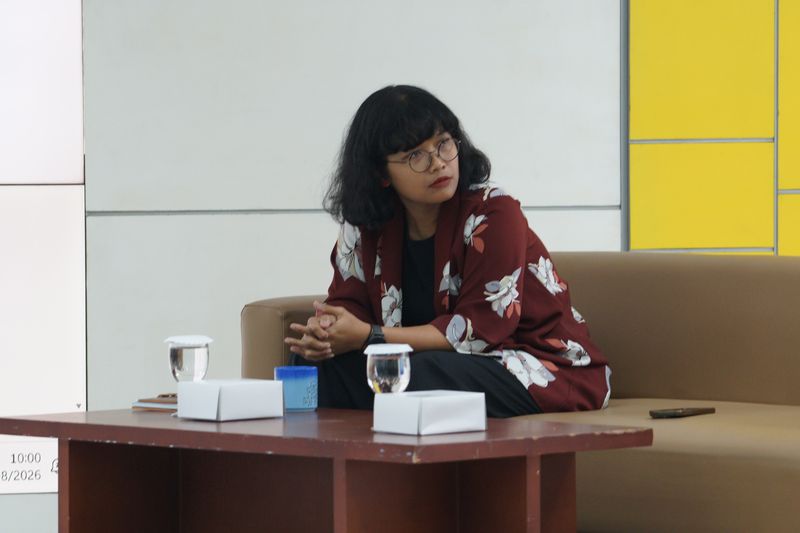
Next, Dr. Primi Suharmadhi Putri presented her dissertation, which focuses on the issue of transparency in natural resource revenue management at the local level. Her key findings emphasize that information disclosure alone is insufficient to drive real change; for transparency to be truly transformative, it must be built upon three simultaneous elements from the outset: information that is accessible and relevant to citizens’ daily needs; space for citizens to take action; and government response mechanisms that endure even amidst leadership transitions. “Transparency initiatives need to be tailored to the spatial and social realities of the local communities they target. They should not simply be designed once and applied everywhere in the exact same way,” she said.
Moving to the third presentation, Dr. Longgina Novita Bayo highlighted women’s political leadership across three regencies in West Timor, East Nusa Tenggara. Her findings reveal that women attain power through diverse pathways—ranging from community activism to state-affiliated women’s organizations—where everyday care practices such as cooking, maintaining a social presence, and communal mutual cooperation serve as sources of tangible political influence. “Women’s political leadership in West Timor should be understood not merely as an individual journey into a pre-existing masculine realm, but rather as the transformation of relational, cultural, material, and affective resources into political authority,” she asserted.
Concluding the series of presentations, Dr. Arya Budi examined the origins of affective attachments to political leaders, drawing examples from supporter unrest in Brazil, the United States, and Indonesia. His findings gave rise to the concept of “Presidential Identification” (Pres-ID)—driven by the leader’s charisma—which influences voting decisions, perceptions, and broader political attitudes. “The relationship between door-to-door campaigning and Pres-ID can only be explained by the proximity of campaigners to the voter; specifically, the voter must be close enough to observe, hear, and witness the presence of these door-to-door campaign activities.”
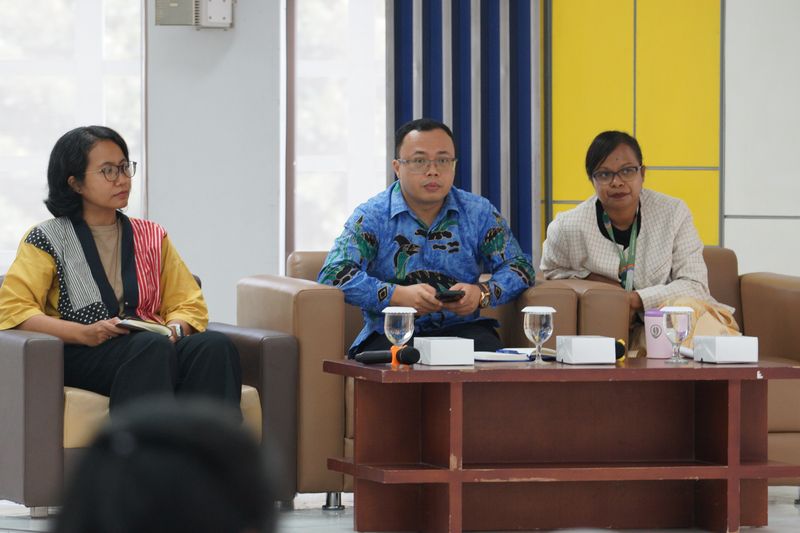
Through this public lecture, the Department of Politics and Government (DPP) at UGM hopes that the research spirit demonstrated by these four young lecturers will inspire the entire academic community—particularly students currently in the early stages of writing their academic papers. It is hoped that students will be motivated to produce work that makes a tangible impact, contributing both to the advancement of political science and to the improvement of democratic policies and practices in Indonesia.