
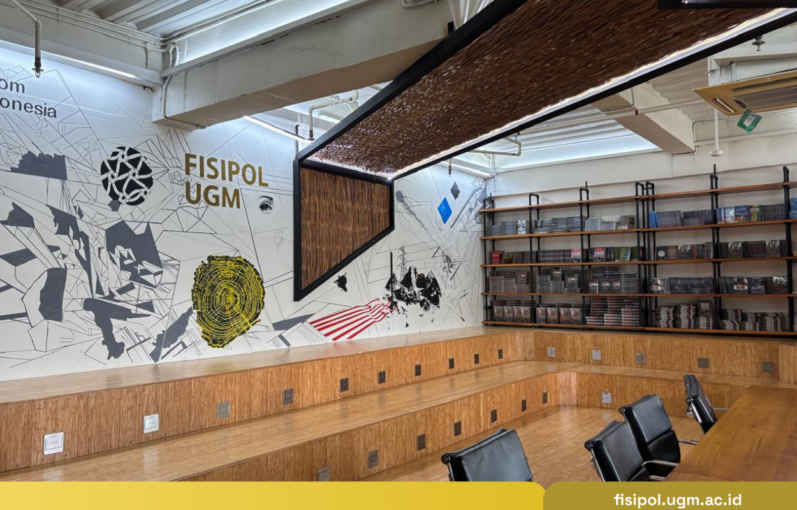
Yogyakarta, September 4, 2026—The use of data in the social sciences has become a necessity amid the explosion of digital information. To address this urgent need, the Faculty of Social and Political Sciences (FISIPOL) at Universitas Gadjah Mada (UGM) has optimized the Big Data Analytics Laboratory as a research center that prioritizes a social data science approach to utilize raw data from the digital realm as the primary tool for interpreting, analyzing, and predicting collective social behavior.
Located on the 4th floor of the BA Building at FISIPOL UGM and managed by the Research Center for Politics and Government (PolGov), this laboratory—established in 2019—was created to shift the paradigm of social research from conventional methods toward an approach grounded in digital empirical evidence. The use of data here goes beyond mere number-crunching; it involves translating patterns of online conversations into scientific findings that comprehensively explain sociopolitical realities.
One concrete example of the use of data in the social sciences can be seen in research surrounding the 2019 Presidential Election. Rather than relying solely on conventional surveys, the lab’s research team utilized conversation data from the social media platform Twitter to gauge public sentiment. Researcher Arya Budi revealed that out of 2,840 identified conversations about abstaining from voting, the use of geospatial data successfully mapped that the main concentration of this issue was on the island of Java. This finding proves that digital data can serve as an accurate, real-time reflection of sociopolitical dynamics.
In 2020, the use of data in the social sciences was once again put to the test through three strategic studies. In research on the handling of COVID-19, the laboratory used data to measure fluctuations in public trust in the government and to assess coordination between the central and regional governments. Meanwhile, a collaboration with the Corruption Eradication Commission (KPK) applied data-driven social network analysis to uncover relationship patterns in natural resource corruption cases. This approach demonstrated that data is not merely a computational tool but a critical instrument for formulating public policies that address governance issues.

Going beyond applied research, the use of data as the backbone of the social sciences is also instilled in students and external stakeholders. As of 2021, the laboratory regularly organizes training sessions and facilitates collaborative research to equip a new generation of social scientists with the skills to transform big data into credible policy narratives. This facility serves as a bridge for students to experience firsthand how raw data—ranging from domestic and international online media to demographic and conflict data—can be transformed into findings with tangible impact.
Staying true to the core principle that data is the cornerstone of understanding reality, the FISIPOL UGM Big Data Analytics Laboratory functions as more than just a computing space. Furthermore, FISIPOL UGM’s digital transformation in response to the high demand for data analysis is a tangible manifestation of SDG 9, which positions innovation and technological infrastructure as the primary foundation for precisely addressing social issues. This laboratory has become a strategic hub in the transformation of digital social sciences in Indonesia, while also reinforcing FISIPOL UGM’s position as a university that is adaptive to technological developments amid the abundance of information in the digital age.