
Yogyakarta, September 24, 2026─Live hosting jobs across various e-commerce platforms are becoming increasingly popular alongside the growth of the digital economy. However, beneath the popularity and claims of flexibility, these workers, particularly women, face layered vulnerabilities. This issue was the main spotlight in the public discussion “Difussion #137: Live Hosts in the Platform Economy: Feminization of Labor and Layered Vulnerabilities” organized by the Center for Digital Society (CfDS) Universitas Gadjah Mada (UGM) in collaboration with Perempuan Mahardhika, broadcast live via the CfDS UGM YouTube channel on Thursday (24/9).
This online discussion featured three main speakers: CfDS Research Officer Ayom Mratita Purbandani, CfDS Research Assistant Aisya Sabili, and Azila, a representative of Keranjang Kuning Perempuan Mahardhika, guided by Gabriella Isabel as the moderator. One of the fundamental issues highlighted in this discussion was the ambiguity of live hosts’ employment status, which is deliberately left in a gray area.
“Working as a live host combines many aspects superimposed into a single role. Ranging from sales, customer service, promotion, entertainment, to content production. Hosts are positioned as sales, talents, influencers, freelancers, or partners,” Ayom explained.
Furthermore, platforms tend to obscure employment status classifications where their activities overlap. Employment status is one of the main issues in platform labor for determining workers’ rights and responsibilities, including access to protection.
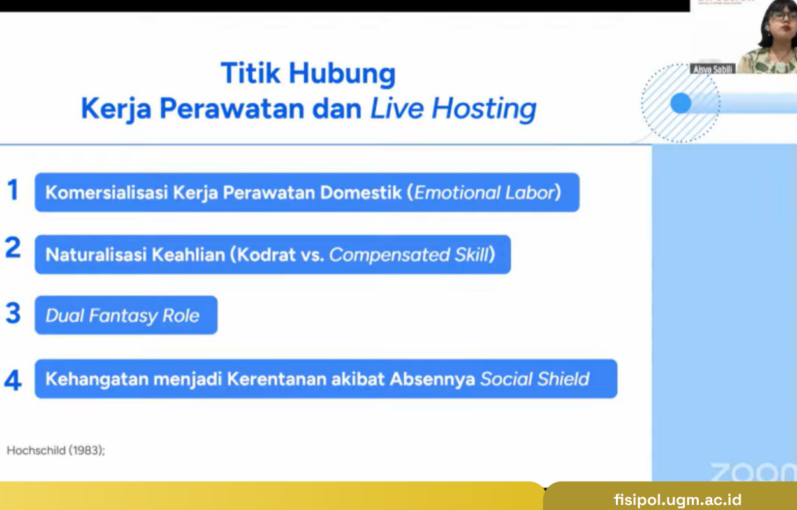
This job is also considered heavily feminized. The platform industry commercializes care work, such as the demand to always be friendly and build emotional closeness (emotional labor).
“Industries like online shops absorb this care work and turn it into a paid performance in live hosting,” Aisya stated. This friendliness and personality are then standardized into metrics based on viewer numbers, key performance indicators (KPIs), and sales targets.
Due to exploitation and the lack of clear employment status, live hosts face threats in the workplace. They must endure strict physical demands amidst inadequate working environments, as well as threats of Online Gender-Based Violence (OGBV) such as verbal harassment, doxing, and stalking. The platform system is perceived to protect the interest of viewer accumulation over guaranteeing its workers’ safety. Therefore, the government is expected to take part in updating policies and implementing fairer platform moderation protocols.