
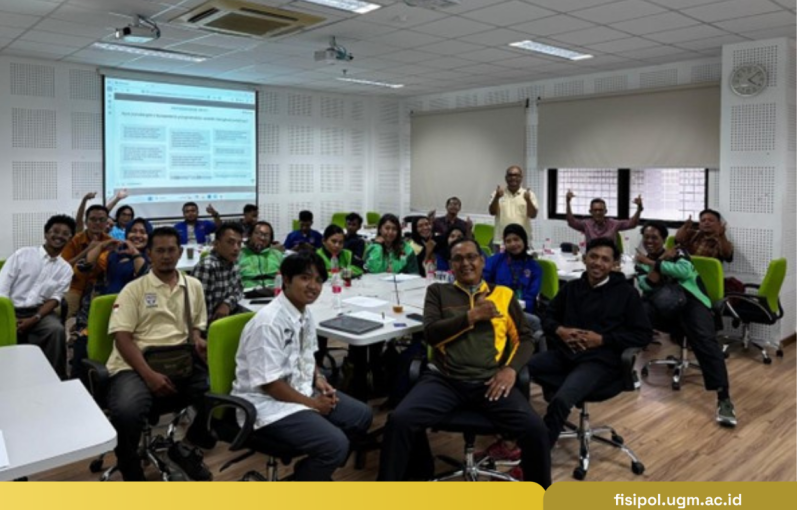
Yogyakarta, April 10, 2026 – The employment landscape in the digital era is now facing new complexities, alongside the increasingly massive intervention of artificial intelligence across various job-providing platforms. Responding to this phenomenon, a lecturer from the Department of International Relations at FISIPOL UGM, Suci Lestari Yuana, held a participatory research training entitled “The Impact of AI on Gig Workers in Indonesia”. This innovative research is part of the UGM EQUITY grant program funded directly by the Indonesia Endowment Fund for Education (LPDP) and simultaneously serves as a continuation of Yuana’s previous research highlighting the issue of AI Colonialism entitled “The Plight of Female Gig Workers in Indonesia”.
The inaugural session of the training was successfully held on Monday (6/4), examining the risks of AI to the conditions of gig workers. The materials discussed in-depth included AI ethics debates, the threat of worker exploitation, up to the risks of privacy vulnerability and data exploitation. The participatory approach in this research was realized by collaborating with three groups of gig workers as co-researchers, namely ride-hailing drivers, freelance photographers, and creative workers. This initial session specifically invited worker communities in Yogyakarta and its surroundings, including Wakanda Yogyakarta, Aliansi Driver Online, Sepeta Indonesia, and the SINDIKASI labor union.
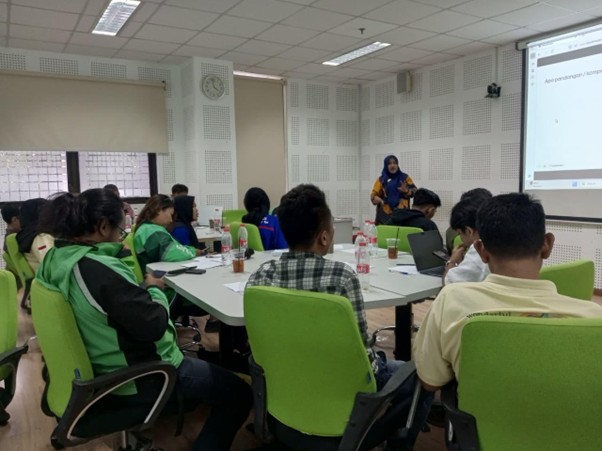
The research team consists of a cross-disciplinary collaboration, including Muhammad Rum (Lecturer of International Relations), Alvi Syahrina (Lecturer of Public Policy and Management), UGM IR Master’s students Faisal Javier and Daru Samudro, UGM IR Bachelor’s student Muhammad Ilyan Faris, and Researcher at the Institute of International Studies (IIS) UGM, Chivalrous Elnatan Nugrajati.
From an International Relations perspective, this study responds to the global conversation regarding the fulfillment of decent work rights for platform workers. Referring to the STAIR (Sciences, Technology, and Arts in International Relations) approach, the existence of AI is now positioned not merely as a passive instrument, but as a non-human entity that has the power to control policies, work relationship patterns, and the gig worker landscape through algorithms. To analyze this, the team adapted the Global Technological Citizenship framework, a consortium idea initiated by Hiroshima University that highlights the four pillars of technological citizen competencies: knowledge, attitudes, skills, and ethics.
From this series of discussions, one of the main concerns that emerged is the tendency for AI development to still be elitist and monopolized by giant companies. This often leads to unilateral algorithmic decision-making that disadvantages workers. Unlike neighboring countries such as Malaysia, Singapore, and Vietnam, which have begun to organize policies on AI governance and gig workers, Indonesia still has significant homework in the regulatory sector.
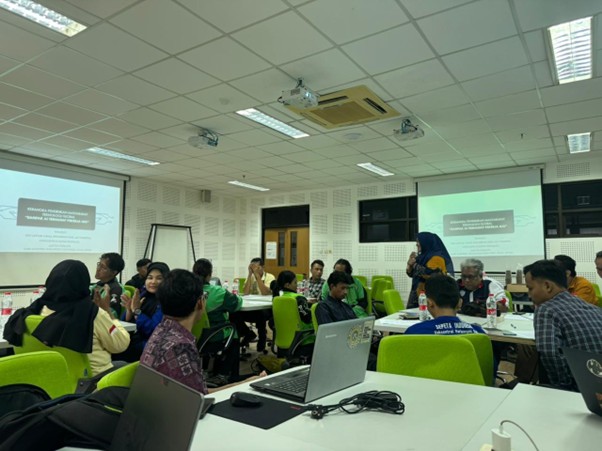
Yuana hope that the results of this research series can become a foundation in drafting national regulations. “In the Indonesian context, the hope is that discussions like this can contribute to policy formulation, either in the form of laws or presidential regulations regarding platform workers, by incorporating the principle of responsible AI. This means that companies need to be responsible for the AI systems they use, including promoting transparency, inclusivity, and preventing exploitative practices,” she said. At the grassroots level, this training is also targeted to multiply workers’ bargaining power when negotiating with platforms.
The series of activities will continue with two additional training sessions on April 15 and 16, 2026, which will specifically involve groups of photographers and creative workers. The research team also widely opens the door for collaboration for communities or institutions that wish to delve into the issue of AI and the fate of gig workers in Indonesia.