Arsip:

News

PPKK FISIPOL UGM Holds BLUD Training to Strengthen ASN Capacity and Accountability of Sarolangun Regency

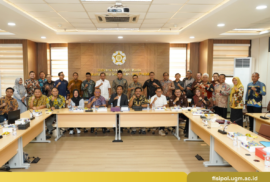
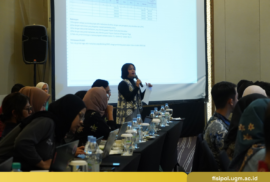
Yogyakarta, June 17, 2026—The Center for Capacity Development and Cooperation of the Faculty of Social and Political Sciences, Universitas Gadjah Mada (PPKK FISIPOL UGM), has launched a training program focused on the preparation of financial reports for Regional Public Service Agencies (BLUD) in health centers for the Sarolangun Regency Government. 

This initiative aims to enhance the capacity of State Civil Apparatus (ASN) and strengthen accountability in local government operations, particularly in managing BLUD finances within health centers. read more

UGM’s Department of Social Development and Welfare Signs Cooperation Agreement with the Prof. Dr. Soeharso Integrated Center in Surakarta

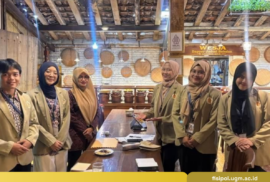
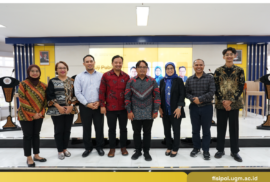
Yogyakarta, June 15, 2026─The Department of Social Development and Welfare (PSdK) of the Faculty of Social and Political Sciences (FISIPOL) of Universitas Gadjah Mada (UGM) signed a Cooperation Agreement (PKS) with the Prof. Dr. Soeharso Integrated Center in Surakarta on Monday (June 15) in the Dean’s Room of the Faculty of Social and Political Sciences and Meeting Room 1 of the PSdK Department.

This activity marks the beginning of a collaboration to develop the PSdK Social Laboratory, which will include a wide range of activities, including capacity building, internships, theses, field lectures, and more. read more

FISIPOL UGM Student Union Releases “Refusing to be Silenced” Statement Amidst Democratic Emergency

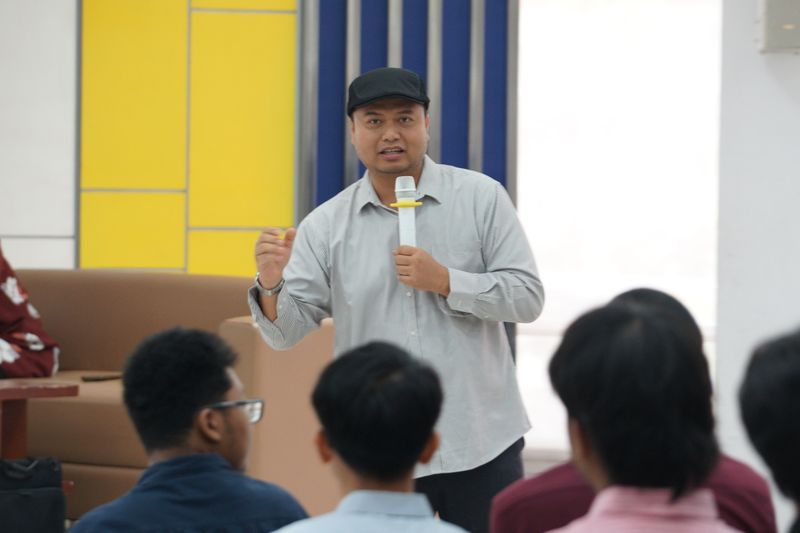
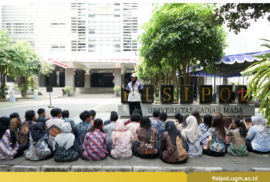
Yogyakarta, June 15, 2026—In response to a national socio-political situation deemed increasingly critical, the FISIPOL UGM Student Union (KM FISIPOL) held a press release reading, a declaration of stance, and a free speech forum at Taman Pintar FISIPOL on Monday (June 15). The rally was marked by the presence of a crowd dressed uniformly in black as a symbol of deep concern.

In its declaration, KM FISIPOL highlighted various crucial issues, pointing to the state’s failure to listen to its people. The primary concerns raised included the weakening of the Rupiah, soaring prices of basic commodities and fuel (BBM), misdirected budget allocations, and the alarming erosion of civilian supremacy following the enactment of the TNI (Military) and Polri (Police) Laws. read more

Expanding International Networks, FISIPOL UGM Holds Visitation and Discussion with IPRC Murdoch University Australia

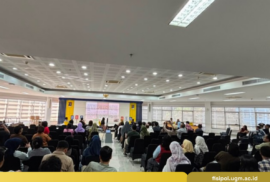
Yogyakarta, June 15, 2026 — The Faculty of Social and Political Sciences (FISIPOL) Universitas Gadjah Mada (UGM) expanded its academic reach at the international level on Monday (15/6) through an event titled “International Visit and Discussion with the Indo-Pacific Research Centre (IPRC), Murdoch University, Australia”. This important meeting was held offline and took place in the Dean’s Meeting Room BB 208, BB Building, FISIPOL UGM.

This activity served as a crucial momentum for both parties to understand each other’s research ecosystems while formulating various potential collaborations, particularly in responding to the socio-political dynamics in the Indo-Pacific region. To ensure the discussion ran comprehensively and on target, the series of events on that day was divided into two main, continuous sessions. read more

Weaving Scientific Dialogue: JSP FISIPOL UGM as a Facilitator of Social-Political Interaction and Thought Update

Yogyakarta, 14th of June 2026—the Faculty of Social and Political Sciences at Gadjah Mada University (FISIPOL UGM) hosted an event aimed at facilitating interaction, discussion, advocacy, and the updating of ideas among social and political scientists in Indonesia through the Journal of Social and Political Sciences (JSP). This scientific journal has been published regularly since July 1997, serving as a platform for researchers and practitioners to share their insights and findings.The JSP is published three times a year, in March, July, and November, and features articles that undergo a rigorous peer review process. This ensures that the content is not only original but also of high academic quality. The journal has become a vital resource for scholars, policymakers, and students interested in contemporary social and political issues. read more

Creating a Safe Space for Survivors, the FISIPOL Crisis Center Holds a Workshop “Harmony of Colors, Healing Together”

Yogyakarta, June 13, 2026—As a concrete demonstration of the institution’s commitment to creating a safe, inclusive, and non-violent campus environment, the Faculty of Social and Political Sciences (FISIPOL) at Universitas Gadjah Mada, through the FISIPOL Crisis Center (FCC), successfully held a workshop entitled “Harmony of Colors, Healing Together.” The event, which took place on Friday (June 5) in Room BA 113 of FISIPOL UGM, was specifically designed to provide a safe space for student survivors of violence to express themselves and support their recovery process. read more

FISIPOL International Short Course (FISCO) 2026 Presents a Blend of Digital Transformation Studies and Local Cultural Exploration

Yogyakarta, June 12, 2026 — The Global Engagement Office (GEO) of FISIPOL UGM is once again hosting the Faculty of Social and Political Sciences International Short Course (FISCO) 2026. Taking place over two weeks from June 8 to 19, 2026, this program highlights contemporary Indonesian issues emerging amidst digital transformation.

Held using a hybrid method that combines online and offline attendance, FISCO 2026 has successfully attracted the interest of 56 applicants from both within the country and abroad, with several specific requirements. For Indonesian citizens, this program is open exclusively to FISIPOL UGM students. read more

FISIPOL UGM Collaborates with the National Economic Council to Develop a Policy Paper on the “South-South Transition Minerals Learning Cohort”

Yogyakarta, June 11, 2026─The Faculty of Social and Political Sciences (FISIPOL) UGM hosted a national-level Focus Group Discussion (FGD) on June 11-12, 2026, with the agenda “Data and Information Gathering for the Preparation of the Policy Paper ‘South-South Transition Minerals Learning Cohort’.” This event was initiated by the National Economic Council of the Republic of Indonesia in collaboration with the Department of Politics and Government, FISIPOL UGM, represented by two department lecturers, Hasrul Hanif and Primi Suharmadhi Putri. read more

The FISIPOL UGM Creative Hub, in Collaboration with UNSW and the University of Leipzig, Engages Residents of Terban in Observing Sustainable Waste Management

Yogyakarta, 8 June 2026─The Creative Hub of the Faculty of Social and Political Sciences at Universitas Gadjah Mada (FISIPOL UGM), together with partners from the University of New South Wales (UNSW) and the University of Leipzig, conducted an observation and mini-fieldwork study on waste management in RW 05, Terban Village, Gondokusuman, Yogyakarta City.

Indonesia faces challenges in waste management, with a national waste production volume of 23.9 million metric tons per year, 65.45% of which remains poorly managed due to low community participation. The Terban area, located not far from the UGM campus, faces similar issues and was therefore selected as a living laboratory for circular economic transformation through the development of the Gebrak Sampah Ecosystem. read more

Upholding Integrity, Organizers of UGM Entrance Exam CBT 2026 at FISIPOL Ensure a Fair and Smooth Process

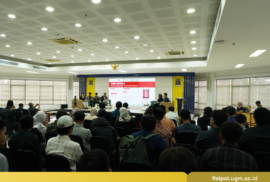
Yogyakarta, June 8th, 2026─In the midst of fierce competition for admission to state universities, the Computer Based Test (CBT) for the Universitas Gadjah Mada (UGM) Entrance Exam 2026, attended by 44,972 participants, emphasizes not only academic skills but also a commitment to a fair and integrity-driven process. This commitment was reaffirmed by the organizers at the faculty level, particularly at the Faculty of Social and Political Sciences (FISIPOL) UGM.

Dr. Pradhikna Yunik Nurhayati, the person in charge of the UGM CBT location at FISIPOL UGM, explained that thorough preparations were made to ensure the exam was conducted fairly and credibly. From training sessions, mentoring, to technical coordination, all staff members were equipped with a comprehensive understanding of what is permissible and what is not. read more