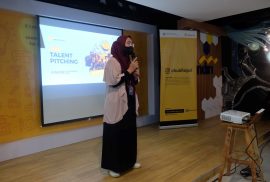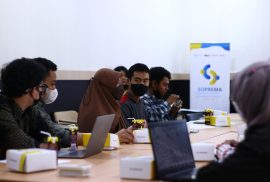
Yogyakarta, September 9th 2022─Entering the seventh year of the event, the Young Indonesian Sociopreneur (SOPREMA) FISIPOL UGM was held again with the theme “#7TahunSOPREMA: Recover Together, Recover Stronger, Rise with Sociopreneur”.
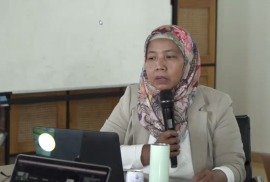
“Through the holding of SOPREMA FISIPOL UGM 2022 this year, it is hoped that it can encourage the revival of the economy and social businesses which has been sluggish in recent years due to the pandemic,” said SOPREMA Managing Director, Hempri Suyatna.
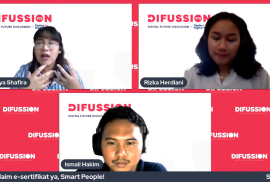
Seeing the current pandemic situation that can be controlled, the SOPREMA 2022 series of events will be held in a hybrid (mixed online and offline) manner, one of which is the Incubation program. This incubation program is a tangible form of SOPREMA Fisipol UGM’s commitment to continue to develop the potential of social entrepreneurship by providing assistance to young sociopreneurs.