
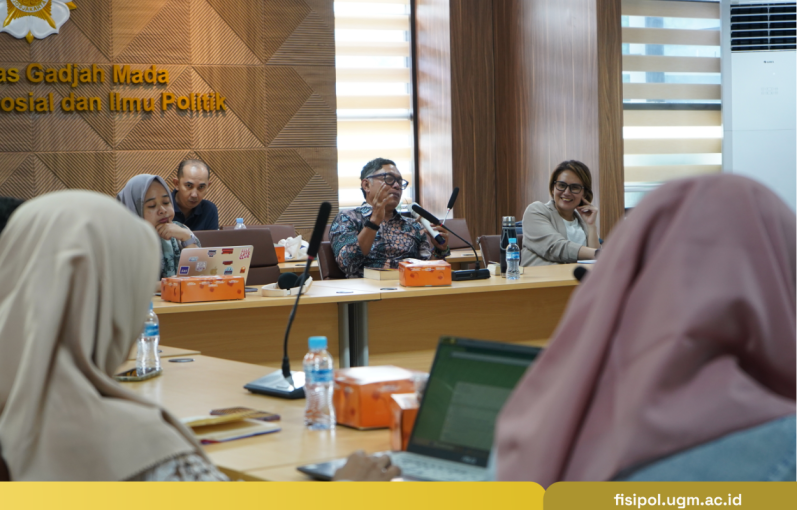
Yogyakarta, April 17 2026 – Field research often presents the greatest challenges and the most valuable experiences for social scientists. To equip and inspire its researchers, the Faculty of Social and Political Sciences (FISIPOL) at Universitas Gadjah Mada (UGM) organized a strategic academic agenda as part of its visiting scholar program. On Friday, April 17, the faculty held a methodology workshop titled “Doing Field Research in Southeast Asia” in the Dean’s Meeting Room.
This event, aimed at faculty members and doctoral students, featured Dr. Priyambudi Sulistiyanto, an Adjunct Senior Lecturer at Flinders University, Australia. While the previous session focused on comparative study approaches, this workshop specifically delved into the practical aspects, methodological tactics, and the art of survival during field research. The activity was designed to ignite the spirit of young researchers on campus, encouraging them to step out of their comfort zones and directly uncover the realities of the regional landscape.
Dr. Budi, as he is affectionately known, persuasively urged participants to take advantage of Indonesia’s geographical advantages and the current ease of mobility. “My goal in conducting this workshop is to encourage friends, while you are still young, while there are many budget airlines, and while you have the opportunity to live in Southeast Asia. You can join funding schemes or seek funding to visit those sites,” he stated before the participants. According to him, the increasingly open access should be optimally utilized by Indonesian researchers not only to be subjects of study but also to become key actors researching the dynamics of neighboring countries directly.
In his presentation, Dr. Budi invited participants to explore the true dynamics of field research through various stories and personal experiences. Years of conducting research in diverse countries with varying political and cultural landscapes have undoubtedly provided him with knowledge rarely found in conventional methodology textbooks. Researchers are tested to be flexible in facing real challenges, ranging from language barriers, local bureaucratic permissions, to the fluid social dynamics of grassroots communities.
The relevant and down-to-earth presentation sparked extraordinary enthusiasm among the attendees. Doctoral students and faculty members actively engaged in dialogue, dissecting various specific obstacles they were currently facing or might encounter in their respective research. The discussion flowed dynamically, covering topics from strategies for building trust with key informants to mitigation steps when encountering dead ends in the field. Through this methodology workshop, FISIPOL UGM reaffirmed its commitment to producing a generation of social researchers who are not only conceptually robust on paper but also brave and agile in exploring the vast research terrain in Southeast Asia.
In summary, the “Doing Field Research in Southeast Asia” workshop served as a vital platform for young researchers to enhance their methodological skills and embrace the challenges of fieldwork. FISIPOL UGM continues to play a pivotal role in shaping the future of social research in the region, ensuring that cultural diversity and sustainable education remain at the forefront of academic endeavors.