
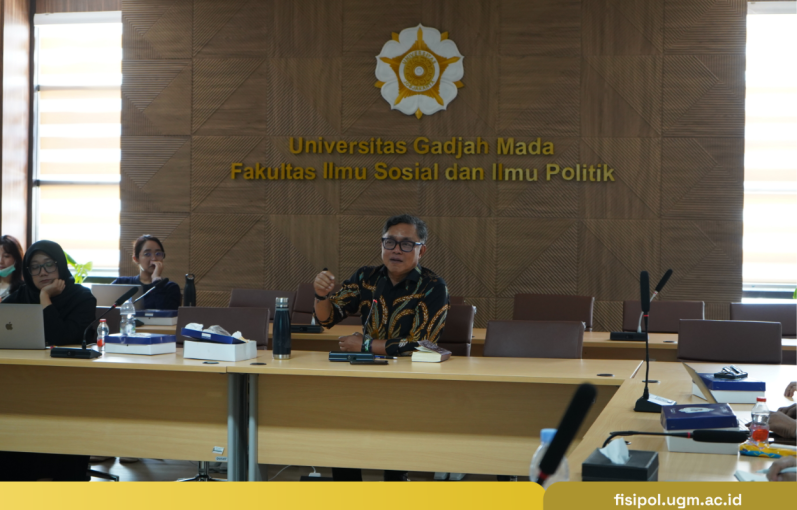
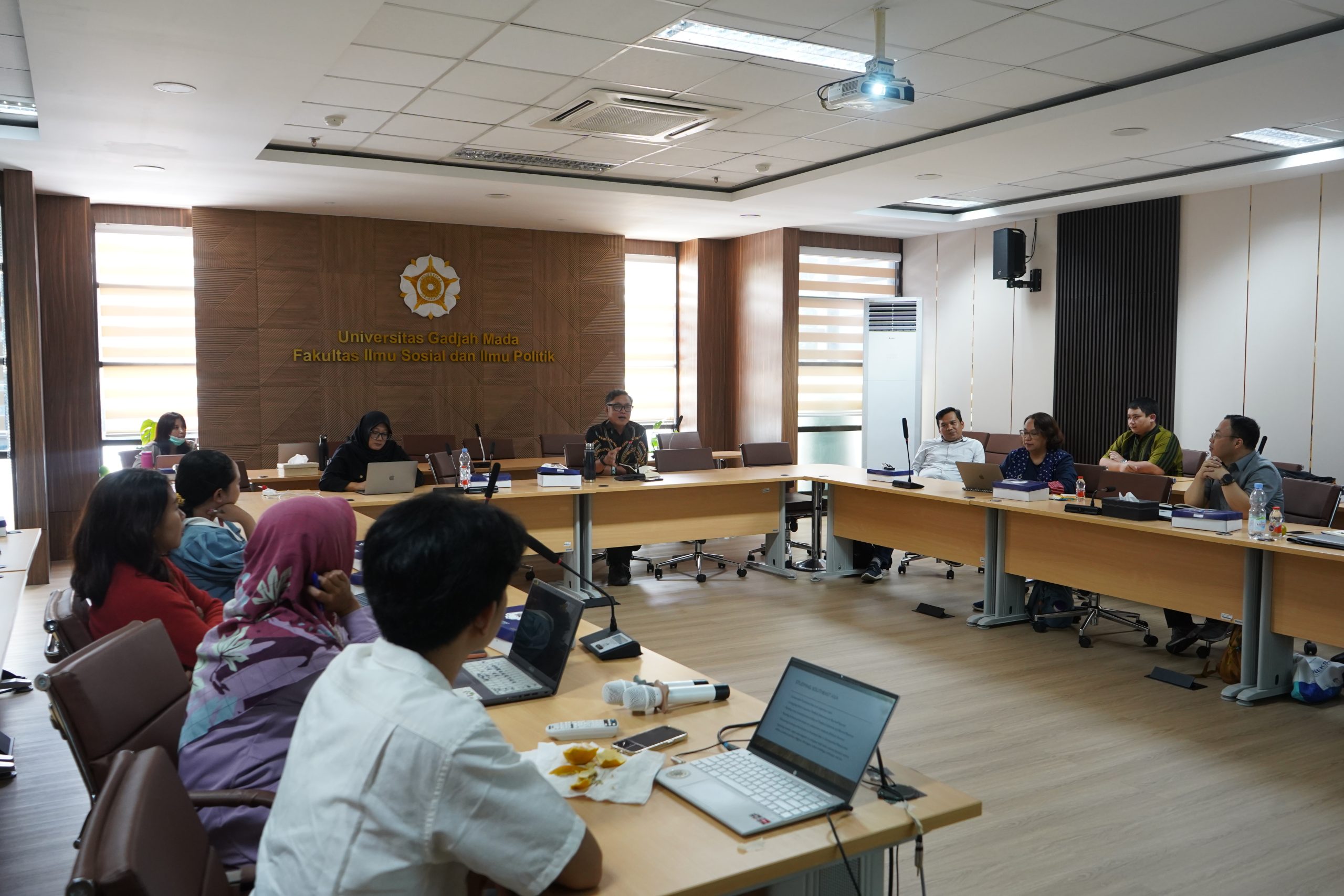
Yogyakarta, April 16, 2026 – The Southeast Asian region continues to be a dynamic and complex area of study for academics. To strengthen the methodology and depth of analysis regarding this region, the Faculty of Social and Political Sciences (FISIPOL) at Gadjah Mada University (UGM) held a workshop titled “Comparative Southeast Asia” on Thursday, April 16. This event took place in the Dean’s Meeting Room BA 201 and featured Dr. Priyambudi Sulistiyanto, an Adjunct Senior Lecturer from Flinders University, Australia, as the speaker.
This workshop is part of a series of Visiting Scholar events that have been ongoing since March 30 and will conclude on April 21, 2026. The purpose of this program is to reinforce the study of social and political issues in Indonesia and Southeast Asia through knowledge exchange among academics. “This time, I want to share reflections on what I have been working on for about 30 years since my field research and subsequent publications,” Dr. Budi stated. He emphasized that the workshop would delve into his research journey in the region.
The event was met with enthusiasm and attended by doctoral students, faculty members, and researchers within the faculty. The presence of the expert, affectionately known as Dr. Budi, opened valuable discourse, especially for doctoral students who are refining their research designs and theoretical frameworks. In his presentation, Dr. Budi not only dissected theoretical concepts but also shared reflections from his life journey while conducting research in Southeast Asia. He highlighted how three countries like Indonesia, Thailand, and Burma (Myanmar) responded to historical turbulence, examining the similarities and differences during the political and economic crises that shook the region in 1997. This critical approach ultimately led to novelty in his works. “My contribution lies in comparing three countries with strong military traditions,” Dr. Budi explained, clarifying the unique position of his research within the current Southeast Asian studies literature.
Beyond merely presenting academic data, Dr. Budi also shared the human side of the knowledge-seeking process. The ups and downs of his fieldwork journey were beautifully captured in his writings. This culminated in the publication of his book titled ‘Melawat ke Asia,’ which he described as a personal and academic reflection of his dedication to regional studies. Regarding the formulation of methodology, Dr. Budi emphasized the importance of researchers being critical and discerning. He reminded attendees that comparative studies cannot rely solely on a single scenario or theory that oversimplifies issues. Researchers are required to be astute in interpreting the intersections of similarities and differences in the phenomena they study.
The insightful presentation sparked a lively discussion. The event continued with an interactive Q&A session, where participants exchanged critical views on the future of democracy and civil-military relations in Asia. Through this visiting scholar program, FISIPOL UGM remains committed to broadening the horizons of its academic community, enabling the production of regionally dimensioned studies with sharp analytical tools.
In line with the Sustainable Development Goals (SDGs), particularly access to education and cultural diversity, this workshop exemplifies FISIPOL UGM’s commitment to fostering an inclusive academic environment. By inviting international scholars like Dr. Budi, the faculty not only enhances educational access but also enriches the cultural diversity of academic discourse. The workshop serves as a reminder of the importance of collaborative learning and the sharing of diverse perspectives in understanding the complexities of Southeast Asia. As the region continues to evolve, the insights gained from such workshops will undoubtedly contribute to a more nuanced understanding of its socio-political landscape.