Arsip:

SDGs 13: Climate Action

IIS MONTHLY REVIEW ISSUE #3 IS OUT NOW

The third edition of IIS UGM’s Monthly Review is here, bringing you fresh insights and the latest knowledge!

Featured articles in this issue include:
When Vietnam’s Lotus Blooms in BRICS Water (Christopher Paller Gerale, Universitas Negeri Malang)
The Structural Crisis Behind Bangladesh’s 2024 Student Protest (Allene Florence Fadhilah Darmawan, Department of International Relations UGM, 2023)
The Making of Macan Asia in A Shifting Western Geopolitical Landscape (Aminah Rafa, Department of International Relations UGM)
Indonesia’s Dilemma Between Nickel Extraction and Biosphere Preservation (Paramasatya Rakha Abiyoga, Department of International Relations UGM) read more

Climate Finance in the Hands of Politics: When the World’s Promises Are Decided by Elections

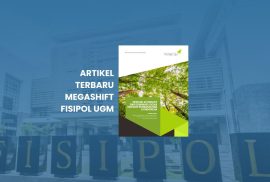
Latest Article on Megashift FISIPOL UGM
“Rethinking the Architecture of Climate Finance: How Political Discretion Undermines Global Commitments”
By: Meilisa Anggraeni

Megashift FISIPOL UGM has released another thought-provoking and timely article, this time spotlighting global climate finance, which is under immense pressure due to the shifting tides of international politics. In her piece, “Rethinking the Architecture of Climate Finance,” author Meilisa Anggraeni examines how climate funding pledges from developed nations often weaken — not because of technical or economic constraints, but due to the political choices of their leaders. read more

PIONIR Society 2025 Officially Opens: Igniting the Spirit of “Gerak Bara Arunika” at FISIPOL UGM

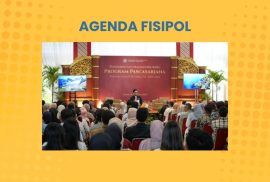
Yogyakarta, 6 August 2025 — A total of 627 new students from across Indonesia officially joined the opening of PIONIR Society 2025, held at the West Hall of FISIPOL UGM. This year, PIONIR Society carries the theme “Gerak Bara Arunika”, symbolizing the spirit of being not only a light for oneself but also a source of tangible benefits for society and the surrounding environment.

The opening ceremony was marked by the symbolic distribution of tumblers to six student representatives from each department, underscoring the faculty’s commitment to the Green Society movement. The program continued with the ceremonial lighting of the “Dawn of the Journey”, representing the first steps of the new students (Gamada) in their academic and personal development journey at FISIPOL UGM. read more

UGM Faculty of Social and Political Sciences Distributes 627 Free Tumblers to New Students

Yogyakarta, August 6, 2025—As part of its green campus commitment, the Faculty of Social and Political Sciences (FISIPOL) of Gadjah Mada University (UGM) distributed free tumblers to 627 new students on Wednesday (6/8). The tumbler distribution ceremony, part of the PIONIR SOCIETY 2025 opening ceremony, was presented directly by the Dean of FISIPOL UGM, Dr. Wawan Mas’udi, to six new student representatives from each department.

In his remarks, Wawan conveyed this effort as a form of the faculty’s contribution to creating an environmentally friendly campus environment. “This is one form of FISIPOL’s commitment to creating a sustainable campus environment,” he explained. read more

Megashift FISIPOL UGM Publishes New Article: Challenging the Dominance of Economic Logic in Indonesia’s Development

Megashift FISIPOL UGM has released a new article titled “Seeking Alternatives to the Dominance of Economic Logic in Indonesia’s Development.” The piece offers a critical reflection on Indonesia’s national development agenda, which has long been centered on economic growth, investment, and macro-financial indicators.

The article emphasizes the importance of pursuing alternative development approaches that prioritize social welfare and environmental sustainability. Rather than relying solely on economic logic, it advocates for an integrative approach that incorporates social values, local wisdom, and participatory democracy into policy formulation. read more

Soft Launching of KHDTK Book: Reflections on Social and Ecological Collaboration in Forest Areas

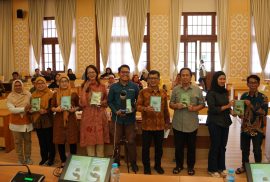
Yogyakarta, July 17, 2025 — Universitas Gadjah Mada (UGM), through the Faculty of Social and Political Sciences (FISIPOL), officially held the soft launching of the book “Community Empowerment and Sustainable Partnership: Experiences and Reflections of Working with Communities in the Special Purpose Forest Area (KHDTK) Blora–Ngawi” on Thursday afternoon at Multimedia Room 1, UGM Rectorate Building. This book serves as a reflective and scholarly documentation of UGM’s long journey in community-based forest management since 2016. read more

Faculty of Social and Political Sciences UGM and Gaziantep University Launch Free Online Class

Yogyakarta, July 16, 2025─The Faculty of Social and Political Sciences (FISIPOL) of Gadjah Mada University (UGM), through the Academic Innovation Unit (UIA), is launching a free online class titled “Sustainable Transformation Towards Global Multifaceted Issues” on the FISIPOL Online Campus (FOCUS) website. This class is a product of a collaboration between FISIPOL UGM and Gaziantep University, and is supported by the Erasmus+ Project 2025.

Using English as the course language, this class aims to foster critical understanding in formulating inclusive and sustainable development strategies. addresses three main themes: industrial transformation in global production networks, sustainable food systems amidst multiple crises, and the green transition in Europe and its global implications. Participants will learn how global changes such as industrialization, climate and food crises, and environmental policies are reshaping urban spaces, local food security, and socio-economic policy directions. With case studies from Europe, Turkey, and Southeast Asia, the course fosters a critical understanding across diverse contexts and promotes academic collaboration in developing inclusive and sustainable development strategies. read more

[Call for Articles] – Megashift FISIPOL UGM Open for Submissions Throughout 2025

Are you passionate about writing and interested in issues related to digital transformation? We invite you to contribute your ideas and submit your articles to be published on the Megashift FISIPOL UGM website! ☺️

Important Notes:

Detailed submission guidelines and suggested subtopics are clearly outlined in the official poster.

This call for articles is open year-round, with no submission deadline.

Articles should be no longer than 1,000 words, including references.

Submissions must include citations from publications, journals, or books written by FISIPOL UGM lecturers or researchers. read more

[Call for Abstracts Invitation] – Go South 2025

We would like to invite you to the 2025 Annual Convention on the Global South, organized by the Institute of International Studies (IIS), Universitas Gadjah Mada (UGM). This year’s convention will be held in person in Yogyakarta, on October 1st – 2nd, 2025. 

GO SOUTH 2025’s theme is “70 Years Bandung Spirit: Re-invigorating Decolonial Struggle amidst Geopolitical Turbulence.” It seeks to foster discussions and debates on the dynamics of the Global South, 70 years after the Bandung Conference. As material conditions of the Global South countries have changed and new global-regional powers have emerged, how can such a global emancipatory project be reinvigorated? How can imaginaries of the Bandung Spirit be expanded, to project ideas for a just and peaceful world order amidst current geopolitical turmoils? This forum provides platforms for academics, policymakers, and the general public to connect, collaborate, and interact with peers with regards to the above questions. read more

Indigenous Papuan Women: Forest Guardians Amid Structural Inequality

MEGASHIFT, a publication initiative by the Faculty of Social and Political Sciences (FISIPOL) Universitas Gadjah Mada, has released its latest feature article highlighting urgent socio-political issues in Indonesia. Titled “Indigenous Women and the Politics of Periphery in Forest Conservation in Papua”, the article by Halimatu Sa’diah sheds light on the structural injustices faced by Indigenous Papuan women in their struggle to protect ancestral forests.

The article critically explores how Indigenous women—often positioned at the margins of state power—play a crucial role in forest conservation through their deep-rooted local knowledge. Through the lens of periphery politics, Sa’diah analyzes how centralized governance in Java, industrial expansion, and the inadequate legal protection for Indigenous communities have systematically marginalized women, both economically and socially. read more