

Yogyakarta, April 24, 2026─The Faculty of Social and Political Sciences (FISIPOL) of Universitas Gadjah Mada (UGM) reaffirmed its tridarma (three pillars of higher education) commitment by organizing the “Dissemination of FISIPOL Volunteer Documentation in Aceh and IKN”. Held on Friday (24/4) at the 4th Floor Auditorium of FISIPOL UGM, this forum was designed as a space to share experiences and findings during the community service and research periods of students who plunged directly into responding to environmental crisis issues in the community.
The event featured presentation sessions from two volunteer delegations. The first session was delivered by representatives of the Fisipol Mengajar (Fisipol Teaches) team, namely Rodrigo, Harry, and Adit. They shared portraits of three areas in Central Aceh Regency (Ketol, Bintang, and Pantan Nangka) after being hit by flash floods in November 2025, which devastated the foundations of residents’ lives overnight.
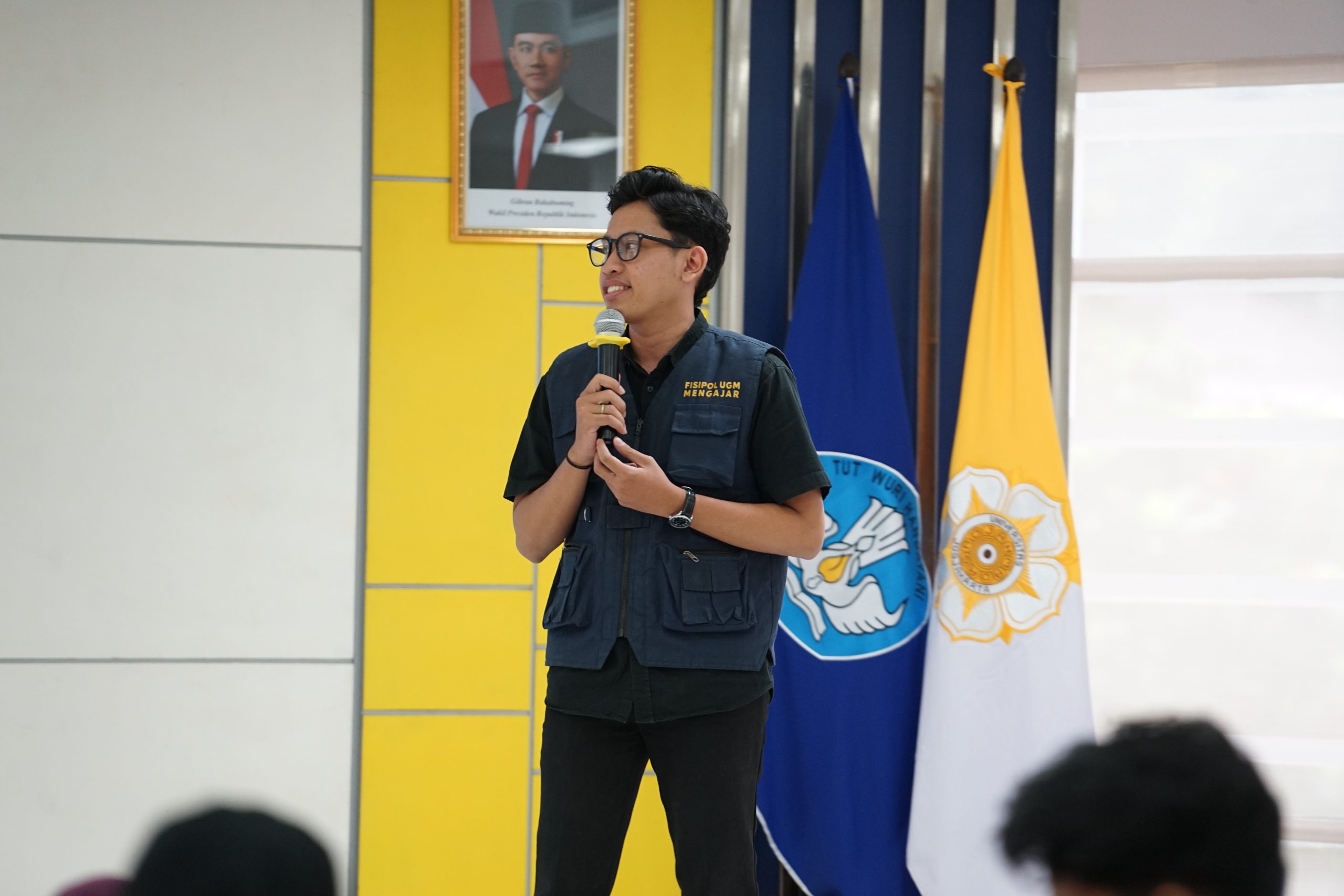
Describing the psycho-social impact of the crisis, Harry, a Public Policy and Management (MKP) student, shared his story, “This disaster is 4x larger than the 2004 Aceh disaster. Statistically, 2004 was indeed worse, but the narratives mentioned show that the community’s life has turned into a prolonged uncertainty for a very long time.”
This statement implies that the numbers of physical losses do not always align with the inner wounds of the survivors. Although the 2004 tsunami was more destructive, the recent disaster triggered trauma and a loss of the community’s sense of security regarding their future, which feels suspended and uncertain. They focused not only on children’s education but also on the condition of education personnel, namely teachers, who were also victims of the disaster.
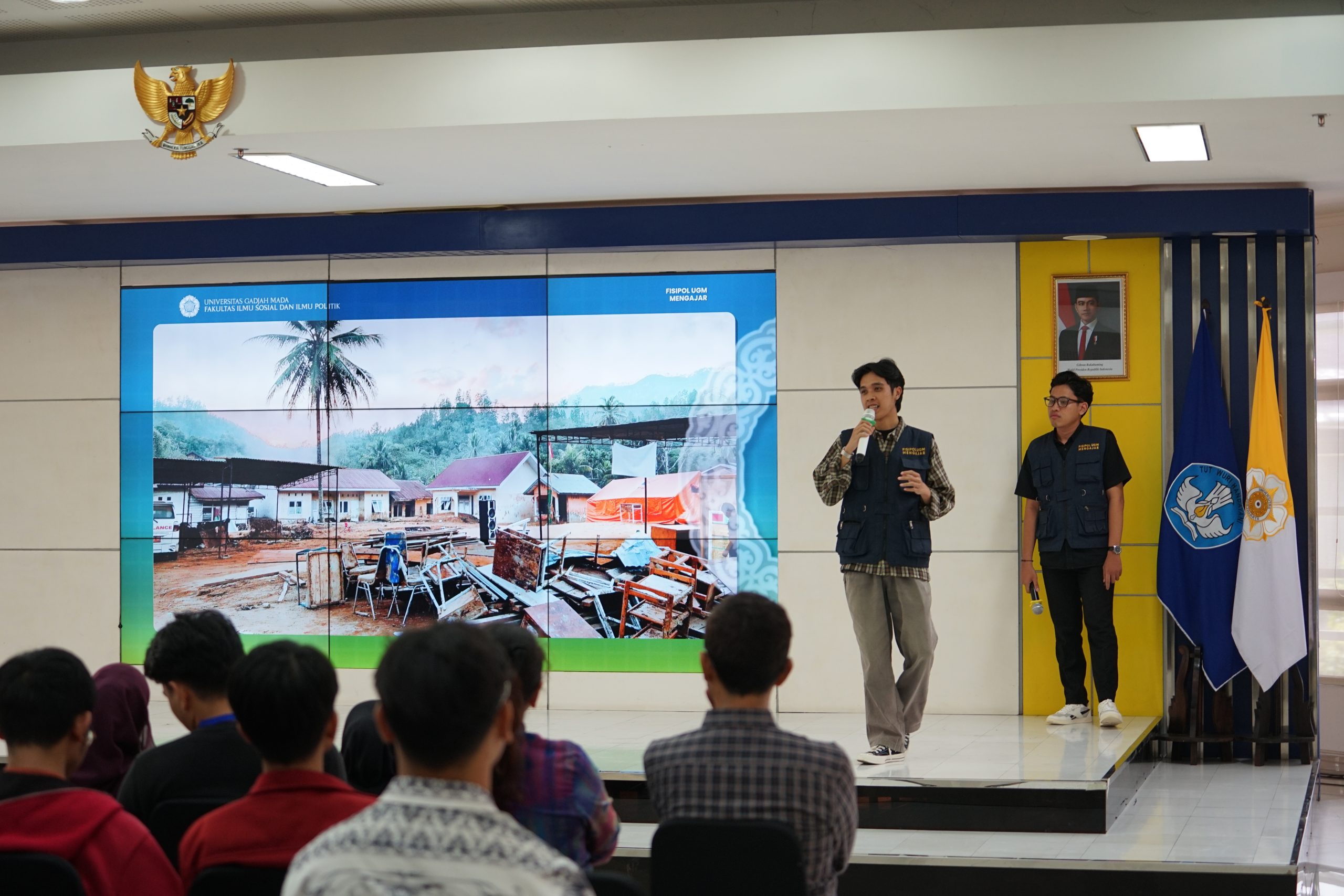
As a closing reflection, they stated, “Keep in mind that the condition of Aceh today is still not fine. Their schools and physical buildings may be destroyed, but remember that we agree education must still be accessible to every child. Because the best investment is no longer about how buildings can stand firmly, but rather through flexible curriculum policies capable of sustainably supporting the lives of post-disaster communities,” he concluded. This sentence shows that the essence of disaster education lies in adapting learning systems and curricula that are empathetic to victims’ trauma and sensitive to environmental situations and conditions, thereby serving as a provision for survivors to rebuild their lives.
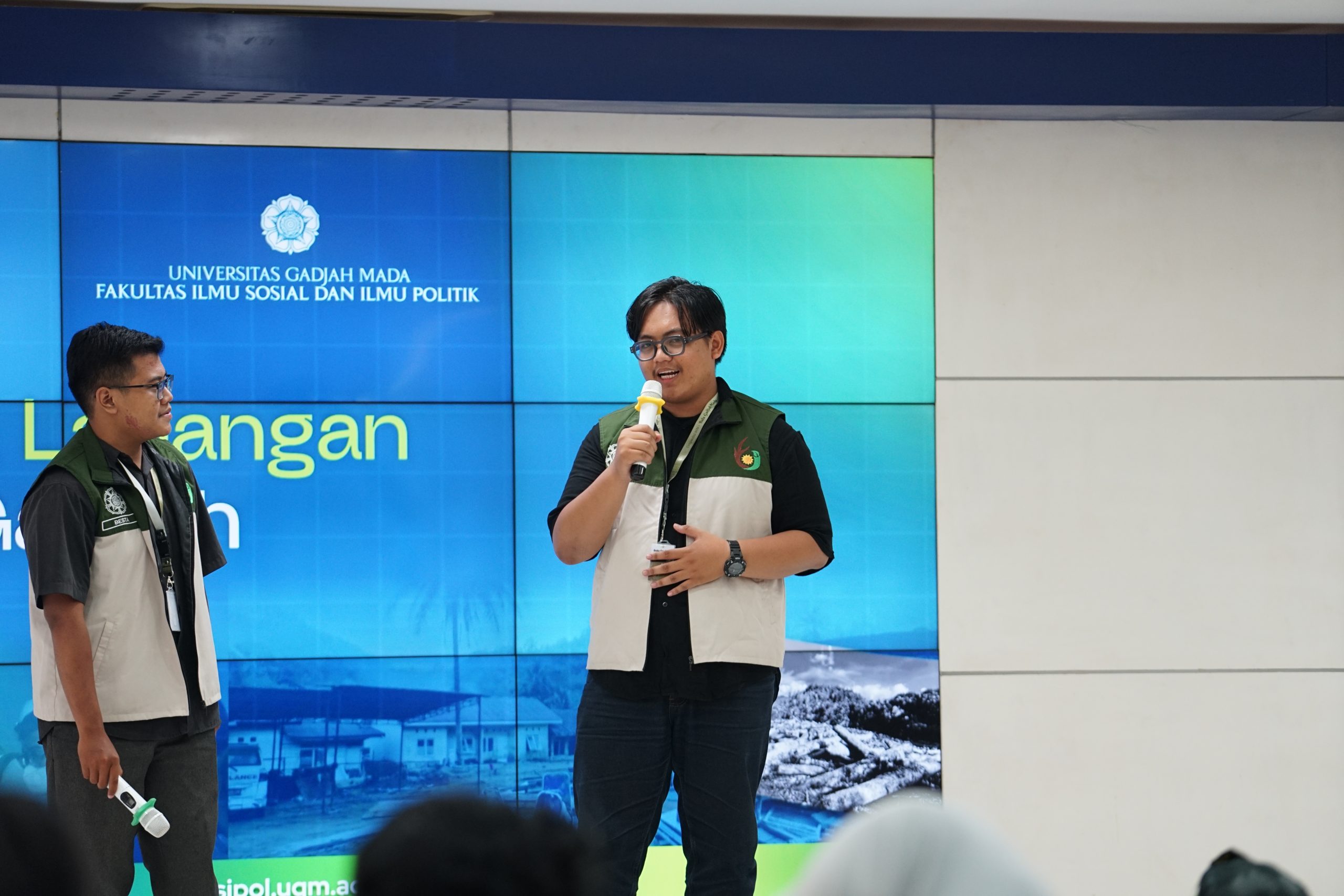
Moving on to the second session, representatives of the Bala Gadjah Mada team dissected their expedition report in the Nusantara Capital City (IKN), which took place from January 26 to February 10, 2026. The community service action focused on ecological activism in three locations, covering 3R waste management education, training on making lodong fertilizer from kitchen waste, and the initiation of a Waste Bank with 20 members in RT 07 of Bumi Harapan. To support this system, the team also donated infrastructure in the form of trash bins and one unit of a bottle house.
In the research agenda, the team analyzed the high-tech Integrated Waste Management Site (TPST) system in IKN. The analysis produced a policy brief with three recommendations: (1) the inclusive development of a green city based on justice, (2) the optimization of the TPST as a space to manifest ecological ideals, rather than merely a physical facility, and (3) government program execution must develop the community’s mindset, rather than just fulfilling bureaucratic obligations.
The highlight of the event was an interactive talk show session featuring cross-sectoral discussions. This session presented three experts as speakers: Dr. Thomas Umbu Pati Tena Bolodadi, M.Si. (Deputy for Development Control of the IKN Authority), Erwan Widyarto (Secretary of the DIY Waste Bank Association), and Rifka Agnes, S.Pd. (Chairperson of KOPHI Yogyakarta). The event was guided by moderator Nur Azizah, S.I.P., M.Sc.
In his presentation, Thomas confirmed that the IKN TPST now accommodates a capacity of 70 tons of waste per day. To balance this, the government, through the Regulation of the Head of the IKN Authority (Perka OIKN) Number 10 of 2025 concerning the implementation of waste management, imposes a fine of IDR 1 million for cleanliness violators. Explaining the vital role of citizens, Thomas stated, “Today, our team is conducting education with the community regarding waste sorting. Because our machines will only process waste if the waste is already sorted properly. For this, we are collaborating with village and sub-district governments to educate residents,” he said. This presentation makes it clear that even sophisticated TPST infrastructure demands responsible consumption patterns and waste management right from the source. This system requires sorting discipline from the household scale, so strategic partnerships with village officials through continuous education become the main key in realizing an urban and residential order that is resilient, adaptive, and sustainable. Thus, this event is expected to awaken our concern to be more sensitive to environmental conditions in Indonesia, ranging from post-disaster recovery to waste emergencies that potentially threaten the environment.