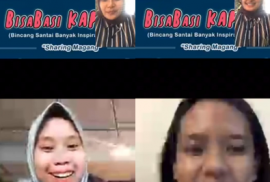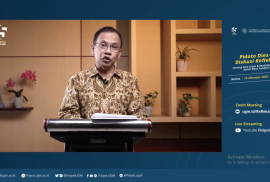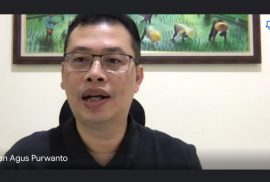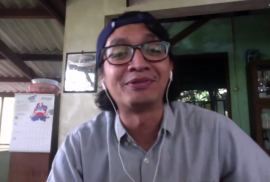
Yogyakarta, October 14th 2020—Fisipol UGM Student Board is back with a Dean Hearing on Wednesday afternoon (14/10). In this event, the Dean hearing is created to accommodate university students’ academic and non-academic questions about the university process in the new normal. As always, in the hearing there was Prof. Dr. Erwan Agus Purwanto, M. Si as the dean, Dr. Wawan Masudi as the Vice Dean of Academics and Students Relations, as well as Ika Wulandari Widyaningrum, S.Pd., MBA as the Head of Students Relations. The event was held from 16.00 until 17.30 pm.
Yogyakarta, October 12th 2020—The 65th Fisipol UGM Dies Natalis celebration is more festive with the Politic and Government Student Corps (KOMAP) event called Politico Tour or better known as Poltour. As an annual program held by the Department of Government and Politics, Poltour that is usually done by visiting many government organizations is now changed into an online webinar event. Taking the theme of Indonesia’s social and political dynamics after the pandemic, Poltour is hoped to be a place to think critically together on the issue of the pandemic. This webinar series has three focuses; the state (12 october 2020), intermediary (13 october 2020), and society (14 october 2020).
Yogyakarta, October 9th 2020 – Organization of Humanity of FISIPOL UGM came back with another OH Online Edition of Visitation on Friday night (9/10). This Online Visitation via Google Meet raised the topic “The Story of COVID-19 Volunteers: Fighting for Humanity”. Sherry Anastasya (Nutritional Science of Faculty of Public Health of University of Indonesia 2017). a COVID-19 volunteer at Wisma Atlet, became the speaker this time. The event lasted from 07.00 p.m. to 08.30 p.m and was moderated by Felice, a student of Communication Science class 2019.
Yogyakarta, October 8th 2020—The International Relations Students Corps (KOMAHI) UGM held Diskors (Diskusi Olahraga Skuy!) on Thursday night (8/10). This sports discussion invited a speaker, an alumna of International Relations of UGM class 2016, Antakarana Tanugraha. In this event, they discussed Tanugraha’s thesis titled as Nation Branding in the Politics of Organizing International Sports Events in Developing Countries. This event started at 06.15 p.m. The background of choosing sports as a discussion material in his thesis was because sport has universal properties that make it attractive to most of the people in the world. The organization of sports events is eagerly awaited by people from all over the world to watch or even visit the venues directly. Becoming a host country for organizing international sporting events is a very dreamy thing because the arrival of tourists to watch matches provides an opportunity and become an economic boost, it makes developing countries compete to host sporting events. This event discussed the comparative study of developing countries that host the Olympics, such as China (2008), South Africa (2010), Greece (2004), and Brazil (2016).
Yogyakarta, October 8th 2020 – The Public Sector Risk Management by the Undergraduate Program of the Department of Public Policy and Management held an open lecture. By presenting Hanif Muhammad, M.Sc. as the guest lecturer, this open lecture discussed specifically about Risk Management and Business Agility in Facing COVID-19. Other than being held according to the course hours—at 07.30 a.m., the discussion session with the speaker was also guided by one of the lecturers in the Public Sector Risk Management course, Media Wahyudi Askar, S.I.P, M.Sc., Ph.D. As the CEO of Boogie Protective and Head of INDEF Center for Innovation and Digital Studies, Hanif combines existing theory with the experience he had had, both from a personal and corporate point of view. However, before entering into the presentation of the material from the guest lecturer, Media as the moderator read out the CV which Hanif responded directly to as a form of introduction to the participants.
Gandung said that the concept used by the models to do a virtual photoshoot is by having a video call with the photographer, hold a pose, then take a screenshot. For the equipment, photographers often use SLR, DSLR, Mirrorless & Pocket. The preparations are the same with a normal photoshoot which is by checking the location and property. For example, the day before the photoshoot, photographers need to video call the model to see in which area of the house can the photoshoot be done by seeing which spot has a good light and which spot is unique. Other than that, the internet connection in the spot needs to be paid attention to. “The internet quality is the key. No matter how expensive, how good, how sophisticated the equipment is, it won’t mean a thing if the internet is slow,” Gandung said.
The screen is also important. Every media screen has their plus-minus in terms of the pixel, color gamut, or other aspect that determines the quality of the photo. “If you’ve seen a virtual photo that is too pixelated, it’s because of the screen. But the latest tech usually has good screens,” Gadung said. Additionally, the hour of the photoshoot also needs to be paid attention to because it determines the amount of light in the photo. Actually, through our handphone we can already set the ISO, the sensor sensitivity to light. The higher the ISO, the more sensitive it is to light. If the photo location is dim, then the handphone will automatically raise the ISO. The risk of a high ISO is the noise, it can be seen through the pixelated picture and unsharp picture. After this elaboration, Gandung shows some pictures with high and low ISO.
On the end of the elaboration, Gandung has a little tips to direct the model. The tip is to hold on to the principle “give compliments, not critics”. Gadung said “If you want the model to smile, make them smile. Don’t say ‘come on, smile!’” he said. The discussion is then followed by a question and answer session. The event ended at 9.pm.
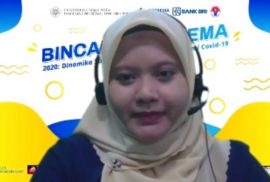
Moderated by Mashita Fandia, the lecturer of Communication Science of UGM, many of the speakers in this webinar talked about the topics based on their experiences in certain fields. But before that, the webinar was started by the opening speech from Muhammad Najib Azca as the Director of YouSure and Prof. Dr. Erwan Agus Putranto, as the Dean of FISIPOL UGM. Not to forget, the moderator also explained a little about the theme and conditions of the webinar, the terms and conditions of door prizes, before inviting the speakers to deliver the material.
As an academic who is active in sociopreneurs issues, Hempri Suyatna—the first speaker—talked much about the urgentities of sociopreneurship, especially for Indonesian youths. From those urgencies SOPREMA presents with its vision and mission Hempri also explained the development of SOPREMA from year to year, including the series of events in SOPREMA 2020.
“The spirit that SOPREMA brings is in line with the Ministry of Youth and Sports in supporting and enhancing individual capacities related to sociopreneurship,” Imam Gunawan said, the Assistant Deputy of Youth Entrepreneurship, as the representative of the government—especially the Ministry of Youth and Sports. The government also does several efforts to realize its spirit, including fully supporting SOPREMA. Imam also explained why cooperation from all parties is important in developing sociopreneurship in the society.
The three other speakers were the representatives of the people who are active in sociopreneurship activities. Fathin Naufal, the founder of Gifood which has been included in SOPREMA 2018, explained much about his start-up—Gifood and Widya Edutech—adapted and contributed for society in the COVID-19 pandemic. Meanwhile, Denok Marty, a sociopreneur as well as an environmental activist, shared much about her point of view in seeing the waste problem as a potency and strength that needed to be managed. With the waste management activities that he and his team carried out in Kampung Kitiran, there were many positive impacts from various aspects that the people felt.
For the closing, Ucup Klaten, a content creator, shared his stories about his experience in utilizing social media, such as YouTube, Instagram, and TikTok, both before and after the COVID-19 pandemic hit. Before that, Ucup used social media to promote his businesses, in this pandemic time he fully utilized his social media. Especially after joining a video competition about social distancing and mudik restriction, he got many positive responses from various parties. From there, his social media was getting crowded and he got many job offers from the government agencies.
After concluding all the materials from all speakers, the moderator read out the questions that had been submitted since the beginning of the presentation of the material, both on Zoom and YouTube comment sections. As stated earlier, the eight selected questions are entitled to get a doorprize from SOPREMA. The door prize submission mechanism was explained by the moderator after all the questions were answered by the speakers. With thanks to all the speakers and participants, the moderator officially closed the webinar on 12.40 p.m. Reruns of the SOPREMA Webinar can be watched on the FISIPOL UGM Youtube channel.
Yogyakarta, September 25th 2020—In order to discuss issues of privacy and personal data on the internet, the Ministry of Communication and Information, Facebook Indonesia. Pamflet, and Kelas Muda Digital (Kemudi) in collaboration with the Communication Student Corps (Komako) of UGM, they held a webinar “It’s Time to #Kendalikan Your Privacy: What We Need to Know about Privacy and Personal Data” Yogyakarta series. One of the research centers in the Faculty of Social and Political Sciences, the Center for Digital Society (CfDS), also participated in this webinar by presenting Yuliana Khong as a speaker.
Other than CfDS, this webinar also presented the other stakeholders to enrich the discussion’s perspective, such as the government—represented by Tuaman Manurung from Ministry of Communication and Information—the academics—represented by Novi Kurnia, Ph.D., the lecturer of the Department of Communication UGM, the social media platform—represented by Dessy Septiane from Facebook Indonesia, and civil society organization—represented by Fietyata Yuda from Forensika Digital Study Center of UII, with Diva Diandra as from Komako as the MC and Resa Tamaputra from Kemudi as the moderator. The event was held on Zoom Meeting and started at 03.00 p.m.
A few days before the event, the organizers also held several small events that were in line with the topics raised in the seminar. Not only that, Komako, Kemudi, and Pamflet have also uploaded infographics several times about personal data protection and privacy in the digital world in order to increase individual awareness.
Even so, it turns out that the government as the policy maker also has an equally important role as individual awareness regarding the protection of privacy and personal data in the digital realm, both in terms of education and regulation. This is as stated by Tuaman Manurung, that the Indonesian government has made four efforts to protect the personal data of its people, including regulatory support, monitoring of personal data protection (PDP) in the communication and information sector, preparing ecosystem implementation and development, and literacy education, as well as raising awareness regarding PDP.
Regarding the regulation of personal data protection in Indonesia, Tuaman said that until now there is no law that comprehensively regulates and serves as an umbrella for PDP in all sectors—these regulations are scattered, separated in the laws of each sector. Therefore, currently, the government is making a more comprehensive and stronger regulation for the protection of personal data in Indonesia. This issue was confirmed by Novi Kurnia. Other than discussing personal data protection regulations in various countries, Novi also explained many examples, data and cases related to violations, leaks, and personal data protection campaigns.
As a digital service provider, Facebook Indonesia, represented by Dessy Septiane, also made efforts to protect the personal data of its users, starting from education in the form of off-platform campaigns, to increasing control, policies and platform arrangements. To be clearer, Dessy displayed the latest privacy settings offered by Facebook, Instagram, and Whatsapp.
Although various parties have made efforts to protect personal data, unfortunately the public—in this context, especially students—still do not have a high level of awareness regarding their digital security. Based on research conducted by CfDS, and presented by Yuliana Khong, content creation skills and knowledge of device security are at the lowest score of all digital competency levels. The result showed that only 31.58% of respondents regularly check security features and device configuration. Yuliana also offered several universal solutions that can be done by various parties in increasing awareness regarding digital security, including protection of personal data and privacy.
In more detail, Fietyata Yudha explained some tips that can be done by individuals in improving their own digital security. It can be started from checking your social media accounts, regularly checking email, being more careful with important documents, avoiding using free wifi, using more complicated passwords, paying attention to and not allowing access to unimportant cookies, using two factor authentication, to using additional security applications such as antivirus.
The explanations from the speakers were followed by a question and answer session from the participants which had previously been conveyed through the comments column and QnA. With the answers to these questions, the speakers took turns delivering their closing remarks before the moderator finally closed the discussion. After taking a group photo, the webinar officially ended at 05.35 p.m. For those who could not join the event could watch the rerun video on the Pamflet Generasi YouTube channel.