
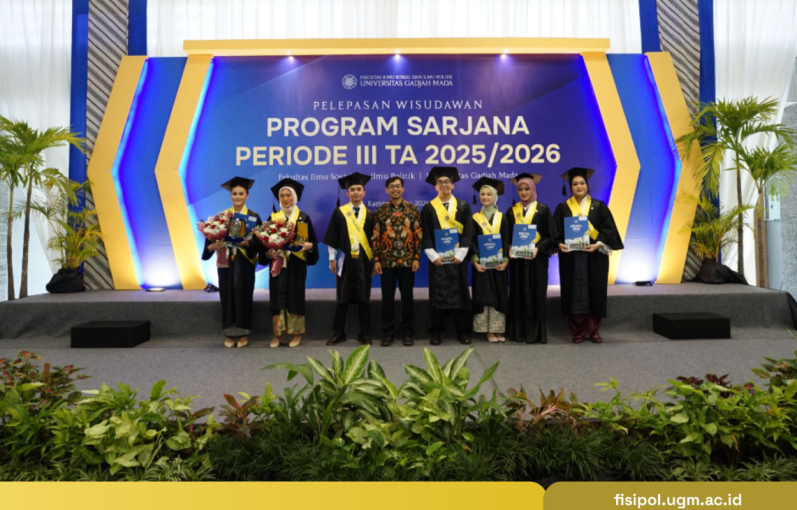
Yogyakarta, May 21, 2026 — At the Period III Undergraduate Graduation of Universitas Gadjah Mada (UGM), the Faculty of Social and Political Sciences (FISIPOL) officially sent off 168 graduates. The solemn graduation ceremony, held in the west corridor of the faculty, was not only an academic celebration but also a moment of reflection for the graduates before directly entering society.
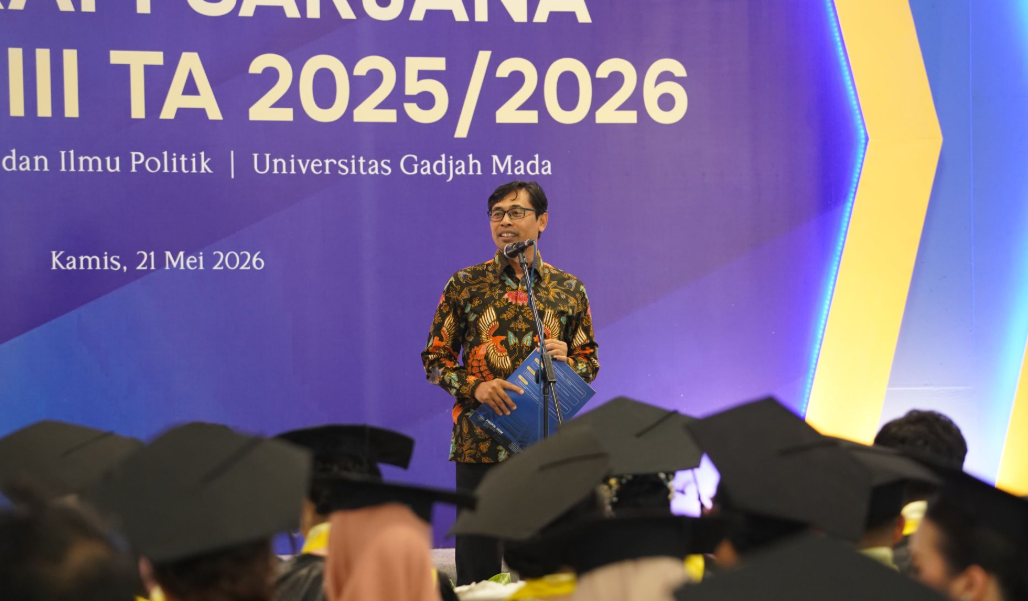
The Dean of FISIPOL UGM, Dr. Wawan Mas’udi, in his speech highlighted the crucial issue regarding educational privilege and the social responsibility now borne by the graduates. He reminded that out of the more than 270 million population of Indonesia, having the opportunity to earn a bachelor’s degree is a great privilege.
“Holding a bachelor’s degree is still, after all, a privilege in this country,” emphasized Dr. Wawan. He further added, “I also always believe that within the privilege we have, there are always responsibilities that we must take on, both personally and as part of a community.”
In his remarks, the Dean also emphasized that the learning process at FISIPOL is not merely aimed at obtaining a diploma, but rather at shaping individuals with character who are capable of implementing the values of humanity and solidarity. This aligns with the institution’s commitment to creating quality education that encourages concrete actions to solve social challenges.
“This faculty has tried to invite you to become individuals who have character… Not only understanding problems but also being part of the solution to social problems,” he stated. He also advised that behind every crisis and challenge the graduates will face, there will always be opportunities to be seized.
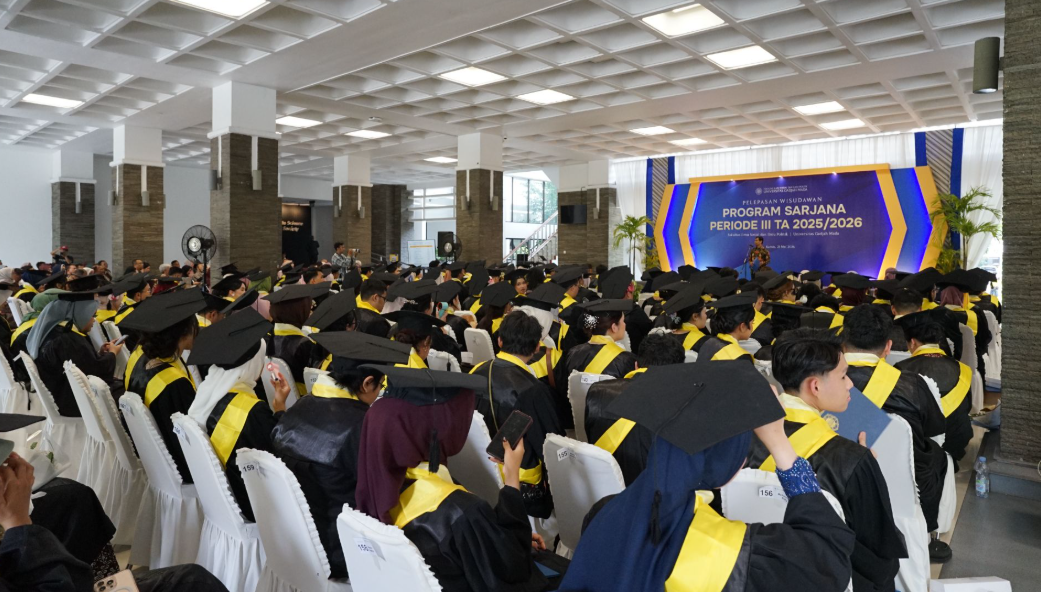
The graduation this period also recorded a proud graduate demographic, where 69.05 percent of the graduates were dominated by women. On this occasion, special appreciation was also given to a number of graduates with achievements such as completing their studies the fastest, as well as the best graduates at the department and faculty levels. Concluding his speech, Wawan expressed his hope that the provisions of interaction, discussion, and dialectics built within the campus spaces can help the graduates achieve success while upholding their character across various sectors, whether in the industrial world, government, or the broader society.