
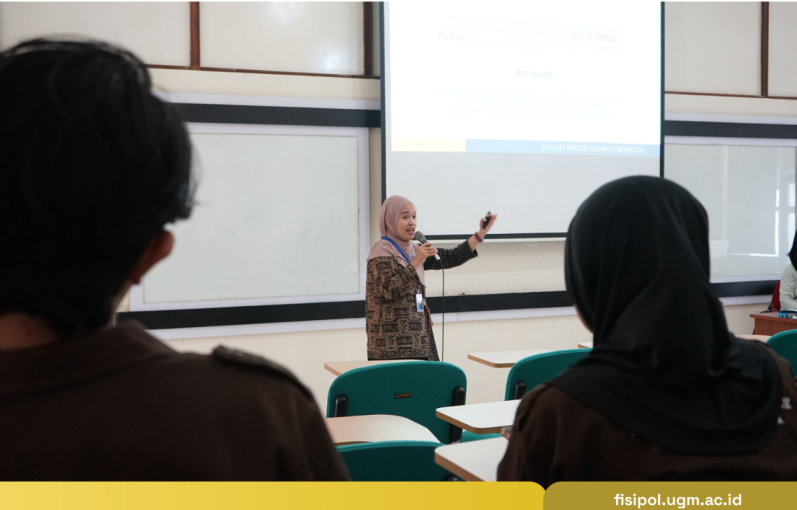
Yogyakarta, April 23, 2026─Mental health issues among university students are increasingly gaining serious attention from various parties. Responding to this urgency and as a concrete step toward creating a safe learning space, the Fisipol Crisis Center (FCC) UGM, in collaboration with the Center for Public Mental Health (CPMH) of the Faculty of Psychology UGM, successfully held a Psychological First Aid (PFA) Training.
The activity, which aimed to equip the academic community to prepare themselves for mental health crises, took place on Thursday (23/4) from 08:00 to 15:00 WIB in Room BG 203, Faculty of Social and Political Sciences (FISIPOL) UGM. This event specifically targeted students actively involved in various Student Activity Units (UKM) within FISIPOL, and was also open to the general public interested in mental health issues.
The implementation of this PFA training is actually not the first step taken by the FCC. This agenda serves as a vital regeneration of a similar program initiated previously, considering the turnover of student cohorts every year. “The FCC (Fisipol Crisis Center) held this training three years ago for students. However, since they have now graduated or are about to graduate, we are conducting a refresher,” said Arie, a representative of the Fisipol Crisis Center UGM, in his opening remarks.
Arie also emphasized that the consistent implementation of this activity is a manifestation of the FCC’s continuous commitment to creating and nurturing an inclusive, safe, and mutually supportive campus environment.
The training was structured using a highly comprehensive method, combining interactive material presentations with hands-on practical sessions. Throughout the event, participants were equipped with various essential skills, including:
- Mental Health Literacy Improvement: Understanding the difference between ordinary stress and a psychological crisis.
- Specific Crisis Management: Guidelines for handling emergency situations such as Non-Suicidal Self-Injury (NSSI) and Suicidal Self-Injury (SSI).
- Supportive Communication: Techniques for active listening and providing empathetic responses without judgment.
- Roleplay Sessions: The highlight of the event, where participants directly practiced the knowledge they gained using real-world case studies to become more adept at providing first aid.
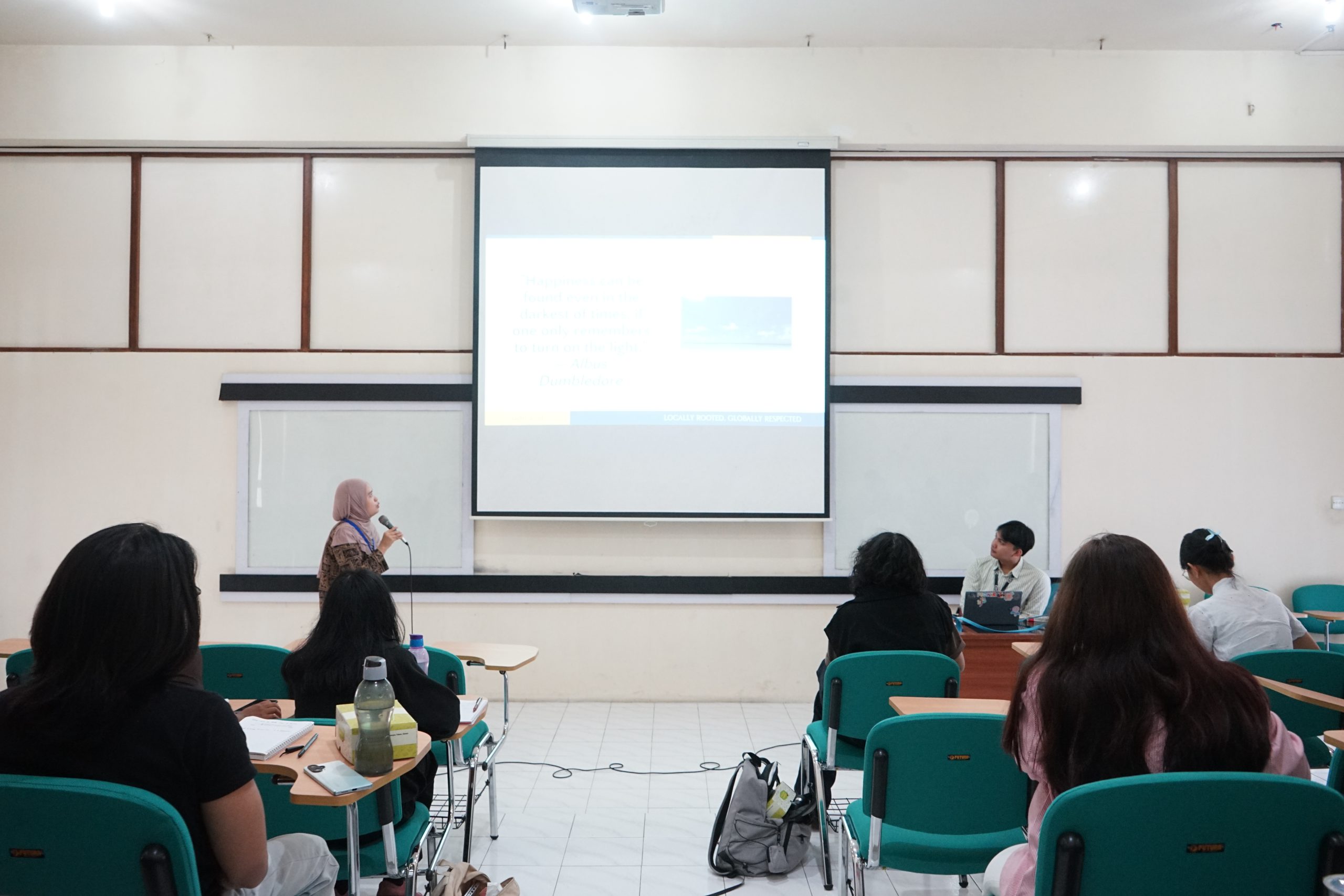
In her presentation, Nurul Hidayati, S.Psi., a speaker from CPMH UGM, highlighted the essential understanding of the roots of mental crises. She dissected the misconception that psychological crises often appear suddenly without cause or merely due to a single factor. “Everyday life pressure alone will not actually cause a person to become mentally ill. It stems from a combination of other factors (biological, psychological, and social) piling up until they finally explode,” Nurul explained, emphasizing the bio-psycho-social approach in mental health.
This message underscores the urgency of early detection and social support as pillars for preventing more severe crises. Through this training, it is hoped that students will not only excel academically but also possess social sensitivity. This initiative serves as a small step toward a resilient, responsive, and empathetic campus environment.