
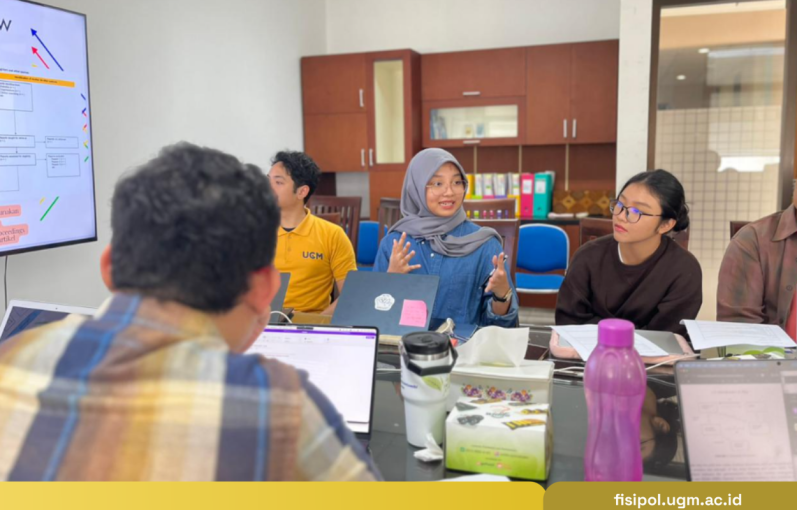
Yogyakarta, May 22, 2026 — To equip students with advanced research skills, the Institute of International Studies (IIS) UGM held the Research Toolkit Training #2 on Friday (05/22). Taking place in the DIHI Common Room, BC Building 5th Floor, this offline training specifically delved into the Systematic Literature Review (SLR) method. The event, which ran from 13:30 to 16:00 WIB, was widely open to undergraduate and postgraduate students, as well as alumni of International Relations at UGM.
Amidst the flood of global literature, the SLR method was introduced as a relevant methodological tool to objectively map the development of knowledge (State-of-the-Art). Through structured and replicable data synthesis, participants were taught how to identify their research position among thousands of existing scientific publications.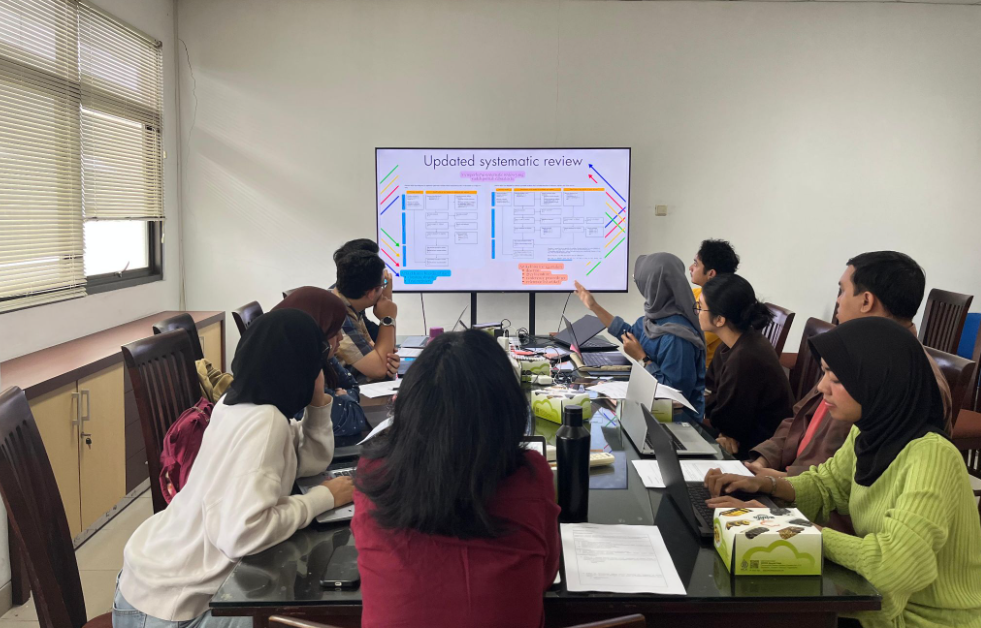
Guided by Fattaa Hayyu Tri Hapsari from IIS UGM, the session invited participants not only to understand the theory but also to directly practice the transparent data extraction process. Fattaa dissected the PRISMA protocol framework, which serves as a global standard guideline. She explained that this process consists of sequential stages. “There are four stages. There is identification, screening, eligibility, and finally inclusion,” she explained to the participants. During the identification stage, participants were taught techniques for formulating search keywords using logical instruments such as boolean operators (AND, OR, NOT) to comb through academic databases. From tens of thousands of initial results, the literature was then narrowed down during the screening stage by strictly applying inclusion and exclusion criteria, such as publication year restrictions, journal document types, and language suitability.
Furthermore, the training highlighted the crucial eligibility stage before conducting textual data extraction. In this phase, researchers are required to read the full text to evaluate the quality and feasibility of the methods used in the literature. Given the variety of research sources, Fattaa also shared a specific assessment instrument that she frequently applies. “Because I use qualitative studies, what I use is the CASP checklist or Critical Appraisal Skills Program,” she revealed. Through this instrument, participants dissected 10 evaluation criteria to determine the weight of the literature’s quality. Articles with an eligibility rate below 50 percent are categorized as weak and not recommended for use, while articles above 75 percent fall into the valid and strong category for review. Journals that successfully pass this final stage are then extracted into a narrative synthesis to identify dominant patterns and discourses.
At the end of the event, participants were immediately invited to conduct a simulation practice of screening articles based on inclusion and exclusion criteria, as well as identifying study quality components. Through this comprehensive analytical provision, UGM International Relations students are expected to be able to expand their research method options and produce scientific works with a strong foundation, free from selection bias, and possessing high credibility at the international level.