
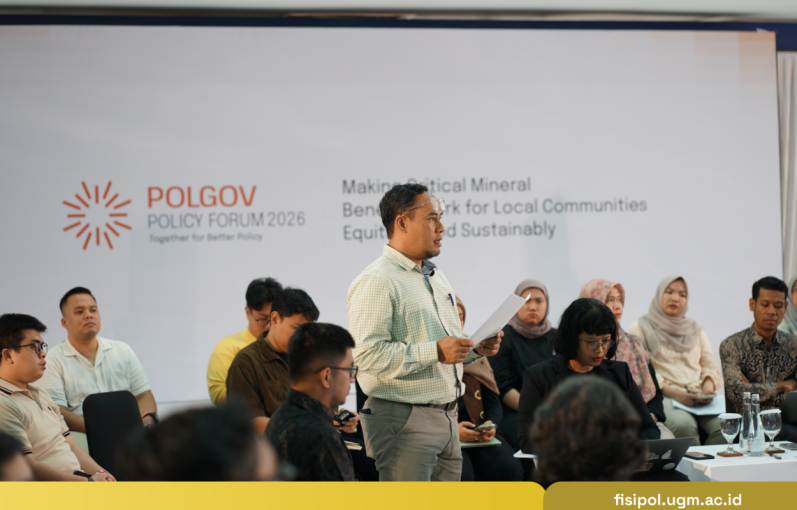
Yogyakarta, 24 June 2026─The POLGOV Research Center will host its inaugural multi-stakeholder forum, titled the POLGOV Policy Forum (PPF) 2026. This forum is designed to bring together academics, policymakers, industry representatives, and civil society in a roundtable discussion to address more equitable natural resource governance.
This event is being launched amid the “paradox of plenty” phenomenon occurring in several nickel-producing regions across Indonesia. Although economic growth in North Maluku surged by more than 20% and Central Sulawesi recorded growth above 12% from 2021 to 2024, poverty rates in both provinces have actually continued to rise.
At the forum, several speakers from diverse backgrounds will discuss the issue of benefit-sharing from the nickel industry, which is considered to remain unequal.
Arie Ruhyanto, Secretary of the Department of Politics and Government (DPP) at UGM, emphasized the importance of a multi-stakeholder dialogue space as a first step toward public policies that are more people-centered. “I believe today’s forum offers a very rich combination of perspectives [because] it features speakers from the central and local governments, academia, and civil society organizations who will provide insights from various angles.”
The POLGOV Policy Forum 2026 is the inaugural forum initiated by the POLGOV Research Center. The event features an open discussion format to foster honest dialogue on how economic growth derived from natural resource extraction can be translated into equitable prosperity, while simultaneously internalizing the environmental costs that have long been overlooked.
By promoting education for sustainability, this forum aims to equip future generations with the knowledge and skills needed to manage their natural resources responsibly.
The POLGOV Research Center hopes that the insights gained from this forum will contribute to the development of policies that prioritize the needs of local communities, ensuring that the benefits of natural resource extraction are shared fairly. By engaging a wide range of stakeholders, this forum aims to foster a collaborative approach to governance that addresses the challenges posed by the paradox of abundance.