
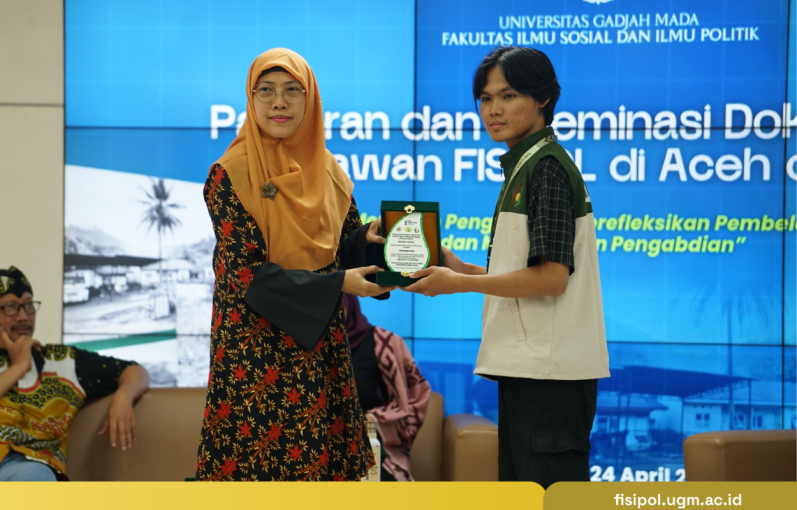
Yogyakarta, April 26, 2026─The deployment of Fisipol Mengajar volunteers to Central Aceh Regency and the Bala Gadjah Mada Team to the Indonesian Capital City (IKN) from January to February 2026 brought urgency to the Faculty of Social and Political Sciences (FISIPOL) at Universitas Gadjah Mada (UGM) to hold an event titled “Exhibition and Dissemination of FISIPOL Documentation in Aceh and IKN” on Friday (April 24). This event served as a collaborative space that bridged students’ empirical experiences with academic reflection and policy discourse. Fisipol Mengajar focused on community support in disaster-affected areas in Aceh, with an emphasis on post-disaster educational recovery and strengthening social interaction. Meanwhile, Bala Gadjah Mada initiated an expedition to the Indonesian Capital City (IKN) area focusing on environmental management issues, particularly waste management in the development buffer zone.
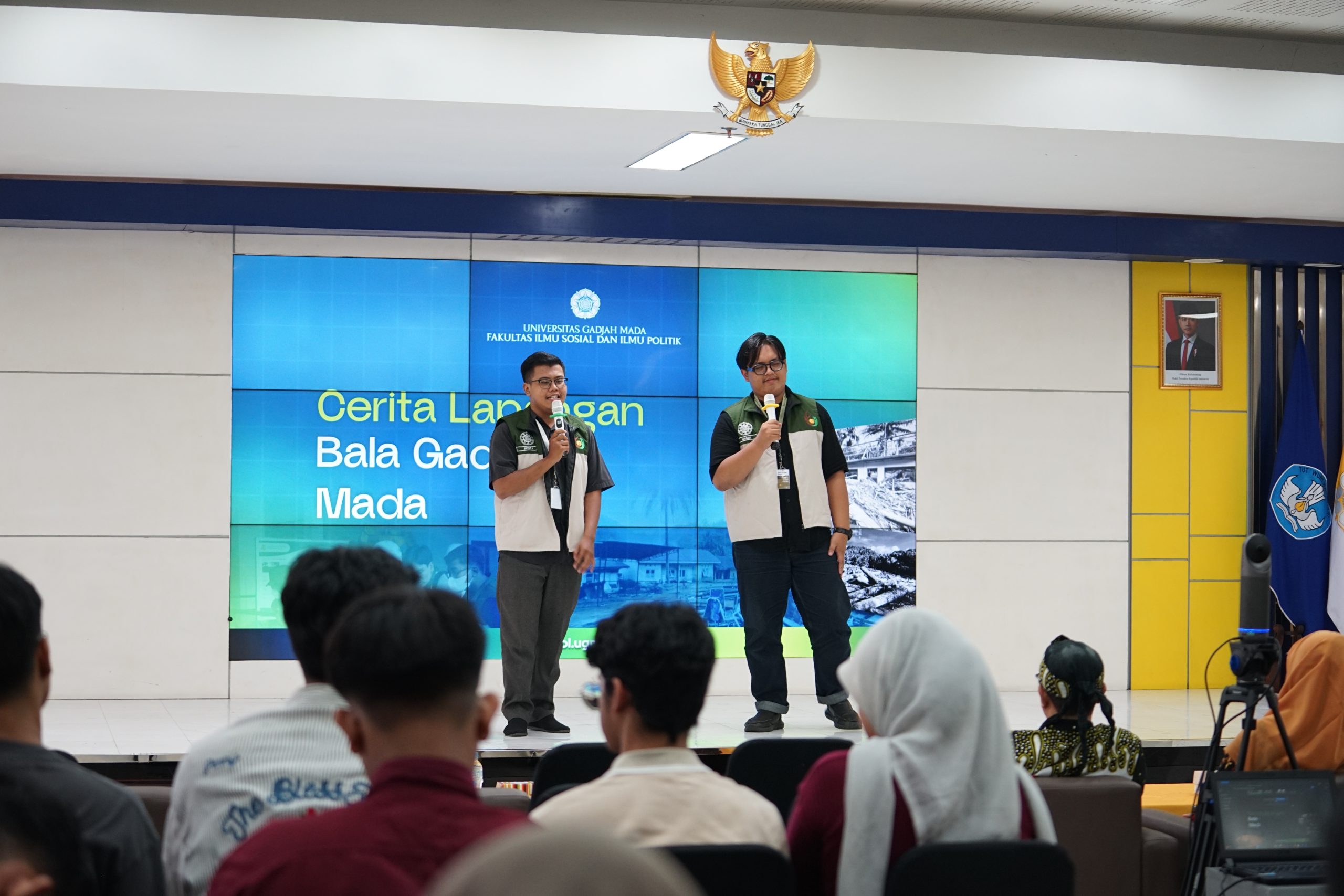
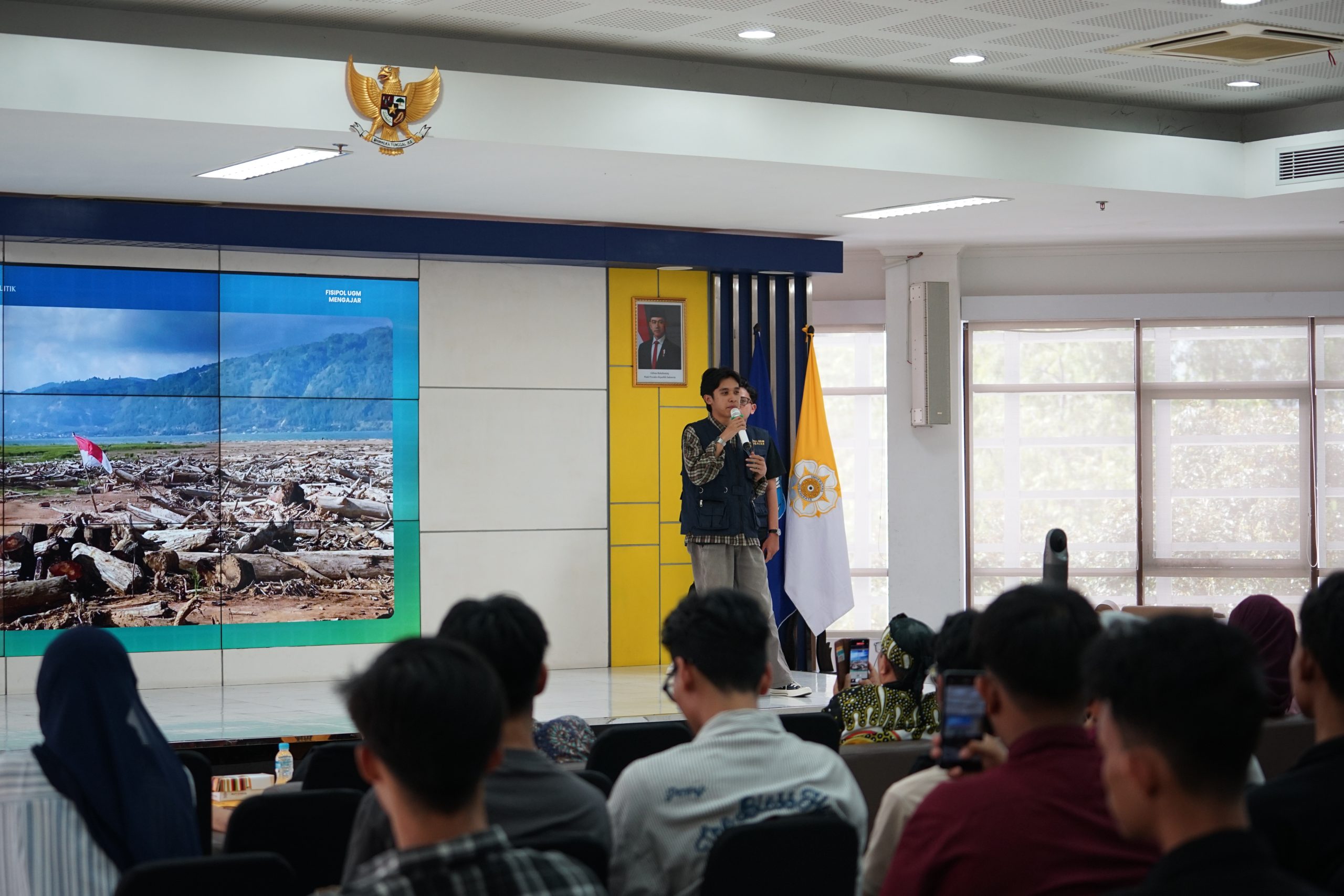
Otto Yasa Abdullah, a 2024 undergraduate student in the Department of Management and Public Policy, representing the Bala Gadjah Mada Team, outlined six problems related to waste in the New Capital City (IKN) based on the expedition’s findings:
- Lack of understanding of cleanliness and waste management in the IKN
- Lack of law enforcement for violations
- Low environmental awareness among residents
- Rapid population and business growth, unpreparedness of local governments
- Limited capacity of local governments to manage waste (limited waste collection fleets and waste disposal sites)
- Ineffective waste management mechanisms and coordination between actors dealing with the significant waste overflow
The Bala Gadjah Mada Team compiled a Policy Brief with three main conclusions. First, the manifestation of inclusive green city development must be built on equity and shared success. Second, the IKN TPST (garbage dump) 1 should not be merely a facility, but a medium for realizing the values, dreams, outcomes, and ideals of a truly green city. Third, program implementation policies should not be limited to the work program checklist of the deputy division, but must also lead to real changes in the mindset and habits of the community.
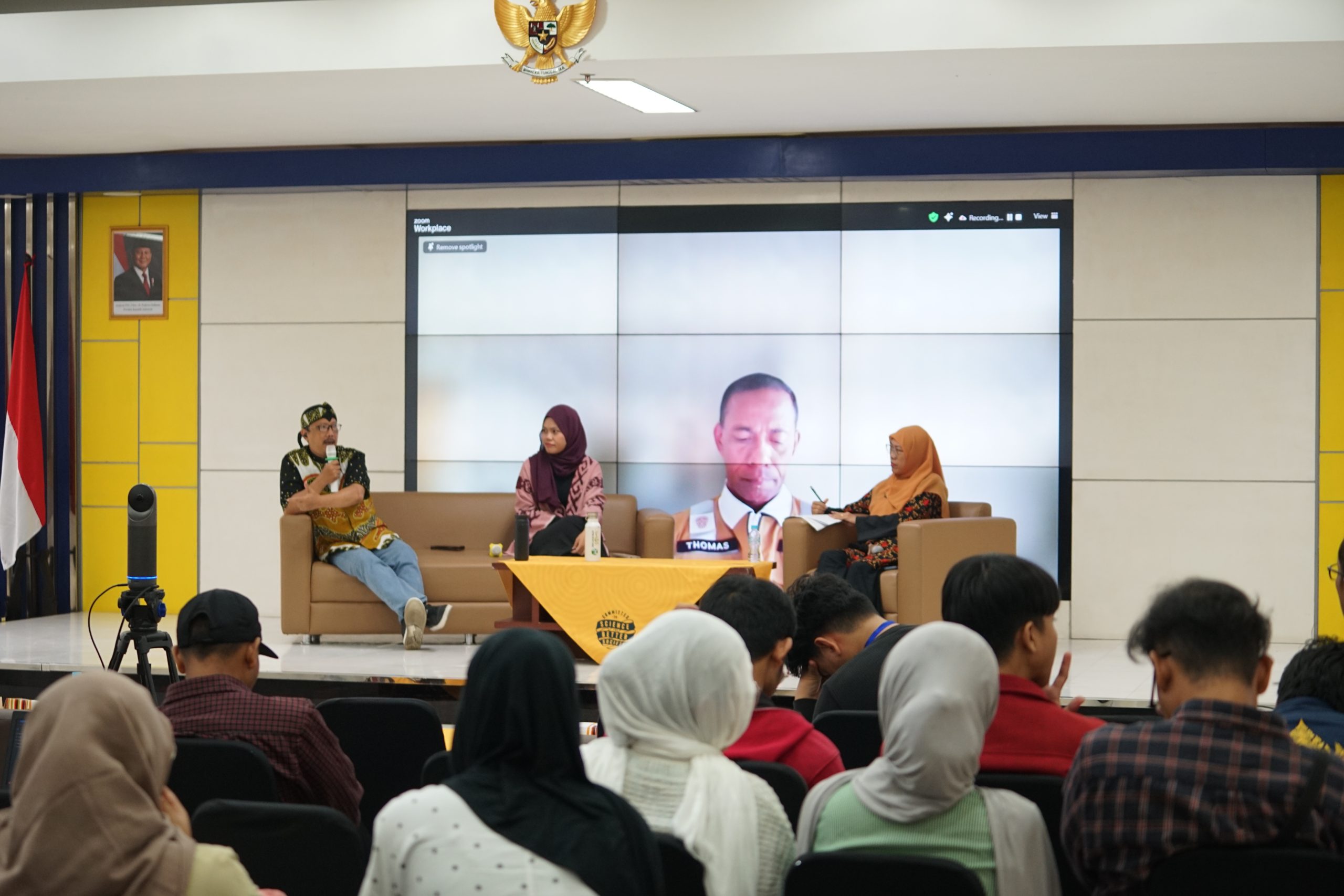
Dr. Thomas Umbu Pati Tena Bolodadi, M.Si., Deputy for Development Control of the IKN Authority, in his presentation, also mentioned that the current population of the IKN has reached 147,000, divided into 7 sub-districts, 32 urban villages, and 22 villages. This massive population has prompted the IKN Authority government to continue expanding its policies, particularly regarding waste management. Thomas also added that the waste management facility at the IKN receives approximately 70 tons of waste per day.
“Today, our team is educating the community about waste sorting. Our machines will only carry out waste sorting if it has been properly sorted. To this end, we are collaborating with village and urban village governments to educate residents,” he said. He also added that a Head Regulation (Perka) has been issued regarding sanctions for littering, which stipulates a fine of one million rupiah.
Regarding waste sorting, Erwan Widyarto, Secretary of the DIY Waste Bank Association and Deputy Chair of GIPI DIY, said, “Our responsibility as a community is to reduce waste. If it’s forced, we reuse it. If we can’t reuse it, we recycle it. Recycling isn’t about making crafts or anything else, but rather our household responsibility to ensure our waste reaches the recycling industry. This can happen if the first step is taken, namely sorting.”
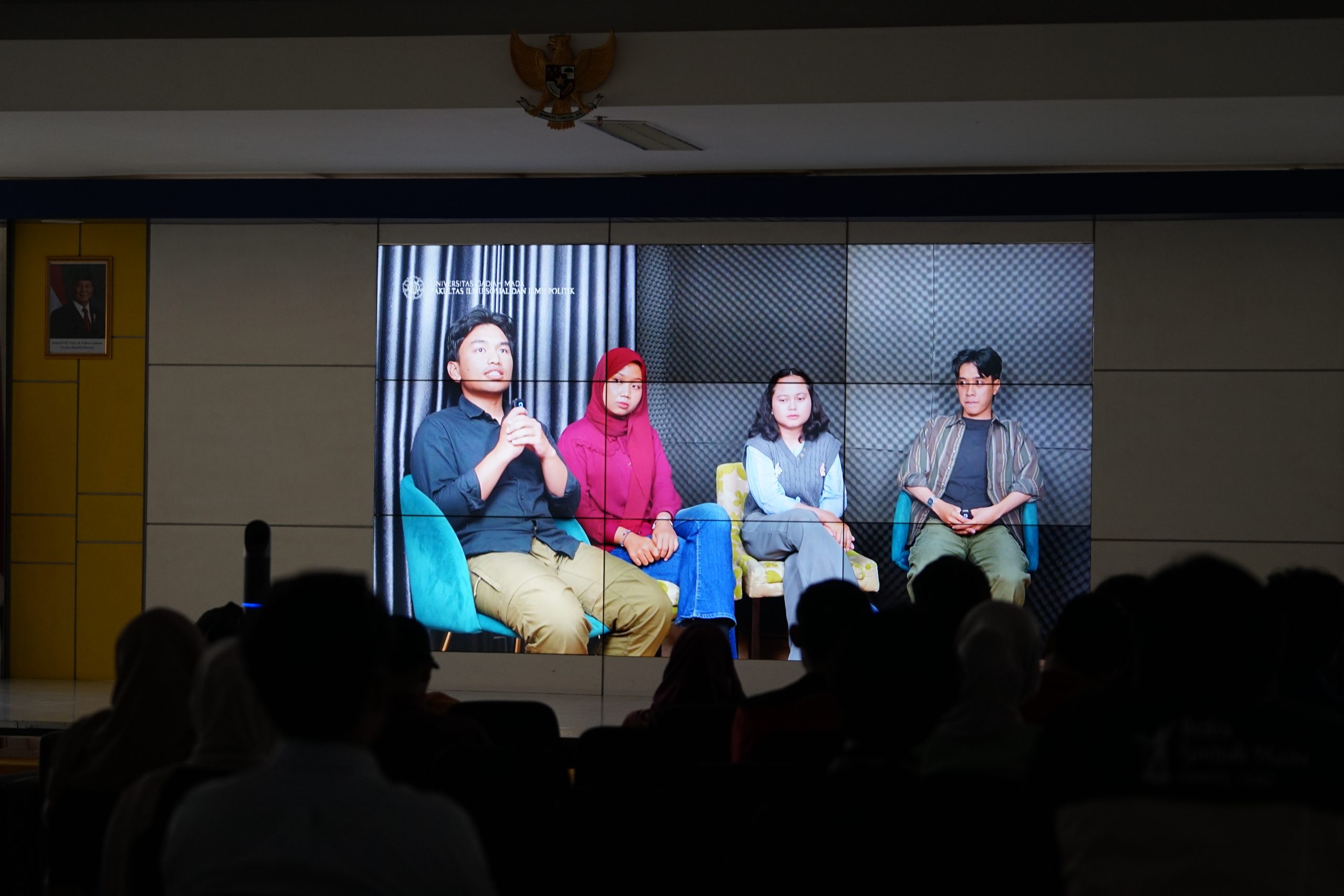
This cross-sector discussion forum is expected to spark the academic community to continue developing community service programs and environmental conservation actions that have a real impact on the community. A documentary video screening and exhibition of documentation of UGM FISIPOL Volunteers in Aceh and the capital city were also held in the West Hall of the UGM FISIPOL Building.
Eleven FISIPOL Mengajar volunteers were deployed to three locations in Central Aceh Regency: Bintang, Ketol, and Pantan Nangka, from January 10 to February 8, 2026. Meanwhile, the Bala Gadjah Mada Team, consisting of 12 students from the Faculty Student Activity Unit (UKMF) of the Nature and Environment Lovers Group (KPALH) of the Faculty of Social and Political Sciences (FISIPOL) UGM, was deployed from January 26 to February 10, 2026, in the buffer zone of the new capital city, including Bumi Harapan Village, Pemaluan Subdistrict, and SMPN 27 Penajam Paser Utara (PPU).
The event featured three speakers: Dr. Thomas Umbu Pati Tena Bolodadi, M.Sc. (Deputy for Development Control of the New Capital City Authority), Erwan Widyarto (Secretary of the DIY Waste Bank Association), and Rifka Agnes, S.Pd. (Chair of KOPHI Yogyakarta). Moderated by Nur Azizah, S.I.P., M.Sc. as moderator.