Arsip:

SDGs 11: Sustainable Cities and Communities

UGM Faculty of Social and Political Sciences Distributes 627 Free Tumblers to New Students

Yogyakarta, August 6, 2025—As part of its green campus commitment, the Faculty of Social and Political Sciences (FISIPOL) of Gadjah Mada University (UGM) distributed free tumblers to 627 new students on Wednesday (6/8). The tumbler distribution ceremony, part of the PIONIR SOCIETY 2025 opening ceremony, was presented directly by the Dean of FISIPOL UGM, Dr. Wawan Mas’udi, to six new student representatives from each department.

In his remarks, Wawan conveyed this effort as a form of the faculty’s contribution to creating an environmentally friendly campus environment. “This is one form of FISIPOL’s commitment to creating a sustainable campus environment,” he explained. read more
Megashift FISIPOL UGM Publishes New Article: Challenging the Dominance of Economic Logic in Indonesia’s Development

Megashift FISIPOL UGM has released a new article titled “Seeking Alternatives to the Dominance of Economic Logic in Indonesia’s Development.” The piece offers a critical reflection on Indonesia’s national development agenda, which has long been centered on economic growth, investment, and macro-financial indicators.

The article emphasizes the importance of pursuing alternative development approaches that prioritize social welfare and environmental sustainability. Rather than relying solely on economic logic, it advocates for an integrative approach that incorporates social values, local wisdom, and participatory democracy into policy formulation. read more

Exploring Village Political Dynamics in the Latest Publication by FISIPOL UGM Lecturers

Two lecturers from the Department of Politics and Government (DPP), Faculty of Social and Political Sciences (FISIPOL) Universitas Gadjah Mada, Arie Ruhyanto and Amalinda Savirani, have once again achieved academic recognition through their latest publication in the reputable Asian Journal of Political Science, published by Routledge (Taylor & Francis). The article, titled “Comparing Village Politics Across Time and Space,” was co-authored with Edward Aspinall and Ward Berenschot.

The article offers a profound comparative study of village politics in Indonesia, examining not only geographical differences but also temporal changes. The authors explore how practices of power, patronage relations, and political participation at the village level have evolved across different periods and regions. read more

FISIPOL UGM Lecturers Publish New Research on Variations in Village Governance Across Indonesia

Two lecturers from the Department of Politics and Government (DPP), Faculty of Social and Political Sciences (FISIPOL) Universitas Gadjah Mada, Amalinda Savirani and Arie Ruhyanto, have once again contributed to international scholarship through their latest publication in the prestigious journal Asian Journal of Political Science (Routledge, Taylor & Francis). The article, titled “Analysing and Explaining Variation in Village Governance Regimes Across Indonesia,” was co-authored with Edward Aspinall and Ward Berenschot. read more

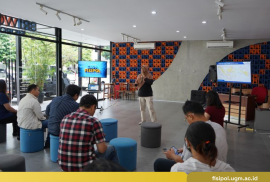
FISIPOL UGM Hosts Media Gathering with National and Local Media

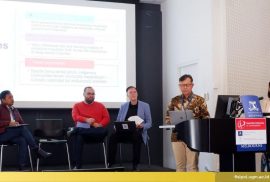
Yogyakarta, 25 July 2025 — To strengthen ties between academia and the media, the Faculty of Social and Political Sciences (FISIPOL) at Universitas Gadjah Mada hosted its first Media Gathering titled “Sapa FISIPOL (Silaturahmi dan Pemberitaan Aktual FISIPOL)” on Friday (25/7). This event served as a platform for dialogue and collaboration between the faculty and media outlets, recognizing the media as strategic partners in addressing societal issues.

At this inaugural gathering, FISIPOL introduced two of its active research centers that focus on digital and social issues in Indonesia: the Center for Digital Society (CfDS) and the Center for Capacity Development and Cooperation (PPKK). read more

Faculty of Social and Political Sciences UGM and Gaziantep University Launch Free Online Class

Yogyakarta, July 16, 2025─The Faculty of Social and Political Sciences (FISIPOL) of Gadjah Mada University (UGM), through the Academic Innovation Unit (UIA), is launching a free online class titled “Sustainable Transformation Towards Global Multifaceted Issues” on the FISIPOL Online Campus (FOCUS) website. This class is a product of a collaboration between FISIPOL UGM and Gaziantep University, and is supported by the Erasmus+ Project 2025.

Using English as the course language, this class aims to foster critical understanding in formulating inclusive and sustainable development strategies. addresses three main themes: industrial transformation in global production networks, sustainable food systems amidst multiple crises, and the green transition in Europe and its global implications. Participants will learn how global changes such as industrialization, climate and food crises, and environmental policies are reshaping urban spaces, local food security, and socio-economic policy directions. With case studies from Europe, Turkey, and Southeast Asia, the course fosters a critical understanding across diverse contexts and promotes academic collaboration in developing inclusive and sustainable development strategies. read more

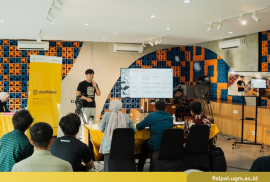
UGM’s Faculty of Social and Political Sciences Creative Hub, the Driving Force of Social Entrepreneurship

Yogyakarta, July 15, 2025—The Faculty of Social and Political Sciences (FISIPOL) at Gadjah Mada University (UGM) is rich with diverse innovation units operating in various fields, from academic to social. The Creative Hub, or C-Hub, under the faculty’s auspices, is no exception. It brings together various disciplines to elaborate and hone creative ideas that can improve the quality of life.

Using a transdisciplinary approach, C-Hub serves as a dialogue space for young people to create opportunities from the challenges and problems facing society today. These opportunities are developed with a proven spirit of social entrepreneurship (sociopreneurship), which has proven to have social and economic impacts. read more

[Call for Articles] – Megashift FISIPOL UGM Open for Submissions Throughout 2025

Are you passionate about writing and interested in issues related to digital transformation? We invite you to contribute your ideas and submit your articles to be published on the Megashift FISIPOL UGM website! ☺️

Important Notes:

Detailed submission guidelines and suggested subtopics are clearly outlined in the official poster.

This call for articles is open year-round, with no submission deadline.

Articles should be no longer than 1,000 words, including references.

Submissions must include citations from publications, journals, or books written by FISIPOL UGM lecturers or researchers. read more

FISIPOL UGM and University of Melbourne Strengthen Global Collaboration Through Australia-Indonesia in Conversation 2025

Melbourne, 9 July 2025 — The Faculty of Social and Political Sciences (FISIPOL) at Universitas Gadjah Mada (UGM), in partnership with the University of Melbourne, successfully held the 5th Australia-Indonesia in Conversation (AIC) 2025. This year’s forum took place at the University of Melbourne, Australia, following its previous iteration hosted at FISIPOL UGM.

Carrying the theme “Bridging Development, Representation, and Indigenous Knowledge: Learning from Australia and Indonesia”, the forum brought together scholars and representatives of Indigenous communities to discuss critical issues at the intersection of social justice, sustainable development, and recognition of local knowledge. read more

UGM and NUS Examine Water Governance and Urban Settlements in Yogyakarta and Jakarta through the SFI 2025 Program

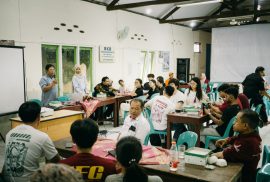
The Department of Public Policy and Management (DMKP), Faculty of Social and Political Sciences (FISIPOL) at Universitas Gadjah Mada (UGM), in collaboration with Residential College 4 (RC4) of the National University of Singapore (NUS), organized the Southeast Asia Friendship Initiative (SFI) 2025. This nine-day program, held from May 17–25, 2025, focused on issues of water governance, climate change, and community empowerment in Indonesian urban areas, particularly in Yogyakarta and Jakarta.

A total of 22 students from NUS, along with student facilitators from DMKP UGM, actively participated in the program. They were guided by faculty members from both institutions, including Dr. Erda Rindrasih, Dr. Ario Wicaksono, Dr. Dede Puji Setiono, and Dr. Navarun Varma from NUS. The program adopted participatory learning methods, such as field observations, stakeholder discussions, and research presentations. read more