Arsip:

SDGs 11: Sustainable Cities and Communities

UGM’s Faculty of Social and Political Sciences Creative Hub, the Driving Force of Social Entrepreneurship

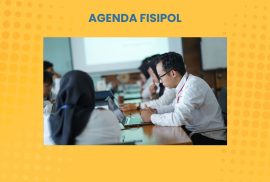
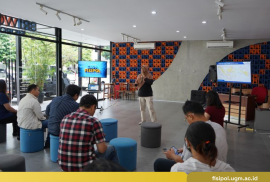
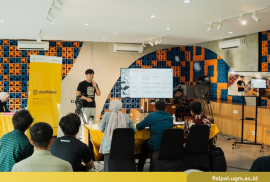
Yogyakarta, July 15, 2025—The Faculty of Social and Political Sciences (FISIPOL) at Gadjah Mada University (UGM) is rich with diverse innovation units operating in various fields, from academic to social. The Creative Hub, or C-Hub, under the faculty’s auspices, is no exception. It brings together various disciplines to elaborate and hone creative ideas that can improve the quality of life.

Using a transdisciplinary approach, C-Hub serves as a dialogue space for young people to create opportunities from the challenges and problems facing society today. These opportunities are developed with a proven spirit of social entrepreneurship (sociopreneurship), which has proven to have social and economic impacts. read more

[Call for Articles] – Megashift FISIPOL UGM Open for Submissions Throughout 2025

Are you passionate about writing and interested in issues related to digital transformation? We invite you to contribute your ideas and submit your articles to be published on the Megashift FISIPOL UGM website! ☺️

Important Notes:

Detailed submission guidelines and suggested subtopics are clearly outlined in the official poster.

This call for articles is open year-round, with no submission deadline.

Articles should be no longer than 1,000 words, including references.

Submissions must include citations from publications, journals, or books written by FISIPOL UGM lecturers or researchers. read more

FISIPOL UGM and University of Melbourne Strengthen Global Collaboration Through Australia-Indonesia in Conversation 2025

Melbourne, 9 July 2025 — The Faculty of Social and Political Sciences (FISIPOL) at Universitas Gadjah Mada (UGM), in partnership with the University of Melbourne, successfully held the 5th Australia-Indonesia in Conversation (AIC) 2025. This year’s forum took place at the University of Melbourne, Australia, following its previous iteration hosted at FISIPOL UGM.

Carrying the theme “Bridging Development, Representation, and Indigenous Knowledge: Learning from Australia and Indonesia”, the forum brought together scholars and representatives of Indigenous communities to discuss critical issues at the intersection of social justice, sustainable development, and recognition of local knowledge. read more

UGM and NUS Examine Water Governance and Urban Settlements in Yogyakarta and Jakarta through the SFI 2025 Program

The Department of Public Policy and Management (DMKP), Faculty of Social and Political Sciences (FISIPOL) at Universitas Gadjah Mada (UGM), in collaboration with Residential College 4 (RC4) of the National University of Singapore (NUS), organized the Southeast Asia Friendship Initiative (SFI) 2025. This nine-day program, held from May 17–25, 2025, focused on issues of water governance, climate change, and community empowerment in Indonesian urban areas, particularly in Yogyakarta and Jakarta.

A total of 22 students from NUS, along with student facilitators from DMKP UGM, actively participated in the program. They were guided by faculty members from both institutions, including Dr. Erda Rindrasih, Dr. Ario Wicaksono, Dr. Dede Puji Setiono, and Dr. Navarun Varma from NUS. The program adopted participatory learning methods, such as field observations, stakeholder discussions, and research presentations. read more

Empowering Regional Governance, FISIPOL UGM Facilitates Strategic Planning for Raja Ampat 2025–2029

Yogyakarta, June 27, 2025 — A strong commitment to fostering adaptive and visionary governance was once again demonstrated through the implementation of a Strategic Planning Training Program (Diklat Renstra) for regional government agencies of Raja Ampat Regency for the 2025–2029 period. The program was held in Yogyakarta from June 24 to 26, 2025.

The opening ceremony was marked by a warm and collaborative atmosphere, attended by the Vice Regent of Raja Ampat, Drs. Mansyur Syahdan, M.Si.; the Dean of FISIPOL UGM, Wawan Mas’udi, S.IP., MPA, Ph.D.; and the Chair of the Board of Experts of the Center for Capacity Development and Cooperation (PPKK) at FISIPOL UGM, Prof. Gabriel Lele. Participants included representatives from various regional departments within the Raja Ampat government. read more

FISIPOL UGM Revitalizes Digilib Cafe with a Fresh Look

Yogyakarta, July 2025 — The Faculty of Social and Political Sciences (FISIPOL) at Universitas Gadjah Mada is undergoing a major renovation of Digilib Cafe, a creative space that has been part of the campus ecosystem since its establishment in 2017. The renovation, which began at the end of 2024, has now reached its halfway point, marked by the completion of the new front façade as the first step in the comprehensive transformation of the area.

The next phase will focus on interior design, landscaping of green spaces, and finalizing the cafe’s management system, which is expected to become a new gathering point for students. The revitalization of Digilib Cafe is intended not only as a supporting facility but also as a living space that fosters an inclusive and collaborative academic atmosphere. read more

Building Camaraderie through FISIPIT Group Cycling

Amid a busy campus schedule, FISIPIT once again fostered a warm and friendly atmosphere through its Gowes Bareng (Group Cycling) event held on Saturday, June 28, 2025. This regularly organized activity is not only a casual sports gathering but also strengthens relationships among the FISIPOL UGM academic community, including lecturers, administrative staff, students, and retirees.

Embodying the spirit of togetherness and a healthy lifestyle, the cycling group set off from the PPKK FISIPOL UGM courtyard at 6:00 a.m., heading to the residence of one of the staff members. Participants, wearing their distinctive FISIPIT jerseys, enthusiastically enjoyed the route while chatting and sharing stories during the ride. read more

BRF The Clinics Explore Opportunities and Strategies for Climate Finance Based on Public Participation

Yogyakarta, June 19th 2025 – Bulaksumur Roundtable Forum (BRF) was held again through The Clinics series which this year focused on the theme “Opportunities for Zakat, Infaq, Sadaqah, and Waqf (ZISWAF) to Build Participative Climate Finance in Indonesia”. Located at the 4th Floor Auditorium of FISIPOL UGM, this forum became a forum for cross-sector discussions to explore the potential of social funds as an instrument of inclusive and sustainable climate crisis financing. The forum presented a variety of speakers from philanthropic institutions, Islamic finance, to government agencies. Some of them were Syamsul Ardiansyah (Senior Officer of Strategic Alliance Dompet Dhuafa), Dede Haris Sumarno (Commissioner of Supervision and Governance of the Indonesian Waqf Board), and Nur Fadilah (ESG Operation and Communication Head of Bank Syariah Indonesia). In addition, the forum also involved academics and climate policy experts to enrich perspectives. read more

More than Sustainable, the C-Hub Talent Pitching Webinar Opening Pushes the Regenerative Entrepreneur Spirit

Yogyakarta, June 13th 2025—In an ever-changing world faced with many social, environmental, and economic challenges, a big question arises: What if businesses are not just profit-oriented, but also think about the impact? This question became a very intriguing introduction in the opening webinar for the 9th Batch of the C-Hub Talent Pitching, a yearly program which pushes the spirit of social entrepreneurship among youths. Bringing the theme of “Future-Fit”, this program is back again with new spirits in placing inclusivity and sustainability as the main foundation for building a brighter future. In the webinar titled “Future-Driven Entrepreneurship for a Sustainable Tomorrow”, Fisipol UGM’s Creative Hub presented two inspirational speakers, none other than Satya Dewastra B. W., founder of Ailesh, and Rika Novayanti, expert strategic communication on environment, as well as the Co-founder of Mosaic. read more

Food Security Issues in the Blue Economy

Yogyakarta, June 4th 2025 – Indonesia with its natural wealth has biological resource potential that has not been fully maximized. As an archipelago, the marine sector has long been one of the export commodities that support the country’s economy. However, on the other hand, the level of fish consumption and the welfare of fishermen have not been evenly distributed. The Faculty of Social and Political Sciences (Fisipol) of Universitas Gadjah Mada presented the discussion “Blue Food as Climate Session: Sustaining Blue Food Ecosystem, Community Empowerment, and Climate Solution” on Wednesday (4/6). read more