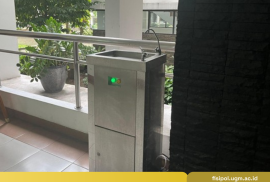
Yogyakarta, April 9, 2026 – The Toyagama Drinking Water Supply System, an initiative by Universitas Gadjah Mada (UGM), is available across various faculties, including FISIPOL. The presence of the Toyagama facility on campus is a manifestation of the Green Campus movement, which continues to be actively promoted from the university down to the faculty level. The initiative to provide these water stations aims not only to ensure the availability of healthy, safe, and high-standard drinking water, but also serves as a concrete and measurable step in reducing the volume of single-use plastic waste, particularly bottled water, which is often the largest contributor to waste on campus.
SDGs 12: Responsible Consumption
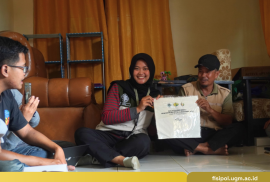
Yogyakarta, March 9, 2026—The Bala Gadjah Mada Team from the Faculty of Social and Political Sciences, Gadjah Mada University (UGM), is promoting sustainable waste management in the communities of North Penajam Paser, East Kalimantan, to address the surge in waste in the buffer zone of the Indonesian Capital City (IKN).
Bala Gadjah Mada has promoted “Strengthening the Waste Bank Community” as its social project to address this waste problem. One of Bala Gadjah Mada’s members, Kholifa Tata Suharta, stated that the development of the IKN has impacted the surrounding areas, including the Pemaluan Village. He explained that the volume of waste has increased, while waste management capacity still relies on incineration or burial.
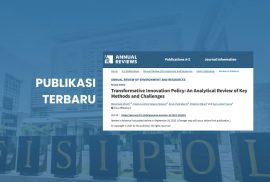
One of the lecturers from the Department of International Relations (DIHI), Faculty of Social and Political Sciences (FISIPOL) UGM, Suci Lestari Yuana, Ph.D., has once again achieved international academic recognition. Together with her collaborators, she has recently published a scholarly article in the prestigious journal Annual Review of Environment and Resources, titled “Transformative Innovation Policy: An Analytical Review of Key Methods and Challenges.”
The article discusses Transformative Innovation Policy (TIP), a new generation of innovation policy designed to address increasingly complex social and environmental challenges—from energy and food crises to mobility systems that remain entrenched in unsustainable modes of production and consumption. The authors emphasize that merely improving technologies or financial instruments is no longer sufficient. Systemic innovations and transformative policies are needed to enable just transitions, ensuring both social justice and planetary health.
The Faculty of Social and Political Sciences (FISIPOL) at Universitas Gadjah Mada, through the Institute of International Studies (IIS), in collaboration with the University of Essex, United Kingdom, is hosting the Networking Conference on Climate Geopolitics and Sustainable Mining Governance on Wednesday (3/9) at the FISIPOL Dean’s Meeting Room.
The two-day international conference, held on September 3–4, 2025, brings together around 12 academics and practitioners from various countries, including the United Kingdom, Australia, and South Africa. The participants engage in intensive discussions on sustainable mining governance amid the dynamics of global climate geopolitics.
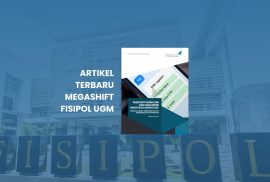
New Release: Megashift FISIPOL UGM Article
“Digital Orchestration for Indonesian Agriculture: From WhatsApp Workflow to Food Security”
By: Setiawan Guntoro
Megashift FISIPOL UGM has once again published an article that sparks discussion on the future of agriculture and food security in Indonesia. This piece highlights a simple yet revolutionary idea: how an everyday app like WhatsApp can become the backbone of agricultural digitalization.
The article sheds light on a long-standing issue in agriculture, particularly in broiler farming: the slow flow of field data from farms to management, which often leads to delayed and risky decision-making. Many agritech startups have failed because their applications did not match farmers’ habits. However, WhatsApp—used by 9 out of 10 Indonesians—emerges as an alternative solution.
The Creative Hub (CHub) of the Faculty of Social and Political Sciences, Universitas Gadjah Mada (FISIPOL UGM), organized a Knowledge Exchange Program titled “Tech for Earth: Sustainable Enterprises for the Future” on Friday, August 22. This online event was part of the CHub Batch 9 Talent Pitching series, which focuses on fostering social entrepreneurship in the context of sustainability challenges.
The webinar explored the theme of Future-Fit, an approach that emphasizes social justice, economic inclusion, and environmental restoration and protection as foundations for a sustainable future. Technology, in this discussion, was positioned not merely as a tool but as a key infrastructure that supports systems—accelerating innovation, expanding impact, and building adaptive and collaborative mechanisms aligned with sustainability principles.
Yogyakarta, August 17, 2025 — To celebrate the 80th Independence Day of the Republic of Indonesia, FISIPOL UGM distributed 250 free cups of coffee to lecturers, staff, and students in attendance.
The event, held at the Tangga Baru area of Digilib Café, was enlivened by a communal breakfast and live music from GASPOL Band, creating a warm and festive atmosphere.
Beyond serving as a casual gathering for the academic community, the occasion also marked the launch of new menu items soon to be available at Digilib Café FISIPOL UGM.
Latest article from Megashift FISIPOL UGM
“Energy Transition from the Fields: Agrivoltaics Meets Agroforestry”
By: Fikri Danang Himawan
This article explores the concept of agrivoltaics — the integration of solar panels and agriculture on the same land — and how this system can be combined with agroforestry, a land management practice that integrates trees, food crops, and/or livestock. The combination of these two approaches offers a solution to address the challenges of renewable energy, food sustainability, land-use efficiency, and climate change adaptation.
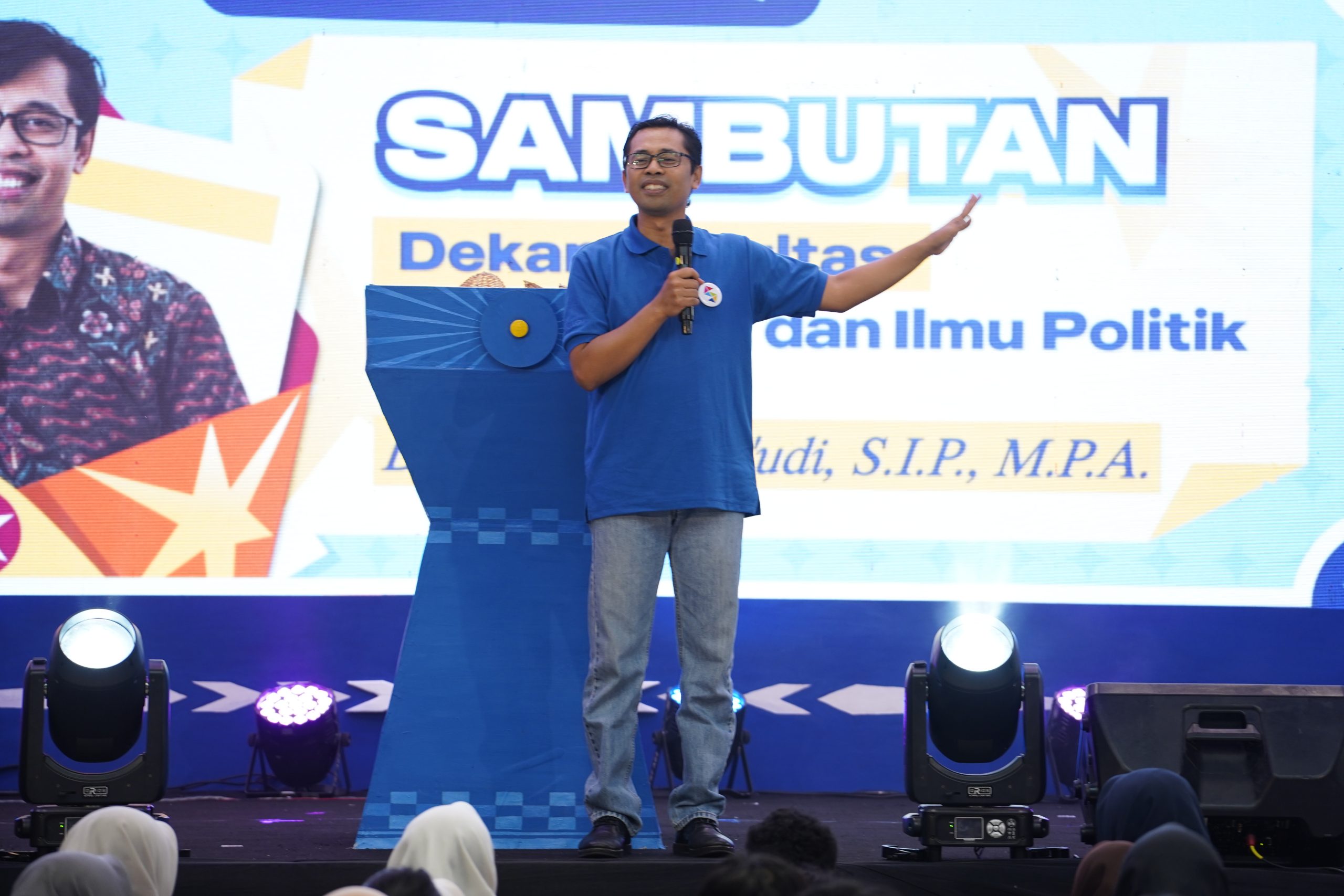
Yogyakarta, 6 August 2025 — A total of 627 new students from across Indonesia officially joined the opening of PIONIR Society 2025, held at the West Hall of FISIPOL UGM. This year, PIONIR Society carries the theme “Gerak Bara Arunika”, symbolizing the spirit of being not only a light for oneself but also a source of tangible benefits for society and the surrounding environment.
The opening ceremony was marked by the symbolic distribution of tumblers to six student representatives from each department, underscoring the faculty’s commitment to the Green Society movement. The program continued with the ceremonial lighting of the “Dawn of the Journey”, representing the first steps of the new students (Gamada) in their academic and personal development journey at FISIPOL UGM.
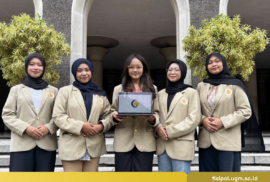
FISIPOL UGM lecturers Ratna Noviani, Heru Nugroho, and Elok Santi Jesica have published their latest research article titled “Grab It Fast! Entrepreneurial Self and Hyper-Consumerism in the Students’ Prosumption of Online Lending Services in Indonesia” in the July–September 2025 edition of the international journal SAGE Open.
The article examines the practice of prosumption — the simultaneous production and consumption of services — in online lending among Indonesian university students, with a specific focus on the Cicil platform. Within the framework of the sharing economy and prosumerism, this platform not only offers educational loans but also encourages students to act as both “digital workers” and active consumers.