Arsip:

SDGs 17: Partnership for the Goals

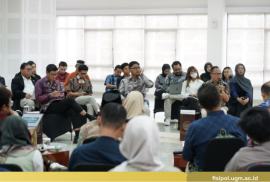
BRF The Clinics Explore Opportunities and Strategies for Climate Finance Based on Public Participation

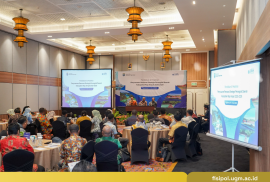
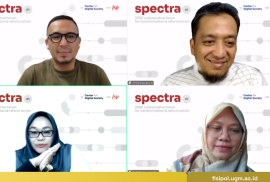
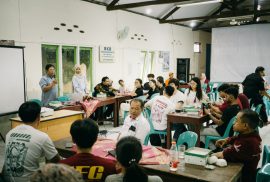
Yogyakarta, June 19th 2025 – Bulaksumur Roundtable Forum (BRF) was held again through The Clinics series which this year focused on the theme “Opportunities for Zakat, Infaq, Sadaqah, and Waqf (ZISWAF) to Build Participative Climate Finance in Indonesia”. Located at the 4th Floor Auditorium of FISIPOL UGM, this forum became a forum for cross-sector discussions to explore the potential of social funds as an instrument of inclusive and sustainable climate crisis financing. The forum presented a variety of speakers from philanthropic institutions, Islamic finance, to government agencies. Some of them were Syamsul Ardiansyah (Senior Officer of Strategic Alliance Dompet Dhuafa), Dede Haris Sumarno (Commissioner of Supervision and Governance of the Indonesian Waqf Board), and Nur Fadilah (ESG Operation and Communication Head of Bank Syariah Indonesia). In addition, the forum also involved academics and climate policy experts to enrich perspectives. read more

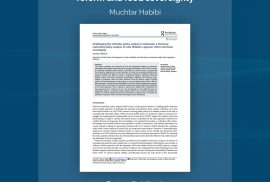
A Lecturer of FISIPOL UGM Offers New Perspective in Analyzing Agrarian Policy and Food Sovereignty in Indonesia

Yogyakarta, May 26th 2025─Muchtar Habibi, a lecturer from the Department of the Department of Public Policy Management (MKP), Faculty of Social and Political Sciences of UGM, once again shares his thoughts through his latest scientific publication entitled “Challenging the orthodox policy analysis in Indonesia: a historical materialist policy analysis of Joko Widodo’s agrarian reform and food sovereignty”. This article was published in the reputable journal Critical Policy Studies published by Routledge Taylor & Francis Group. read more

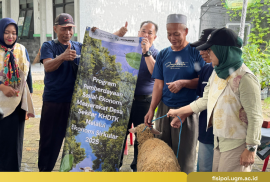
Ceremony of FISIPOL UGM and Pertamina Foundation Closed the Pitu Ngawi Village Community Empowerment Program

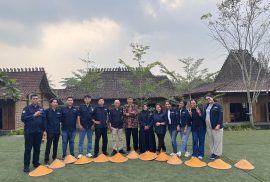
Yogyakarta, May 23th 2025─The Socio-Economic Empowerment Program for Village Communities Around Special Purpose Forest Areas (KHDTK) through a circular economy approach was officially closed in a ceremony at Pitu Village Hall, Getas District, Ngawi Regency, on Friday (23/5). The program, which ran from January to May 2025, is the result of collaboration between Pertamina Foundation, FISIPOL UGM, and Universitas Gadjah Mada.

During the five months of implementation, this program has provided skills training, local business assistance, household waste management into value-added products, and the formation of community business groups based on local potential and sustainability principles. read more

After Five Months of Empowering the Community in Blora, FISIPOL UGM and Pertamina Foundation Officially Ends Program with Ceremony

Blora, May 23, 2025—UGM’s Faculty of Social and Political Science (Fisipol) has successfully organized a closing  ceremonial event for the socio–economic empowerment program for village communities around forest areas with special-purpose (KHDTK). It is done through the lens of circular economy at the second location, Mendenrenjo Village, Blora Regency on Friday (23/5). This event also marks the official end of the program that has been ongoing for five months since January 2025. 

Arie Sujito, as Vice Rector for Student Affairs, Community Service, and Alumni of UGM, attended the ceremony and mentioned that,”The activities carried out all this time are aimed at increasing the quality of life of communities together. It is hoped that this cooperation between villages and groups is important in reducing the rate of poverty by empowering communities.” read more

Highlighting Issues of Food Security and Urban Industry, Fisipol UGM Organizes Discussion with Gaziantep University

Yogyakarta, May 22, 2025—Community empowerment, energy transition, and food security became government agendas in an effort to achieve the Golden Indonesia 2045 Vision. UGM’s Faculty of Social and Political Science organized a discussion session regarding the challenges and development of these three agenda together with experts from the Gaziantep University, Turkey. Held on Thursday (22/5), the discussion talked about how factors such as climate change and food crisis became determinant of the success of the government’s agenda.

Dr. Mehmet Cevat Yildirim, as Associate Professor of Public Administration, explained that the global crisis has experienced its own set of dynamics from time to time along with technological advancements and climate change. For example,  in 1970, there was a transition from the import sector to global manufacturing. It then developed further to global factory networks due to globalization. Now, the world has entered an era of robotic technology and the neoliberal economic structure. These changes have caused a number of disruptions in various fields, including employment. “This creates new problems for countries that depend on the development of  urban areas. This is the case in Turkey, where the growth of industry outpaced the infrastructure planning process,” Mehmet stated. Gebze, one of the centers of the automotive and chemical industries that drive Turkey’s economy, is now faced with the lack of adequate infrastructure. Unprepared, the city infrastructure is increasingly under pressure, causing several social problems such as congestion, minimal public service, and high population density. 

Similar things are happening in Indonesia, specifically in the city of Bekasi, West Java. Mehmet’s research has shown Bekasi as the centre of the world’s automotive industry that has grown at a rapid pace due to investments. However, the area of Bekasi itself is separated into two very unequal areas, namely the modern industrial district and the residential district. “The city infrastructure that we see in Bekasi is under pressure due to high amounts of migration, land purchase for investment and infrastructure gaps,” Mehmet explained. According to him, the economic growth experienced  is not accompanied by proper access to public services and infrastructures.
read more

Faculty of Social and Political Sciences UGM and Gaziantep University Discuss Research Collaboration and Academic Mobility

Yogyakarta, 21 May 2025–The Faculty of Social and Political Sciences UGM continues to strengthen international cooperation through a strategic meeting with a delegation from Gaziantep University, Turkey. In a warm atmosphere and with a collaborative spirit, the deans of the Faculty of Social and Political Sciences, UGM, and the Faculty of Agriculture, UGM, hosted a dinner with delegates from Gaziantep University at Sasanti Restaurant in Yogyakarta.

This meeting served as a forum to discuss the continuation of academic cooperation between the two institutions, which had previously been established through the Erasmus+ program. One of the potential topics discussed in depth was the plan for collaborative research and project development related to co-operatives in a comparative perspective between Indonesia and Turkey. The Dean of FISIPOL, Dr. Wawan Mas’udi, and the Dean of the Faculty of Agriculture, Prof. Jaka Widada, highlighted the importance of strengthening the people’s economy through the cooperative model as an inclusive and sustainable development strategy in both countries. read more

Formulating the Direction of Sustainable Development, Central Mamberamo Regency Government Visits Fisipol UGM

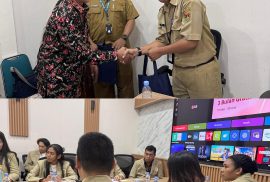
Yogyakarta, May 21, 2025—UGM’s Faculty of Social and Political Science (Fisipol) accepted a visitation from the Central Mamberamo Regency Government, in order to sign a Memorandum of Understanding (MoU) and Cooperation Agreement on Regional Medium Term Development Plan (RPJMD) of the Central Mamberamo Regency for the 2025-2029 period.

The signing was done by the Deputy Regent of Central Mamberamo, Mr Itaman Thago, S.Sos., together with the Head of Local Development Planning Agency (Bappenas) of Central Mamberamo Regency, Mr Piet Miniagasi.
read more

Increase Environmental Awareness, GAMAPI FISIPOL UGM Holds Environmental Action (Aksi Lingkungan/ Angklung) at Pandansari Beach

Yogyakarta, 18 May 2025–GAMAPI FISIPOL UGM held an Environmental Action (Aksi Lingkungan/ Angklung) work program at Pandansari Beach, Bantul Regency, Yogyakarta. This activity was designed by the Social Society division (Sosmas) of GAMAPI as a means of realizing positive contributions and responsibilities towards the environment. 

“As students, we want to invite and provide a forum for other students and non-students to have a real impact on the environment as an effort to care for and increase awareness of our shared environment,” said Farrel.  read more

Building Kinship and Welcoming the New Management Period, Kafisipolgama Holds Halal bi Halal and National Deliberation

Jakarta, 19 May 2025–Alumni Family of Faculty of Social and Political Sciences Universitas Gadjah Mada (Keluarga Alumni Fisipol UGM/ Kafisipolgama) held Halal bi Halal as well as Kafisipolgama National Conference (Musyawarah Nasional/ Munas) on Sunday (5/18). The event was held at TVRI Senayan, Jakarta, and invited various parties, ranging from Fisipol alumni across different departments, professions, and generations, to the dean of Fisipol. 

Ian Agisti, as the head of the committee, stated that this event combined two main agendas. Halal bi Halal, Kafisipolgama’s annual event that provides a space for people to meet and talk with each other, was combined with the National Conference, which discussed the change in management. “Halal bi Halal is indeed used as a place to meet alumni, while the National Conference aims to process the regeneration of the organization,” she said. read more

MKP Alumni Gathering Strengthens Intergenerational Inclusive Collaboration

Yogyakarta, May 14th 2025The Department of Public Policy Management (MKP) of FISIPOL UGM together with its alumni held an alumni gathering entitled MKPketemuAN 2025: Stepping Forward Shining Together at the RRI Auditorium Jakarta, Saturday (10/5) yesterday.

This event became a forum for friendship and consolidation across generations of MKP of FISIPOL UGM alumni. This is evident from the philosophy of choosing the name of the event with the affix “AN” as a form of respect for the history of the department which was previously named State Administration before now transforming into Public Policy Management or MKP. read more