Arsip:

SDGs 17: Partnership for the Goals

FISIPOL UGM Examines Ethics, Power, and the Politics of Knowing in the AI Era Alongside Academics from the University of Melbourne and UGM

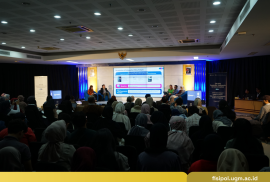
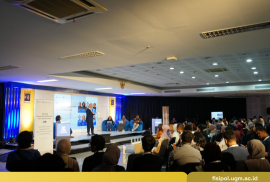
Yogyakarta, July 20, 2026—The advent of Artificial Intelligence (AI) can no longer be perceived merely as a technological marvel; rather, it constitutes a complex instrument with the potential to perpetuate domination and structural inequalities. This discourse emerged during the critical deliberations of The 6th Australia-Indonesia in Conversation (AIC) 2026. The inaugural panel, entitled “Governing Intelligence: Ethics, Power, and the Politics of Knowing,” featured Prof. Robert Hassan and Dr. Silvia Montaña-Niño from the University of Melbourne, alongside Prof. Ridi Ferdiana and Pratiwi Utami, Ph.D. from Universitas Gadjah Mada. Moderated by Dr. Indah Surya Wardhani, the session convened at the 4th Floor Auditorium of FISIPOL UGM on Monday (July 20). read more

UGM Public Lecture Explores the Relationship Between Market Reforms and Power

Yogyakarta, 24 June 2026─The Faculty of Social and Political Sciences at Gadjah Mada University (FISIPOL UGM) hosted a public lecture titled “Tinpots and Technocrats? Market Reforms and the Politics of Personal Rule.”

The event featured Professor Benjamin Smith from the University of Florida as the keynote speaker. Professor Smith is an expert in comparative politics and political economy, known for his research on natural resource wealth, ethnic conflict, and regimes and regime change in developing countries. read more

PPKK FISIPOL UGM Holds BLUD Training to Strengthen ASN Capacity and Accountability of Sarolangun Regency

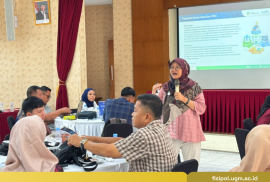
Yogyakarta, June 17, 2026—The Center for Capacity Development and Cooperation of the Faculty of Social and Political Sciences, Universitas Gadjah Mada (PPKK FISIPOL UGM), has launched a training program focused on the preparation of financial reports for Regional Public Service Agencies (BLUD) in health centers for the Sarolangun Regency Government. 

This initiative aims to enhance the capacity of State Civil Apparatus (ASN) and strengthen accountability in local government operations, particularly in managing BLUD finances within health centers. read more

FISIPOL UGM Strengthens Global Partnerships through Strategic Collaboration Talks with Australia’s Murdoch University

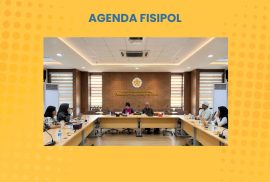
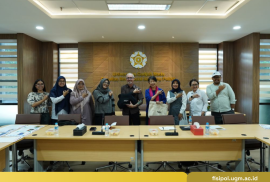
The Faculty of Social and Political Sciences at Universitas Gadjah Mada (FISIPOL UGM) welcomed a delegation from the Indo-Pacific Research Centre (IPRC), Murdoch University, Australia, for an international visit and discussion held at the Faculty Senate Meeting Room on Monday, June 15, 2026. The delegation was led by Prof. Ian Wilson, Director of the Indo-Pacific Research Centre, and Prof. Jacqueline Lo, both representing Murdoch University.

The visit marked another important step in FISIPOL UGM’s ongoing efforts to strengthen its global academic network and explore strategic partnerships with the Indo-Pacific Research Centre in the areas of education, research, and academic development. The meeting provided an opportunity for both institutions to exchange ideas and identify collaborative initiatives aimed at enhancing academic capacity and producing research with meaningful societal impact. read more

UGM’s Department of Social Development and Welfare Signs Cooperation Agreement with the Prof. Dr. Soeharso Integrated Center in Surakarta

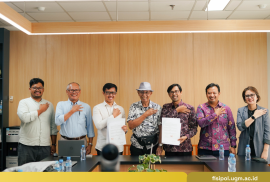
Yogyakarta, June 15, 2026─The Department of Social Development and Welfare (PSdK) of the Faculty of Social and Political Sciences (FISIPOL) of Universitas Gadjah Mada (UGM) signed a Cooperation Agreement (PKS) with the Prof. Dr. Soeharso Integrated Center in Surakarta on Monday (June 15) in the Dean’s Room of the Faculty of Social and Political Sciences and Meeting Room 1 of the PSdK Department.

This activity marks the beginning of a collaboration to develop the PSdK Social Laboratory, which will include a wide range of activities, including capacity building, internships, theses, field lectures, and more. read more

Expanding International Networks, FISIPOL UGM Holds Visitation and Discussion with IPRC Murdoch University Australia

Yogyakarta, June 15, 2026 — The Faculty of Social and Political Sciences (FISIPOL) Universitas Gadjah Mada (UGM) expanded its academic reach at the international level on Monday (15/6) through an event titled “International Visit and Discussion with the Indo-Pacific Research Centre (IPRC), Murdoch University, Australia”. This important meeting was held offline and took place in the Dean’s Meeting Room BB 208, BB Building, FISIPOL UGM.

This activity served as a crucial momentum for both parties to understand each other’s research ecosystems while formulating various potential collaborations, particularly in responding to the socio-political dynamics in the Indo-Pacific region. To ensure the discussion ran comprehensively and on target, the series of events on that day was divided into two main, continuous sessions. read more

FISIPOL UGM Hosts FORDEKIIS 2026 National Symposium on Advancing High-Quality and Impactful Higher Education Governance

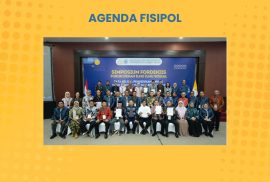
The Faculty of Social and Political Sciences at Universitas Gadjah Mada (FISIPOL UGM) hosted the 2026 National Symposium of the Forum of Deans of Social Sciences (FORDEKIIS) on Friday, June 12, 2026, at the FISIPOL UGM Jakarta Campus. The symposium was organized in response to the evolving landscape of higher education governance in Indonesia and the increasingly complex challenges facing social sciences in a rapidly changing global environment.

Carrying the theme “High-Quality and Impactful Higher Education Governance,” the symposium served as a strategic platform for deans and faculty leaders from social science faculties across Indonesia to exchange ideas, share institutional experiences, and develop collaborative strategies for strengthening the future of higher education. read more

FISIPOL International Short Course (FISCO) 2026 Presents a Blend of Digital Transformation Studies and Local Cultural Exploration

Yogyakarta, June 12, 2026 — The Global Engagement Office (GEO) of FISIPOL UGM is once again hosting the Faculty of Social and Political Sciences International Short Course (FISCO) 2026. Taking place over two weeks from June 8 to 19, 2026, this program highlights contemporary Indonesian issues emerging amidst digital transformation.

Held using a hybrid method that combines online and offline attendance, FISCO 2026 has successfully attracted the interest of 56 applicants from both within the country and abroad, with several specific requirements. For Indonesian citizens, this program is open exclusively to FISIPOL UGM students. read more

FISIPOL UGM Collaborates with the National Economic Council to Develop a Policy Paper on the “South-South Transition Minerals Learning Cohort”

Yogyakarta, June 11, 2026─The Faculty of Social and Political Sciences (FISIPOL) UGM hosted a national-level Focus Group Discussion (FGD) on June 11-12, 2026, with the agenda “Data and Information Gathering for the Preparation of the Policy Paper ‘South-South Transition Minerals Learning Cohort’.” This event was initiated by the National Economic Council of the Republic of Indonesia in collaboration with the Department of Politics and Government, FISIPOL UGM, represented by two department lecturers, Hasrul Hanif and Primi Suharmadhi Putri. read more

The FISIPOL UGM Creative Hub, in Collaboration with UNSW and the University of Leipzig, Engages Residents of Terban in Observing Sustainable Waste Management

Yogyakarta, 8 June 2026─The Creative Hub of the Faculty of Social and Political Sciences at Universitas Gadjah Mada (FISIPOL UGM), together with partners from the University of New South Wales (UNSW) and the University of Leipzig, conducted an observation and mini-fieldwork study on waste management in RW 05, Terban Village, Gondokusuman, Yogyakarta City.

Indonesia faces challenges in waste management, with a national waste production volume of 23.9 million metric tons per year, 65.45% of which remains poorly managed due to low community participation. The Terban area, located not far from the UGM campus, faces similar issues and was therefore selected as a living laboratory for circular economic transformation through the development of the Gebrak Sampah Ecosystem. read more