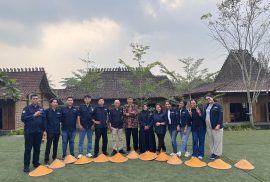
Magelang, June 24, 2025 — Students of the Magister Public Administration Affirmation Program (MAP) at Universitas Gadjah Mada undertook a field trip to Magelang Regency as part of a learning process connecting theory with practical public policy implementation. The activity, held from June 23–24, involved scholarship recipients from various local government institutions across Indonesia and focused on strengthening Micro, Small, and Medium Enterprises (MSMEs) as pillars of the local economy and job creation.
SDGs 9: Innovation and Infrastructure
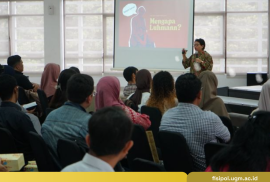
Yogyakarta, June 17th 2025—A professor from UGM’s Department of Communication Science published an introductory book regarding the theory of Niklas Luhmann as an eye-opening perspective in the field of communication science. Prof. Dr. Phil. Hermin Indah Wahyuni organized a discussion with several communication science experts from Universitas Padjadjaran titled “Titik Balik: Teori Sistem dalam Ilmu Komunikasi” on Tuesday (17/6).
Niklas Luhmann is a German sociologist who discovered the systems theory. Luhmann was inspired by Talcott Parsons theory of the social system, which aims to answer the many questions that society faces in regards to social change. It is the development of this theory that is explained as the Luhmann systems theory, in which the social system is not shaped through mutual agreement, moreso through conflicting disagreement. Without difference of opinions, there won’t be interaction between social actors and therefore, a system will not be formed.
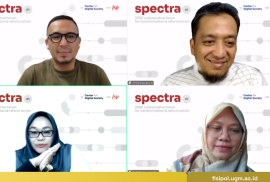
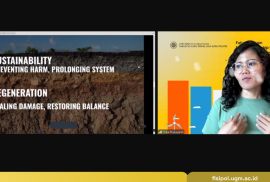
Yogyakarta, June 13th 2025—In an ever-changing world faced with many social, environmental, and economic challenges, a big question arises: What if businesses are not just profit-oriented, but also think about the impact? This question became a very intriguing introduction in the opening webinar for the 9th Batch of the C-Hub Talent Pitching, a yearly program which pushes the spirit of social entrepreneurship among youths. Bringing the theme of “Future-Fit”, this program is back again with new spirits in placing inclusivity and sustainability as the main foundation for building a brighter future. In the webinar titled “Future-Driven Entrepreneurship for a Sustainable Tomorrow”, Fisipol UGM’s Creative Hub presented two inspirational speakers, none other than Satya Dewastra B. W., founder of Ailesh, and Rika Novayanti, expert strategic communication on environment, as well as the Co-founder of Mosaic.
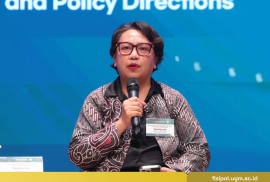
Dr. Mehmet Cevat Yildirim, as Associate Professor of Public Administration, explained that the global crisis has experienced its own set of dynamics from time to time along with technological advancements and climate change. For example, in 1970, there was a transition from the import sector to global manufacturing. It then developed further to global factory networks due to globalization. Now, the world has entered an era of robotic technology and the neoliberal economic structure. These changes have caused a number of disruptions in various fields, including employment. “This creates new problems for countries that depend on the development of urban areas. This is the case in Turkey, where the growth of industry outpaced the infrastructure planning process,” Mehmet stated. Gebze, one of the centers of the automotive and chemical industries that drive Turkey’s economy, is now faced with the lack of adequate infrastructure. Unprepared, the city infrastructure is increasingly under pressure, causing several social problems such as congestion, minimal public service, and high population density.
Similar things are happening in Indonesia, specifically in the city of Bekasi, West Java. Mehmet’s research has shown Bekasi as the centre of the world’s automotive industry that has grown at a rapid pace due to investments. However, the area of Bekasi itself is separated into two very unequal areas, namely the modern industrial district and the residential district. “The city infrastructure that we see in Bekasi is under pressure due to high amounts of migration, land purchase for investment and infrastructure gaps,” Mehmet explained. According to him, the economic growth experienced is not accompanied by proper access to public services and infrastructures.
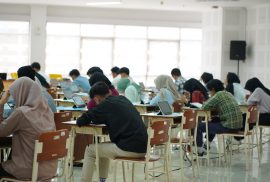
Yogyakarta, 22 May 2025–To improve the convenience and efficiency of academic services, the Library of FISIPOL UGM provides ETD reservation services for the scholarly community of FISIPOL UGM. This service offers directed access to academic community manuscripts, particularly for those seeking references or related studies. To maintain the security of content and copyright, the manuscript can only be read directly on a computer at this time.
The FISIPOL UGM Library has provided computers for accessing manuscripts from the undergraduate degree thesis, master’s degree thesis, and dissertation collections as a whole. This service can be visited on the 3rd floor of the Mandiri Building. For abstracts, academicians can access them through https://etd.repository.ugm.ac.id/.
Yogyakarta, 21 May 2025–The Faculty of Social and Political Sciences UGM continues to strengthen international cooperation through a strategic meeting with a delegation from Gaziantep University, Turkey. In a warm atmosphere and with a collaborative spirit, the deans of the Faculty of Social and Political Sciences, UGM, and the Faculty of Agriculture, UGM, hosted a dinner with delegates from Gaziantep University at Sasanti Restaurant in Yogyakarta.
This meeting served as a forum to discuss the continuation of academic cooperation between the two institutions, which had previously been established through the Erasmus+ program. One of the potential topics discussed in depth was the plan for collaborative research and project development related to co-operatives in a comparative perspective between Indonesia and Turkey. The Dean of FISIPOL, Dr. Wawan Mas’udi, and the Dean of the Faculty of Agriculture, Prof. Jaka Widada, highlighted the importance of strengthening the people’s economy through the cooperative model as an inclusive and sustainable development strategy in both countries.
Yogyakarta, 18 May 2025–GAMAPI FISIPOL UGM held an Environmental Action (Aksi Lingkungan/ Angklung) work program at Pandansari Beach, Bantul Regency, Yogyakarta. This activity was designed by the Social Society division (Sosmas) of GAMAPI as a means of realizing positive contributions and responsibilities towards the environment.
“As students, we want to invite and provide a forum for other students and non-students to have a real impact on the environment as an effort to care for and increase awareness of our shared environment,” said Farrel.
“In front of us, work conditions that are claimed as flexible, do not occur because there is a form of control or discipline, one of which is done through Artificial Intelligence,” Arif claimed.
Legally speaking, labor laws and regulations are seen as not adaptive enough in responding to the challenges of the gig economy in the digital transformation era, which causes the precariatization of gig workers. “Indonesian labor laws are considered to be oldies and traditional, which can be explained by the fact that it was created in the era in which gig workers are not as apparent as they are now. This is why the definition of employment relationship in Indonesia is strict,” Nabiyla explained.
Yogyakarta, 22nd of March 2025 — Once again, Fisipol UGM’s Career Development Center (CDC) opens the Essential Skills : Intensive Writing and Speaking Classes Batch V Program. This program is opened in collaboration with the University of Melbourne in attempting to accommodate the student needs for English language learning, which is identified as an essential skill by the faculty for study and career preparation. At the same time, this program is also aimed to train self-confidence through verbal and written communication in English.
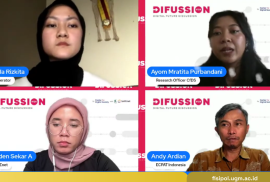
The Indonesian government initiated the implementation of AI in the public sector by issuing the Ministry of Communication and Information Technology (Menkominfo) No. 9 of 2023 on the ethics of artificial intelligence. However, according to Hossea Immanuel, research assistant at CfDS UGM, the initiative still faces some challenges due to inadequate digital infrastructure.
“There are still problems regarding AI implementation in Indonesia, such as the ransomware attack on the national data center last year. Of course, this contradicts the purpose of implementing AI,” said Hossea in his presentation.