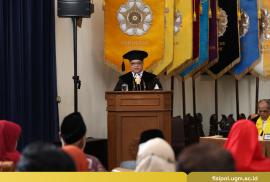
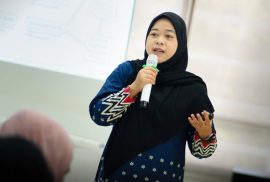
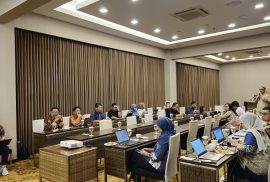
Yogyakarta, 24 July 2025 — Prof. Dr. Nur Rachmat Yuliantoro was officially inaugurated as a Full Professor in East Asian International Development at the Faculty of Social and Political Sciences, Universitas Gadjah Mada. In his inaugural speech, he addressed the issue of loans and national debt within China’s Belt and Road Initiative (BRI), which continues to spark debate over Indonesia–China relations. Prof. Rachmat offered a broad and critical perspective, raising concerns over financial risk and national stability.
SDGs 9: Innovation and Infrastructure
Yogyakarta, July 15, 2025─The Faculty of Social and Political Sciences (FISIPOL) of Gadjah Mada University (UGM), through the Center for Digital Society (CfDS), is once again offering the Digital Intelligence course in 2025. The Digital Intelligence course is an annual CfDS initiative that encourages the public, especially students, to become critical, reflective, and empowered digital citizens. This course is an official elective under the Faculty of Social and Political Sciences, Gadjah Mada University, and is open to the general public free of charge.
Are you passionate about writing and interested in issues related to digital transformation? We invite you to contribute your ideas and submit your articles to be published on the Megashift FISIPOL UGM website! ☺️
Important Notes:
Detailed submission guidelines and suggested subtopics are clearly outlined in the official poster.
This call for articles is open year-round, with no submission deadline.
Articles should be no longer than 1,000 words, including references.
Submissions must include citations from publications, journals, or books written by FISIPOL UGM lecturers or researchers.
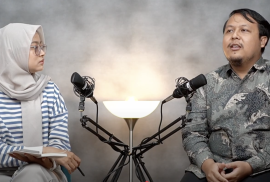
The Institute for Policy and Development (PolDev), under the Faculty of Social and Political Sciences (FISIPOL) at Universitas Gadjah Mada, has released the second episode of its podcast series, Unitalks. This episode addresses the timely and critical topic of Data Transparency and Proxy Data, highlighting ongoing challenges in ensuring public access to information in Indonesia.
Hosted by Rizki Dwi Lestari, a researcher at the Department of Management and Public Policy (DMKP), the episode features guest speaker Rizki Ardinanta, a researcher at PolDev and Project Advisor at Unitrend. Together, they delve into the complexities surrounding public access to government data—especially in the realm of public policy—where transparency and accessibility remain limited.
The Department of Public Policy and Management (DMKP) at the Faculty of Social and Political Sciences (FISIPOL), Universitas Gadjah Mada (UGM), welcomed a study visit from the Faculty of Administration and Social Sciences, Universitas Bina Taruna (UNBITA) Gorontalo. The event was part of a collaborative academic initiative aimed at expanding inter-university engagement, particularly in the field of inclusive digital transformation policy and governance in Indonesia.
As part of the visit, students from UNBITA participated in a guest lecture delivered by Alvi Syahrina, S.T., M.Sc., a lecturer at DMKP UGM. The session, titled “Inclusive Digital Transformation Policy and Governance in Indonesia,” emphasized the need to view digital transformation not only as a technological advancement, but also through the lens of social justice, digital literacy, and the risks of digital exclusion.
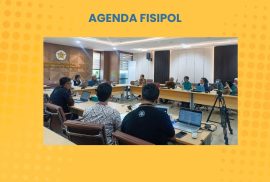
Yogyakarta, July 5, 2025 — The Faculty of Social and Political Sciences (FISIPOL) at Universitas Gadjah Mada continues to demonstrate its commitment to strengthening an academic culture that is reflective, productive, and impact-oriented. Through the Research, Publication, and Community Engagement Unit (UP3M), FISIPOL organized the Research Grant Progress Report Presentation Week from June 30 to July 4, 2025. The event was attended by nearly 80 grant recipients from various internal faculty funding schemes.
Yogyakarta, July 4th 2025—With the increase of internet access by children, safety of digital spaces became a key concern. A 2024 data from BPS shows that 35,5 percent of children aged 0-4 have access to the internet, marking a sign of digital exposure in the early ages. This does not only create opportunities, but also serious challenges, starting from exposure of dangerous content, cyberbullying, as well as other misdeeds like digital exploitation. As a response to these challenges, UGM Centre for Digital Society (CfDS) organized the DIFUSSION #124 discussion session titled “Protecting Digital Space for Kids: Can PP TUNAS become the answer?”. This discussion presents many experts in the field of online child protection, which includes Andy Ardian (Coordinator for Nasional ECPAT Indonesia), Nenden Sekar Arum (Executive Director of SAFENet), and Ayom Mratita Purbandani (Researcher at CfDS UGM), with Nabila Rizkita (Researcher at CfDS UGM) as moderator.
Yogyakarta, 4 July 2025 — As internet access becomes increasingly prevalent among children, ensuring a safe digital environment has emerged as an urgent priority. According to data from Statistics Indonesia (BPS) in 2024, 35.5 percent of children aged 0–4 years have accessed the internet, indicating that digital exposure now begins at a very early age. While this brings opportunities for learning and development, it also presents serious risks—including exposure to harmful content, cyberbullying, and digital exploitation.
Research is not merely a process of data collection, but also a meaningful space for learning. This was evident in the fieldwork experience of students from the Faculty of Social and Political Sciences (FISIPOL) at Universitas Gadjah Mada (UGM), who joined a research team focusing on women’s empowerment and social justice across various regions in Indonesia. Through direct interaction with women from diverse social, cultural, and economic backgrounds, these young researchers not only sharpened their technical skills but also reflected deeply on their own position, privilege, and social responsibility as academics.
Seoul, June 26, 2025 — As the urgency of the climate crisis continues to intensify, the global community faces a growing obstacle: the spread of misinformation and disinformation that hampers public understanding and concrete climate action. At the prestigious 9th Climate Energy Summit held in Seoul, South Korea, Dr. Novi Kurnia, a lecturer in the Department of Communication Science at FISIPOL UGM and lead researcher at the Centre for Digital Society (CfDS) UGM, delivered a keynote address offering a critical perspective from the Global South on the rampant spread of climate-related falsehoods.