
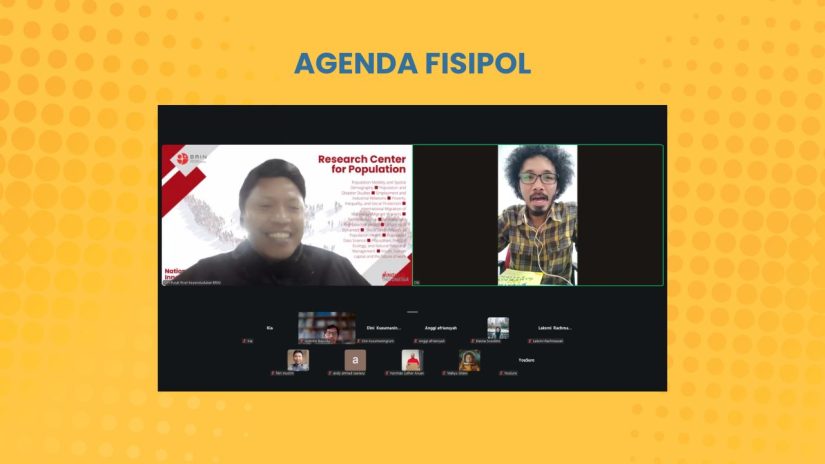
Yogyakarta, March 4, 2026 — The Youth Studies Center (YouSure) Faculty of Social and Political Sciences, Universitas Gadjah Mada, collaborated with the Youth, Human Capital, & Future of Work (YHCFW) Research Group of the Population Research Center of the National Research and Innovation Agency (BRIN) in a book discussion titled Reading Group Reboan #141 “Introduction to Youth Perspectives: Transition, Culture, and Social Generation.” The online event on Wednesday (March 4) examined the latest work by Dr. Oki Rahadianto Sutopo and Elok Santi Jesica, S.Pd, M.A. published in 2025.
The discussion featured Oki Rahadianto Sutopo, a lecturer in the Department of Sociology, Faculty of Social and Political Sciences, Universitas Gadjah Mada (UGM) and Director of YouSure, along with Gutomo Bayu Aji, a researcher at the Population Research Center at BRIN, and moderated by Fikri Muslim, a researcher from the BRIN Population Research Center.
In his presentation, Oki explained that the book seeks to present a perspective that is more relevant to the realities of young people. He emphasized that the perspectives of transition, youth culture, and social generations are the main foundations in helping young people understand their position amidst social change and navigate the future. “The perspectives of transition, youth culture, and social generations are the basic perspectives adopted to help young people see themselves and navigate the future,” he said.
The discussion also highlighted the importance of an interdisciplinary approach that combines Sociology with Media and Cultural Studies. By utilizing popular culture, the book seeks to build a connection with the everyday experiences of young people, while simultaneously opening a more inclusive entry point for the development of Youth Studies in Indonesia. The three fundamental perspectives curated in this book are designed to serve as a starting point for expanding the youth research and policy agenda going forward.
This collaboration between university study centers and national research institutions not only enriches academic discourse but also represents a tangible contribution to achieving the Sustainable Development Goals (SDGs), particularly point 4 on Quality Education through strengthening critical literacy and developing research-based youth studies. Furthermore, the focus on youth transition and the future of work aligns with point 8 on Decent Work and Economic Growth, while the synergy between universities and BRIN embodies the spirit of point 17 on Partnerships to Achieve the Goals, building a collaborative and sustainable knowledge ecosystem.