Arsip:

SDGs 12: Responsible Consumption

UGM Students Examine Clickbait-Based Affiliate Content Practices on the X Platform

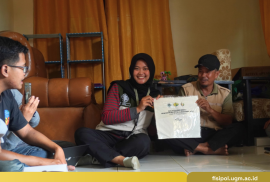
Yogyakarta, September 10, 2026—Three students from the Faculty of Social and Political Sciences (FISIPOL) Universitas Gadjah Mada (UGM)—Widyastri Prabaningrum (Communication Sciences, 2024), Nayla Devira Cahyani (Communication Sciences, 2024), and Upik Maulia (Social Development and Welfare, 2023)—along with Rizki Laidha Putri (Law, 2024) and Dini Rindang Ekarini (Economics, 2023), are examining clickbait practices in affiliate content on the X platform under the guidance of Mashita Phitaloka Fandia Purwaningtyas, S.I.P., M.A. This study is being conducted through the Student Creativity Program for Social Sciences and Humanities Research (PKM-RSH). The research is titled “The Price of a Click: Clickbait Practices in Affiliate Content on the X App as a Consequence of the Attention Economy within the Gig Economy.” read more

Day One of PIONIR Society 2026 at FISIPOL UGM Officially Held

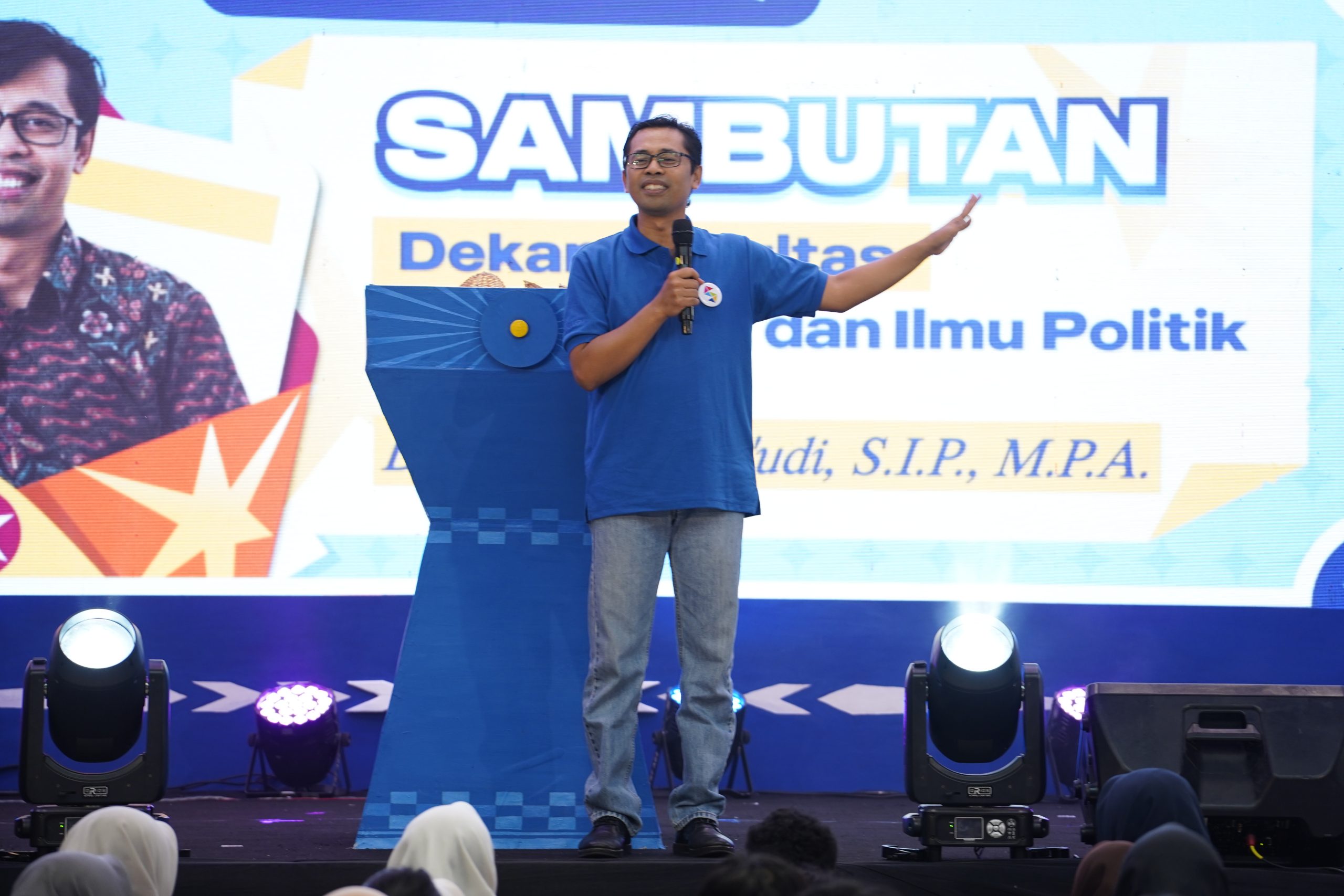
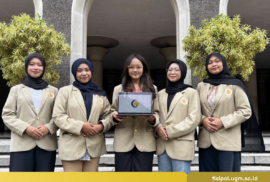
Yogyakarta, August 5, 2026—The Faculty of Social and Political Sciences (FISIPOL) at UGM held the first day of the PIONIR Society 2026 event, themed “Weaving the Direction of Youth Initiatives,” on Wednesday (August 5). The agenda began with a guidance session, followed by an opening ceremony in the West Concourse area. A total of 629 new students from the Class of 2026 participated in this orientation program.

In his remarks, the Dean of FISIPOL UGM, Dr. Wawan Mas’udi, conveyed a message to the new students about why they should be proud to be part of their dream campus, FISIPOL UGM. read more

FISIPOL UGM and National Economic Council Discuss Critical Minerals Governance to Support a Sustainable Energy Transition

Yogyakarta, June 11, 2026 – The Faculty of Social and Political Sciences at Universitas Gadjah Mada (FISIPOL UGM) hosted a national Focus Group Discussion (FGD) titled “Data and Information Gathering for the Development of the South-South Transition Minerals Learning Cohort Policy Paper” on Thursday (June 11). The event was initiated by Indonesia’s National Economic Council (DEN) in collaboration with the Department of Politics and Government at FISIPOL UGM.

The discussion formed part of a broader effort to develop evidence-based policy recommendations on the governance of Indonesia’s critical minerals, as global demand for strategic mineral resources continues to rise in support of the clean energy transition. Bringing together stakeholders from government, academia, and industry, the forum provided a platform to exchange insights, share experiences, and contribute expertise that will inform the preparation of two strategic policy papers. read more

The Paradox of Food Security: GAMAPI UGM Holds Public Conference with Experts

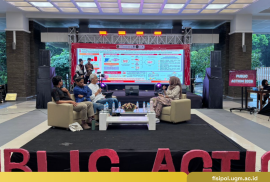
Yogyakarta, 23rd May 2026—The Universitas Gadjah Mada (UGM) Public Management and Policy Student Association (GAMAPI UGM) concluded its Public Action series of events by hosting a Public Conference to discuss food security with experts.

Food security has become a critical topic of discussion, particularly in light of its alignment with the national strategic program of President Prabowo Subianto. The complexities surrounding food security necessitate a thorough examination, especially when its implementation involves various actors and interests. The conference aimed to shed light on these complexities and foster a deeper understanding of the challenges and opportunities in achieving food security. read more

A Track Record of Community Service: FISIPOL UGM Holds Dissemination of Aceh and Nusantara Capital City (IKN) Volunteer Documentation

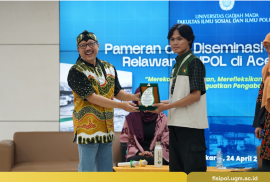
Yogyakarta, April 24, 2026─The Faculty of Social and Political Sciences (FISIPOL) of Universitas Gadjah Mada (UGM) reaffirmed its tridarma (three pillars of higher education) commitment by organizing the “Dissemination of FISIPOL Volunteer Documentation in Aceh and IKN”. Held on Friday (24/4) at the 4th Floor Auditorium of FISIPOL UGM, this forum was designed as a space to share experiences and findings during the community service and research periods of students who plunged directly into responding to environmental crisis issues in the community. read more

“Toyagama” Free Drinking Water Facility Supporting a Green Campus is Now Available at FISIPOL

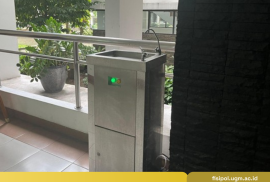
Yogyakarta, April 9, 2026 – The Toyagama Drinking Water Supply System, an initiative by Universitas Gadjah Mada (UGM), is available across various faculties, including FISIPOL. The presence of the Toyagama facility on campus is a manifestation of the Green Campus movement, which continues to be actively promoted from the university down to the faculty level. The initiative to provide these water stations aims not only to ensure the availability of healthy, safe, and high-standard drinking water, but also serves as a concrete and measurable step in reducing the volume of single-use plastic waste, particularly bottled water, which is often the largest contributor to waste on campus. read more

Socialization, Training, and Revitalization: The Bala Gadjah Mada Team Addresses Surge in Waste in the Buffer Zone of the IKN

Yogyakarta, March 9, 2026—The Bala Gadjah Mada Team from the Faculty of Social and Political Sciences, Gadjah Mada University (UGM), is promoting sustainable waste management in the communities of North Penajam Paser, East Kalimantan, to address the surge in waste in the buffer zone of the Indonesian Capital City (IKN).

Bala Gadjah Mada has promoted “Strengthening the Waste Bank Community” as its social project to address this waste problem. One of Bala Gadjah Mada’s members, Kholifa Tata Suharta, stated that the development of the IKN has impacted the surrounding areas, including the Pemaluan Village. He explained that the volume of waste has increased, while waste management capacity still relies on incineration or burial. read more

Driving Just Transitions: Latest Publication by an HI FISIPOL UGM Lecturer in the Annual Review of Environment and Resources

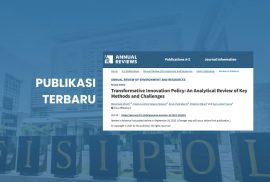
One of the lecturers from the Department of International Relations (DIHI), Faculty of Social and Political Sciences (FISIPOL) UGM, Suci Lestari Yuana, Ph.D., has once again achieved international academic recognition. Together with her collaborators, she has recently published a scholarly article in the prestigious journal Annual Review of Environment and Resources, titled “Transformative Innovation Policy: An Analytical Review of Key Methods and Challenges.”

The article discusses Transformative Innovation Policy (TIP), a new generation of innovation policy designed to address increasingly complex social and environmental challenges—from energy and food crises to mobility systems that remain entrenched in unsustainable modes of production and consumption. The authors emphasize that merely improving technologies or financial instruments is no longer sufficient. Systemic innovations and transformative policies are needed to enable just transitions, ensuring both social justice and planetary health. read more

Facing Climate Geopolitics, Global Academics Discuss Sustainable Mining at FISIPOL UGM

The Faculty of Social and Political Sciences (FISIPOL) at Universitas Gadjah Mada, through the Institute of International Studies (IIS), in collaboration with the University of Essex, United Kingdom, is hosting the Networking Conference on Climate Geopolitics and Sustainable Mining Governance on Wednesday (3/9) at the FISIPOL Dean’s Meeting Room.

The two-day international conference, held on September 3–4, 2025, brings together around 12 academics and practitioners from various countries, including the United Kingdom, Australia, and South Africa. The participants engage in intensive discussions on sustainable mining governance amid the dynamics of global climate geopolitics. read more

WhatsApp Workflow: When a Message Can Save National Food Production

New Release: Megashift FISIPOL UGM Article
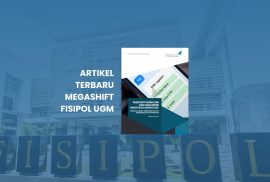
“Digital Orchestration for Indonesian Agriculture: From WhatsApp Workflow to Food Security”
By: Setiawan Guntoro

Megashift FISIPOL UGM has once again published an article that sparks discussion on the future of agriculture and food security in Indonesia. This piece highlights a simple yet revolutionary idea: how an everyday app like WhatsApp can become the backbone of agricultural digitalization.

The article sheds light on a long-standing issue in agriculture, particularly in broiler farming: the slow flow of field data from farms to management, which often leads to delayed and risky decision-making. Many agritech startups have failed because their applications did not match farmers’ habits. However, WhatsApp—used by 9 out of 10 Indonesians—emerges as an alternative solution. read more