Arsip:

SDGs 8: Decent Work and Economic Growth

POLGOV Research Center Hosts Inaugural Forum on Inequality in Nickel-Producing Regions

Yogyakarta, June 24, 2026—The POLGOV Research Center is set to host its inaugural multi-stakeholder forum, the POLGOV Policy Forum (PPF) 2026. This forum is designed to bring together academics, policymakers, industry players, and civil society in a roundtable discussion aimed at addressing more equitable natural resource governance.

The event is being launched against the backdrop of the “paradox of plenty” observed in several nickel-producing regions across Indonesia. Despite economic growth surging by over 20% in North Maluku and exceeding 12% in Central Sulawesi between 2021 and 2024, poverty rates in both provinces have continued to rise. read more
Technocrats vs. Authoritarian Rulers: Fisipol UGM Held Public Lecture Examines the Relationship Between Market Reform and Power

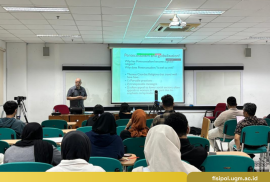
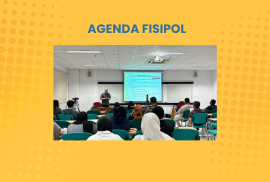
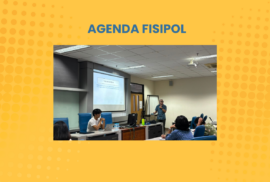
Yogyakarta, June 24, 2026—The Faculty of Social and Political Sciences (FISIPOL) at Universitas Gadjah Mada (UGM) hosted a public lecture titled “Tinpots and Technocrats? Market Reforms and the Politics of Personal Rule” on Wednesday, June 24, 2026, in Room BA 201 at FISIPOL UGM.

The event, held from 1:00 PM to 3:00 PM WIB, featured Professor Benjamin Smith from the University of Florida as the keynote speaker. Professor Smith is an expert in comparative politics and political economy, known for his research on natural resource wealth and politics, ethnic conflict, and regimes and regime change in developing nations. He earned his Ph.D. from the University of Washington and previously served as an Academy Scholar at the Harvard Academy for International and Area Studies. read more

PPKK FISIPOL UGM Holds BLUD Training to Strengthen ASN Capacity and Accountability of Sarolangun Regency

Yogyakarta, June 17, 2026—The Center for Capacity Development and Cooperation of the Faculty of Social and Political Sciences, Universitas Gadjah Mada (PPKK FISIPOL UGM), has launched a training program focused on the preparation of financial reports for Regional Public Service Agencies (BLUD) in health centers for the Sarolangun Regency Government. 

This initiative aims to enhance the capacity of State Civil Apparatus (ASN) and strengthen accountability in local government operations, particularly in managing BLUD finances within health centers. read more

FISIPOL UGM and National Economic Council Discuss Critical Minerals Governance to Support a Sustainable Energy Transition

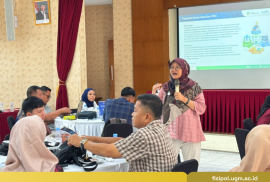
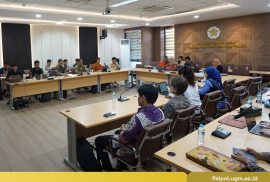
Yogyakarta, June 11, 2026 – The Faculty of Social and Political Sciences at Universitas Gadjah Mada (FISIPOL UGM) hosted a national Focus Group Discussion (FGD) titled “Data and Information Gathering for the Development of the South-South Transition Minerals Learning Cohort Policy Paper” on Thursday (June 11). The event was initiated by Indonesia’s National Economic Council (DEN) in collaboration with the Department of Politics and Government at FISIPOL UGM.

The discussion formed part of a broader effort to develop evidence-based policy recommendations on the governance of Indonesia’s critical minerals, as global demand for strategic mineral resources continues to rise in support of the clean energy transition. Bringing together stakeholders from government, academia, and industry, the forum provided a platform to exchange insights, share experiences, and contribute expertise that will inform the preparation of two strategic policy papers. read more

Defending the Rights of Village Residents: Public Discussion on Rejecting the Merah Putih Village Cooperative as a Threat to Economic Democracy

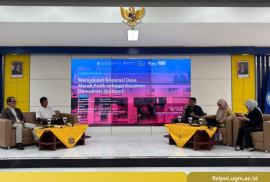
Yogyakarta, 20th May 2026—The Social Research Center at Gadjah Mada University, in collaboration with the Caksana Institute, held a public discussion to address issues with the Merah Putih Village Cooperative (KDMP) policy that threaten economic democracy.

Dr. Andreas Budi Widyanta, one of the speakers, emphasized that the current concept of KDMP has strayed far from the original ideals of Mohammad Hatta’s cooperative concept. “Cooperatives were born out of a shared need among their members, which were then managed democratically without the employer-employee divide. In contrast, KDMP is a tangible manifestation of state corporatism,” he asserted. read more

Half the Minimum Wage, No Days Off, and Mounting Debt: The DEMA FISIPOL UGM Selasar Forum Highlights the Vulnerability of Migrant Domestic Workers

Yogyakarta, May 19, 2026─DEMA FISIPOL UGM’s Selasar Forum highlighted the vulnerabilities faced by migrant domestic workers on Tuesday at the FISIPOL UGM Selasar Barat.

In commemoration of Labor Day (May 1), the Student Council (DEMA) of the Faculty of Social and Political Sciences at Gadjah Mada University held a Forum Selasar with a primary focus on highlighting the vulnerabilities experienced by Indonesian migrant domestic workers. The event took place at the West Selasar, FISIPOL UGM, and featured several speakers from Beranda Migran and the Coordination of Former Indonesian Migrant Workers (KOPPMI). read more

Encouraging Innovation Development: FISIPOL UGM Provides BRIWork as a Space for Student Collaboration and Creativity

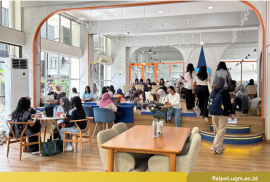
Yogyakarta, April 27, 2026—The Faculty of Social and Political Sciences, Universitas Gadjah Mada (FISIPOL UGM), is creating a creative ecosystem through the BRIWork facility.

In today’s fast-paced world, the challenges individuals face require them to be more than just knowledgeable; they must also be creative thinkers. Recognizing this need, FISIPOL UGM has created an environment that supports the development of fresh ideas and innovative solutions. BRIWork serves as a hub for students to collaborate, share ideas, and work on projects that contribute to their personal and professional growth. read more

Understanding the Relationship between Religion and Socio-Economic Life through a Public Lecture at the Faculty of Social and Political Sciences UGM

Yogyakarta, April 22, 2026—The Department of Sociology, Faculty of Social and Political Sciences, Universitas Gadjah Mada (FISIPOL UGM), highlighted the relationship between religion and economics in a public lecture on Wednesday (April 22).

Featuring Prof. Martin Lindhardt from the University of Southern Denmark as the keynote speaker, the public lecture, titled “The Economics of Pentecostal/Charismatic Christianity,” sought to understand the relationship between religion and economics, which is becoming increasingly important in Indonesia. Furthermore, religious activities play a significant role in the social and economic life of society. read more

Danish Professor Discusses the Economics of Charismatic Christianity at FISIPOL UGM

Yogyakarta, April 22, 2026—The Department of Sociology, Faculty of Social and Political Sciences, Universitas Gadjah Mada (FISIPOL UGM), highlighted the relationship between religion and economics in a public lecture today.

The public lecture featured Prof. Martin Lindhardt from the University of Southern Denmark as the keynote speaker. The event was open to the public and was attended by undergraduate and graduate students of the Sociology of Religion course.

Understanding the relationship between religion and economics is becoming increasingly important in Indonesia, where religious activities play a significant role in the social and economic life of society. UGM presented a public lecture titled “The Economics of Pentecostal/Charismatic Christianity” with international expert Professor Martin Lindhardt. This public lecture provided an opportunity for the academic community to broaden their understanding of the dynamics of religious economics, which are highly relevant to Indonesia’s current socio-economic conditions. read more

For Sustainable Quality, The Social Development and Welfare Study Program (PSdK) at FISIPOL UGM Undergoes LAMSPAK Assessment

Yogyakarta, April 20, 2026—The Independent Accreditation Institute for Social, Political, and Communication Studies (LAMSPAK) conducted a field accreditation assessment of the Master’s Program in Social Development and Welfare (PSdK) at the Faculty of Social and Political Sciences (FISIPOL UGM).

This assessment serves as the main platform for strategic discussions regarding improving the quality assurance of higher education in the PSdK master’s program. The assessment process not only focused on administrative verification but also deeply explored the institution’s commitment to building a continuous quality assurance cycle. read more